
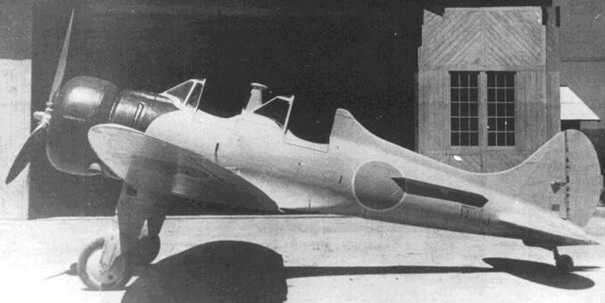
Designed by Jiro Horikoshi, the Mitsubishi A5M represented a significant leap in naval aviation technology. The aircraft, known by the company designation Mitsubishi Ka-14, first took flight on 4 February 1935. Its primary historical distinction is that it was the world's first low-wing monoplane shipboard fighter to enter operational service, a design shift that modernized the fighter forces of the Imperial Japanese Navy.
Production of the A5M family took place during the mid-to-late 1930s, with a total of 1,094 aircraft manufactured by Mitsubishi. The aircraft officially entered service in 1936 and remained in active use until 1945. While the A5M established a new standard for carrier-based combat, it also served as the direct design lineage for the subsequent A6M Zero.
In military service, the A5M was operated exclusively by the Imperial Japanese Navy Air Service. It saw extensive action during the Second Sino-Japanese War, entering combat in early 1937. During these engagements, the A5M fought against Chinese aircraft, including the Boeing P-26C fighter. The aircraft was deployed across a wide array of Japanese aircraft carriers, including the Akagi, Kaga, Sōryū, Shōhō, Ryūjō, Hōshō, and Zuihō, as well as various land-based air corps units and kōkūtai.
As the Pacific War and World War II progressed, the A5M continued to serve, though its role evolved. On 7 May 1942, during the Battle of the Coral Sea, A5M aircraft operated alongside A6Ms to counter American attacks targeting the carrier Shōhō. In the final years of the war, the remaining A5M airframes were relegated to secondary duties and were eventually utilized for special attack, or kamikaze, missions. Today, the A5M is remembered as a foundational aircraft in Japanese aviation history, although no examples are currently restored to flying condition.