
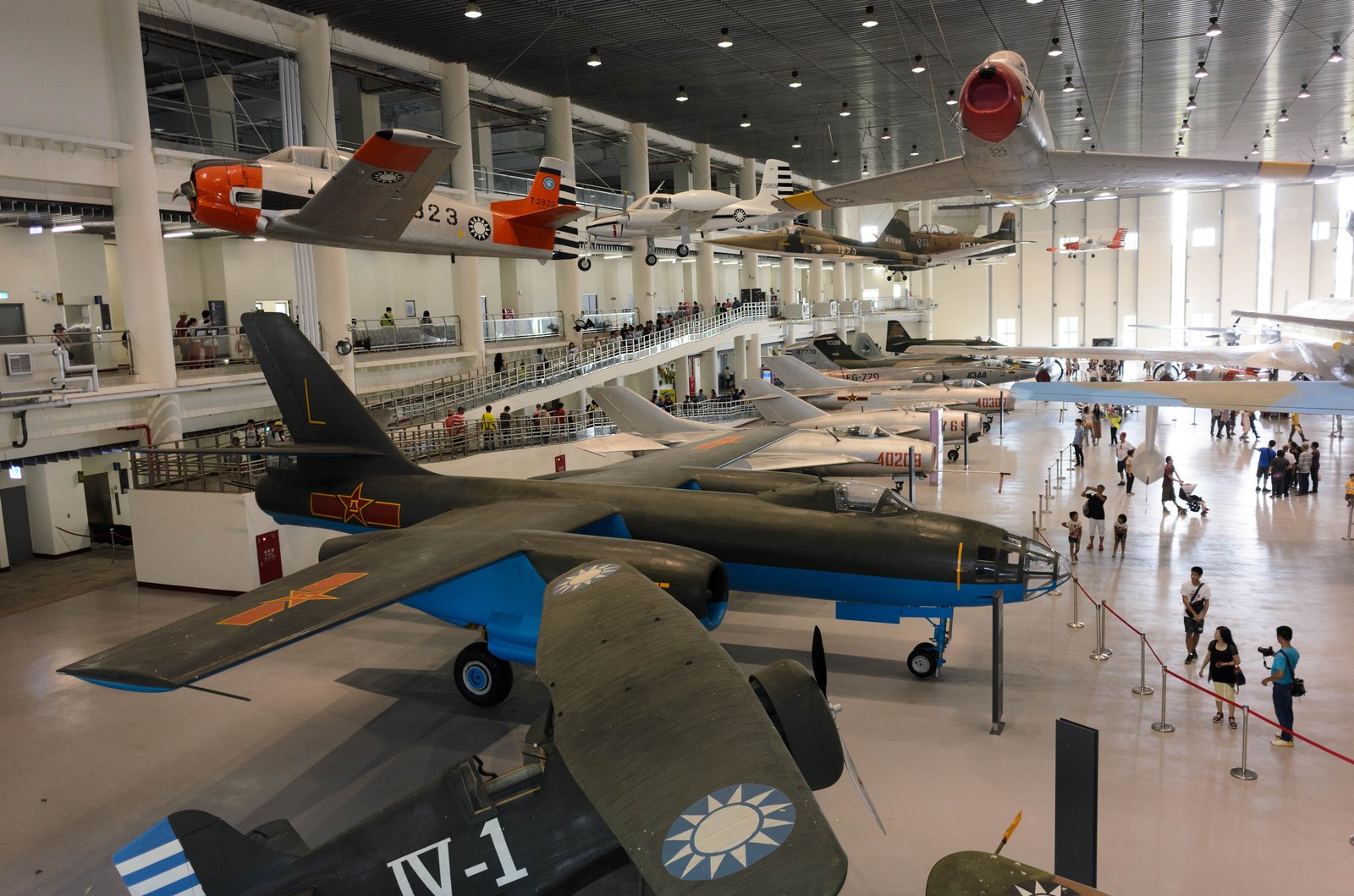
The Ilyushin Il-28 was developed by the Ilyushin Design Bureau under the leadership of chief designer Sergei Vladimirovich Ilyushin. Following a directive issued in June 1948 for a new twin-engine jet frontline bomber, the prototype first took flight on July 8, 1948. This early version was powered by imported British Rolls-Royce Nene centrifugal-flow turbojet engines. The aircraft made its public debut during the May Day parade in Moscow on May 1, 1950, and entered operational service later that year.
Mass production was distributed across several Soviet aviation plants to meet high demand. Key manufacturing sites included the Moscow aviation plant, the Omsk aviation plant, and the Voronezh aviation plant (later known as the Voronezh Aircraft Production Association). Other associated manufacturers included Production Corporation Polyot in Novosibirsk, the Dux Factory in Moscow, and Aviakor in Samara. In total, 6,316 Il-28 series aircraft were built within the Soviet Union. Additionally, China produced an unlicensed copy known as the Harbin H-5, with over 319 bombers and 187 HJ-5 trainers manufactured, bringing the total production of the type to over 6,600 units.
Technically, the Il-28 featured a pressurized cabin for a three-person crew: a pilot under a bubble canopy, a navigator/bombardier in a glazed nose, and a tail gunner in a rear cabin. The production models transitioned from the Nene to the Soviet-built Klimov RD-45 and eventually the Klimov VK-1A turbojets, which provided 26.5 kN of thrust each. The bomber could reach maximum speeds of approximately 900 km/h and had a service ceiling of 12,300 meters. Its armament consisted of two 23 mm NR-23 cannons in the nose and two more in a remote-controlled tail barbette. It was capable of carrying a 1,000 kg internal bomb load, which could be increased to 3,000 kg, and was certified to deliver the RDS-4 tactical nuclear bomb.
Throughout its service life, the Il-28 was exported to roughly 25 air forces, including those of Poland, Czechoslovakia, Egypt, Iraq, and Vietnam. It played a significant role in the 1956 Hungarian Revolution and was a focal point of the 1962 Cuban Missile Crisis. While the Soviet Union retired the type from front-line service by the late 1950s, China operated the H-5 variant into the 1990s. As of the early 2020s, North Korea remains the last known operator, maintaining approximately 80 aircraft.