
The Republic P-43 Lancer was an American single-seat, all-metal fighter developed as an evolutionary step between the Seversky P-35 family and the later Republic P-47 Thunderbolt. The aircraft was the result of design work initiated by Alexander P. de Seversky and continued by the Republic Aviation Corporation, a company that emerged in 1939 after the reorganization of the Seversky Aircraft Corporation.
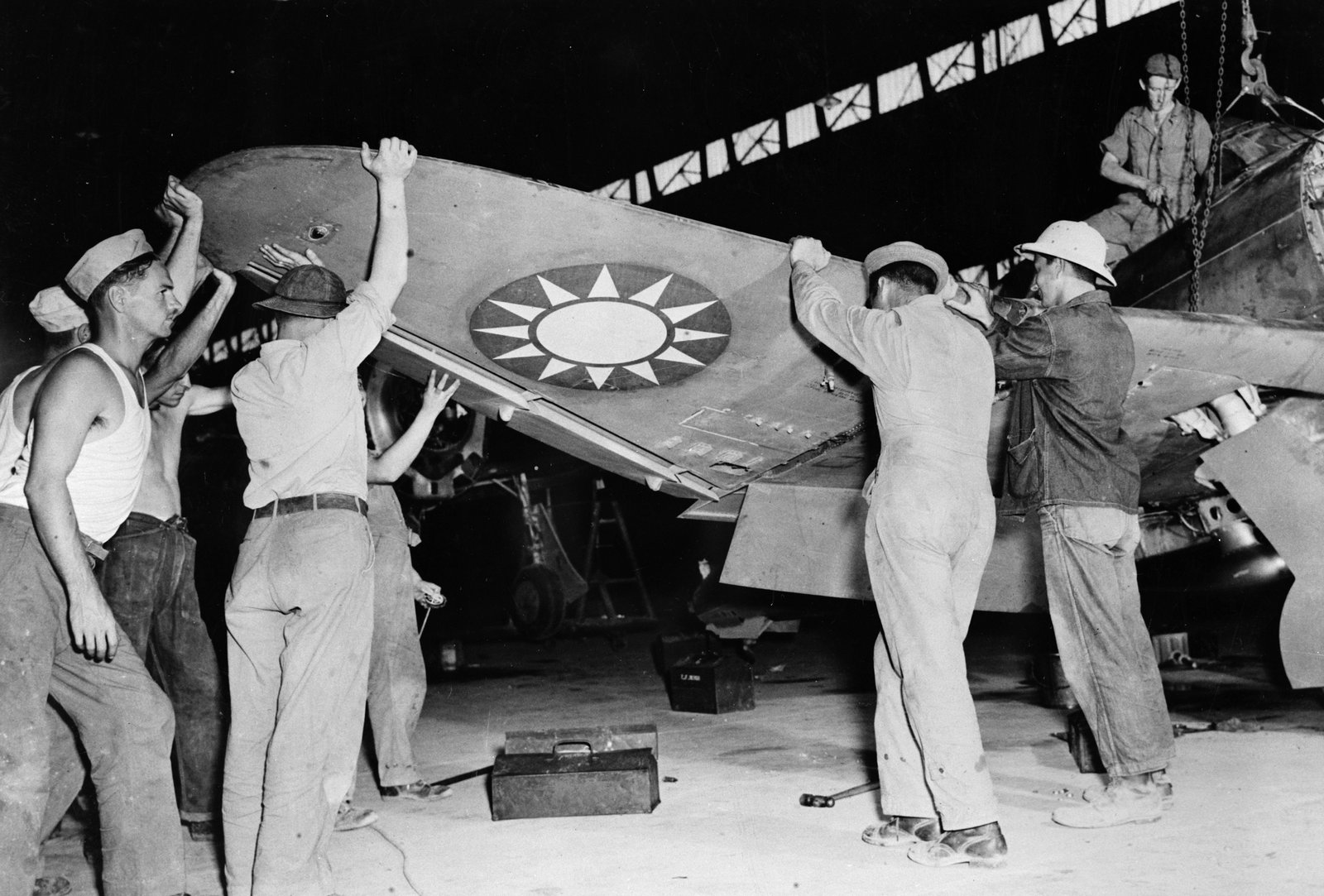
Produced between 1940 and 1942, a total of 272 P-43 aircraft were completed. The first unit was delivered on May 16, 1941, with the final delivery to the United States Army occurring on August 28, 1941. While the aircraft served as a stopgap fighter and trainer for the U.S. Army Air Corps and Army Air Forces, additional units were delivered to China throughout 1942 and 1943.
Technically, the P-43 was notable for its high-altitude capabilities, powered by a turbocharged Pratt & Whitney R-1830 series piston radial engine. Depending on the specific variant, such as the P-43A-1, the aircraft utilized either the R-1830-47 or R-1830-57 engine, both capable of producing 1,200 hp. This turbo-supercharging allowed the Lancer to be competitive at high altitudes during its early development, though it was quickly surpassed by rapid wartime advancements. The P-43A-1 featured a wingspan of 10.97 meters, a length of 8.68 meters, and a height of 4.26 meters. Performance figures for the type include a maximum speed of up to 573 km/h, a service ceiling of 11,580 meters, and a rate of climb of 869 m/min.
In military service, the P-43 saw diverse roles. The Royal Australian Air Force employed P-43A-1 aircraft for photo reconnaissance starting in August 1942, conducting long-range missions in the Southwest Pacific. In China, 108 aircraft were delivered, some of which were operated by the 24th Squadron, known as the "Chinese Lancers," where they engaged Japanese Ki-46 reconnaissance aircraft and Ki-48 bombers. In the United States, the 55th Pursuit Group based in Portland, Oregon, was among the operators. Armament varied by sub-type; while cowl-mounted .50-caliber guns were standard, wing-mounted guns ranged from 7.62 mm to 12.7 mm depending on the source and variant.
Ultimately, the P-43 is remembered as a critical developmental link that provided the Republic Aviation Corporation with essential experience in high-altitude interception and turbo-supercharging. No surviving airframes are confirmed to exist today, as most were scrapped following the war.