
Service History
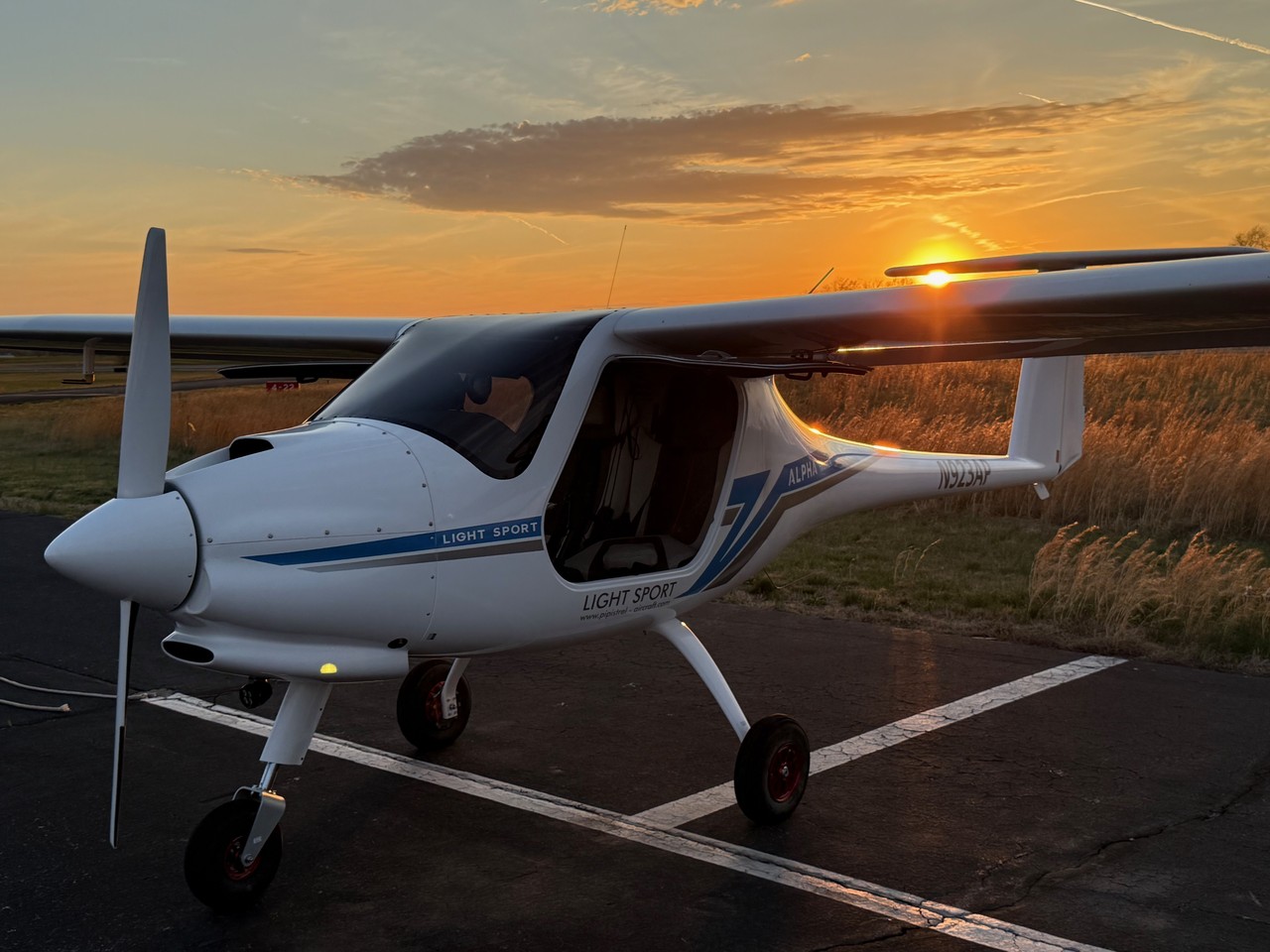
The Alpha Trainer carved out a dominant position in the light sport aircraft training market by addressing a critical need for affordable flight instruction. Priced initially at $85,000, the aircraft cost significantly less than traditional training aircraft while maintaining professional capabilities. Flight schools worldwide adopted the type for primary training operations, attracted by its combination of low operating costs and standard safety equipment including a full airframe emergency recovery parachute system.
Military training programs also embraced Pipistrel designs, with India becoming the largest military operator. The Indian Armed Forces acquired 194 trainers based on the closely related Virus SW 80 design, designated "Garud" after a divine bird in Hindu mythology. The Indian Air Force received 72 aircraft, the Indian Navy 12, and the National Cadet Corps 110, with deliveries spanning from 2016 to 2019.
The Manufacturer
Pipistrel emerged from humble beginnings in Slovenia, formally established in 1992 though its origins trace to 1987 when founder Ivo Boscarol received official authorization to produce aircraft. The company began with ultralight trikes, manufacturing the "Basic" model in 1989 followed by the "Plus" in 1990. Under Boscarol's leadership as "Brainstormer In Chief," Pipistrel evolved from a small ultralight manufacturer into a respected developer of innovative aircraft designs.
The Slovenian company established manufacturing operations in Gorizia, Italy, where Alpha Trainer production commenced in May 2012. Pipistrel's total aircraft production across all models reached at least 598 units, with the Alpha Trainer representing a significant portion of this output. The company remains active today, pioneering electric aircraft technology alongside conventional designs.
Engine & Technical Details
The Alpha Trainer employs a single Rotax 912 UL four-cylinder, horizontally opposed, four-stroke engine producing 80 horsepower. This Austrian-manufactured powerplant became Pipistrel's standard choice after Rotax discontinued two-stroke engine production. The engine drives a two-blade variable-pitch feathering propeller manufactured by Pipistrel itself.
Design innovations focused on simplifying manufacturing and maintenance compared to the Virus airframe from which it derived. Engineers adopted single-skin laminate composite construction rather than the more complex honeycomb layup, reducing production costs while maintaining structural integrity. The landing gear received reinforcement specifically for training operations, acknowledging the demanding nature of student pilot operations.
Cockpit design emphasized practicality over sophistication, featuring traditional round-dial flight instruments and GPS navigation rather than expensive glass cockpit systems. A central brake lever positioned between seats replaced differential brakes, simplifying ground handling procedures. The flaperons incorporated 25 degrees of flap travel, enabling easy short-field operations crucial for training environments.
Pilot Perspective
Pilots appreciate the Alpha Trainer's forgiving handling characteristics and straightforward systems, making it ideal for primary instruction. The high-wing configuration provides inherent stability, while the tricycle landing gear simplifies ground operations for student pilots. With a fuel capacity of 50 liters (13 US gallons), the aircraft offers sufficient endurance for typical training flights while maintaining low fuel costs.
The side-by-side seating arrangement facilitates effective communication between instructor and student, superior to tandem configurations for training purposes. Modern examples, such as 2023 production aircraft, feature contemporary Garmin G3X Touch avionics with autopilot capability, bridging traditional training with modern technology exposure.
Electric Innovation and Legacy
Pipistrel pioneered electric training aircraft with the Alpha Electro variant, which entered production in 2015. The electric version first flew in 2014 as part of the European Union's "WattsUp" project advancing electric propulsion for light aircraft. Using the proven Alpha Trainer airframe, the electric variant incorporates a Siemens motor and inverter with Pipistrel-developed batteries and avionics, providing approximately one hour of flight endurance.
The Alpha Trainer's legacy extends beyond conventional training, demonstrating successful adaptation to emerging technologies. The aircraft established Pipistrel as a significant player in the light sport aircraft market, proving that innovative design and cost-conscious engineering could create viable alternatives to traditional training aircraft. Production continues today, with the Alpha Trainer serving flight schools and private operators worldwide while pioneering the transition to electric flight training.