
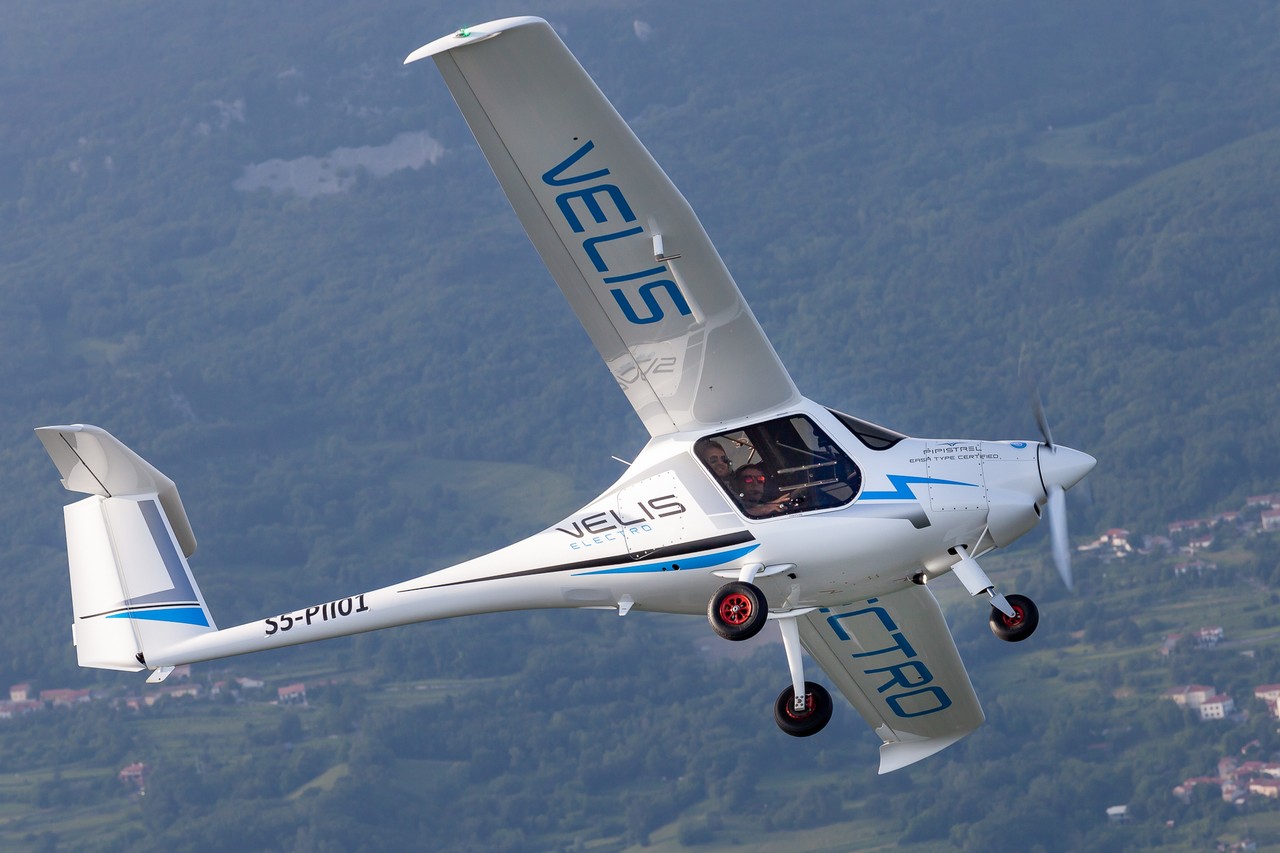
Revolutionary Electric Aviation
The Velis Electro achieved what many considered impossible when it received EASA type certification on May 18, 2020, becoming the first fully electric aircraft to meet international airworthiness standards. This breakthrough opened the door for sustainable aviation training, with flight schools across Europe embracing zero-emission pilot instruction. By March 2024, exactly 100 aircraft had rolled off the production line at Pipistrel's Ajdovščina facility, with deliveries spanning more than 30 countries.
Service in Flight Training
Flight schools rapidly adopted the Velis Electro for its economic advantages and environmental benefits. AlpinAirPlanes GmbH of Switzerland became an early adopter, operating up to 12 units across 10 locations by 2021, complete with solar charging infrastructure. Green Aerolease in France placed a substantial 50-unit order in January 2021, leasing aircraft to training schools through the French Flying Association. Similarly, Green Airside in the United Kingdom ordered 50 units in October 2021 for rental to flight training organizations.
The aircraft's operational economics proved compelling for training operations. With charging costs dramatically lower than aviation fuel, schools could reduce per-hour operating expenses while meeting increasing environmental regulations. The first commercial delivery occurred on July 16, 2020, to a Swiss customer, launching the electric training revolution.
Record-Setting Performance
Swiss aviation enthusiasts demonstrated the aircraft's capabilities in August and September 2020, establishing multiple efficiency and endurance records. They achieved the lowest energy consumption at 22.76 kWh per 100 kilometers, while setting speed records of 136 km/h over 100 kilometers and 125 km/h over 700 kilometers. Distance records included 327 kilometers in 24 hours, 608 kilometers in 48 hours, and an impressive 839 kilometers in 56 hours, proving electric aircraft could handle extended cross-country flights with proper charging infrastructure.
Pipistrel's Electric Pioneer Heritage
Pipistrel began electric propulsion research in 2000, two decades before the Velis Electro's certification. The Slovenian company, founded in 1989 as a powered hang glider manufacturer, evolved into a composite aircraft specialist during the 1990s. Key milestones included the 2007 Taurus Electro announcement and the 2011 NASA Green Flight Challenge victory with the Taurus G4, which validated the company's electric aviation expertise.
The Alpha Electro, introduced around 2014, served as the direct predecessor to the Velis Electro, providing crucial development experience for the world's first certified electric trainer. Textron Inc. acquired Pipistrel in 2022, integrating the company into Textron eAviation alongside Bell's Nexus eVTOL program, ensuring continued innovation in electric flight.
Advanced Electric Powertrain
The heart of the Velis Electro is the Pipistrel E-811-268MVLC liquid-cooled electric motor, developed in collaboration with Slovenian firms Emrax and Emsiso. This powerplant received EASA type certification EASA.E.234, becoming the first certified electric aircraft engine. The motor produces 57.6 kW (77 horsepower) at 2,500 rpm for 90-second takeoff power and 49.2 kW (66 horsepower) at 2,350 rpm for continuous operation.
A three-bladed fixed-pitch composite Pipistrel P-812/164-F3A propeller, measuring 1.640 meters in diameter, efficiently converts electric power to thrust. The 345-volt DC electrical system incorporates dual battery packs with liquid cooling and onboard charging capability, requiring just 1 hour and 20 minutes for a complete charge cycle.
Pilot Experience and Performance
Pilots praised the Velis Electro's intuitive operation and whisper-quiet performance. The aircraft cruises at 88 knots true airspeed with a useful load of 380 pounds, accommodating an instructor and student for training flights. The 50-minute endurance provides adequate time for pattern work, local area training, and short cross-country instruction flights.
The simplified electric powerplant eliminated complex engine management procedures, allowing student pilots to focus on fundamental flying skills rather than mixture, propeller, and carburetor heat controls. Maintenance requirements dropped significantly compared to conventional piston engines, reducing training costs and aircraft downtime.
Production Legacy and Future Impact
Production at Pipistrel's Ajdovščina, Slovenia facility reached the 100-unit milestone on March 7, 2024, when serial number 100 was delivered to Green Aerolease. The company originally planned 31 deliveries in 2020, but strong demand from flight training organizations worldwide accelerated production schedules. By early 2024, more than 85 aircraft were actively serving training fleets across Europe and beyond.
The Velis Electro's certification success influenced broader electric aviation development, establishing regulatory pathways for future electric aircraft. Its operational proving in flight training demonstrated the viability of electric propulsion for commercial aviation applications, contributing to Textron's expanding eAviation portfolio and inspiring competing manufacturers to pursue electric aircraft certification.