
Service History
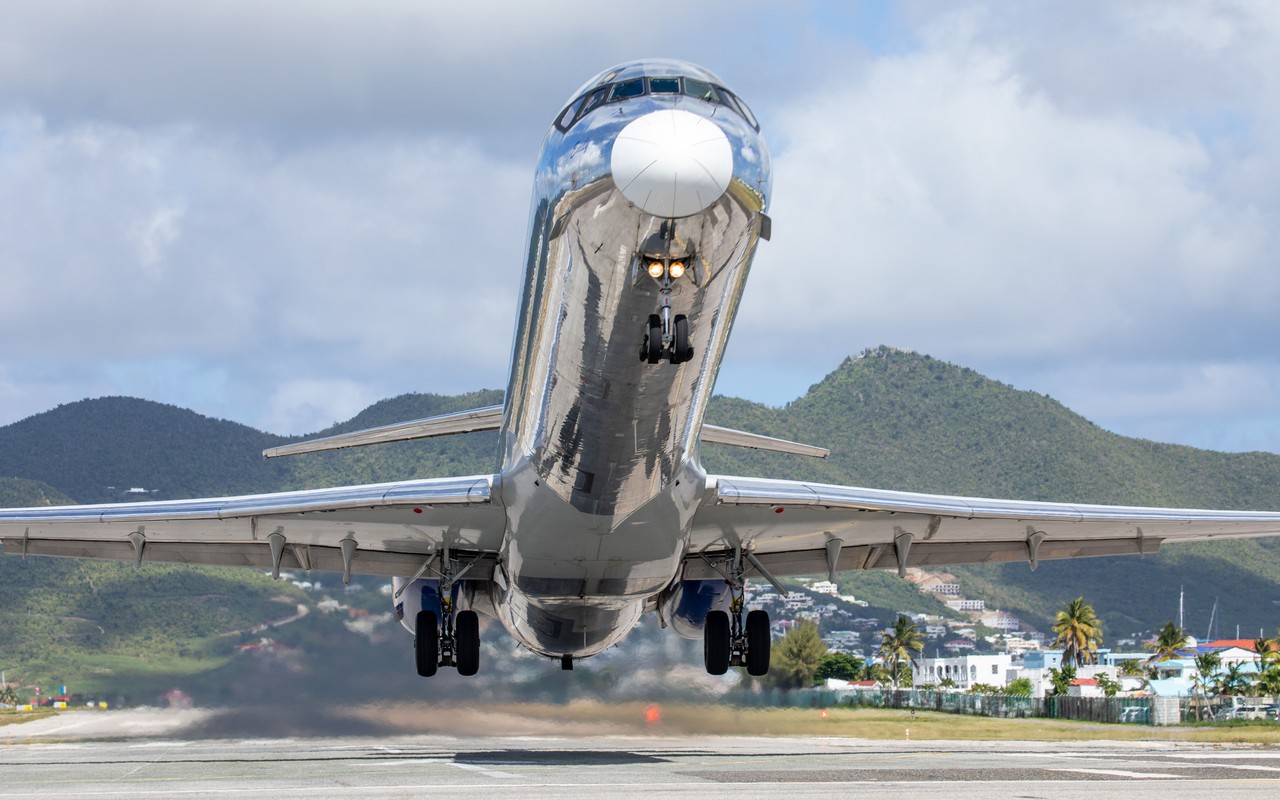
The MD-83 dominated short-to-medium haul commercial aviation in the United States during its operational heyday. Alaska Airlines launched revenue service in February 1985, becoming the type's first commercial operator. The aircraft's enhanced fuel capacity made it particularly valuable for carriers operating longer domestic routes, distinguishing it from earlier MD-80 variants that were optimized for shorter segments.
Trans World Airlines emerged as one of the type's most significant operators, ultimately receiving the final production MD-83 on December 28, 1999. Registered as N984TW and christened "Spirit of Long Beach," this aircraft marked the end of an era in American commercial aviation manufacturing. The MD-83's 172-seat configuration proved ideal for high-density domestic routes, allowing airlines to maximize passenger loads on popular city pairs.
The Manufacturer
McDonnell Douglas originated from the 1967 merger of the McDonnell Aircraft Corporation and Douglas Aircraft Company, combining military aviation expertise with commercial transport heritage. The company manufactured the MD-80 series at their Long Beach, California facility, a site that had produced commercial aircraft since the Douglas DC-8 era. Production transitioned to Boeing Commercial Airplanes in August 1997, two years before Boeing's complete acquisition of McDonnell Douglas in 1997.
The MD-83 represented McDonnell Douglas's attempt to modernize the successful DC-9 formula for the deregulated airline environment of the 1980s. However, intense competition from Boeing's 737 series and the Airbus A320 family ultimately limited the type's market penetration. McDonnell Douglas ceased to exist as an independent entity following Boeing's acquisition, marking the end of one of America's pioneering aerospace manufacturers.
Engine & Technical Details
Two Pratt & Whitney JT8D-219 turbofan engines powered the MD-83, each producing 21,000 pounds of thrust. These engines represented the most powerful variant of the JT8D series, providing the additional power necessary for the MD-83's increased maximum takeoff weight and extended range capability. The powerplant selection maintained commonality with other MD-80 variants while delivering enhanced performance.
The aircraft required a flight crew of two pilots, reflecting the advanced automation standards of mid-1980s commercial aviation. The MD-83's systems incorporated improvements over earlier DC-9 derivatives, including updated avionics and flight management systems that reduced pilot workload during complex operations.
Design Evolution
Engineers developed the MD-83 as a stretched derivative of the original Douglas DC-9, incorporating lessons learned from the entire MD-80 family development program. The January 31, 1983 launch announcement positioned the aircraft as McDonnell Douglas's answer to market demands for increased range without sacrificing the MD-80's operational efficiency.
The prototype's December 17, 1984 maiden flight validated the design's performance parameters, leading directly to Alaska Airlines' February 1985 service introduction. This rapid development timeline reflected McDonnell Douglas's expertise in DC-9 derivatives, accumulated through decades of continuous improvement programs.
Pilot Perspective
Pilots appreciated the MD-83's straightforward handling characteristics and reliable performance, though the aircraft earned the nickname "Mad Dog" due to the distinctive noise signature of its JT8D engines during takeoff operations. The type's conventional flight controls and systems provided a direct connection between pilot inputs and aircraft response, contrasting with the fly-by-wire systems beginning to appear on competing designs.
The aircraft's performance envelope made it particularly suitable for operations from shorter runways, a capability that proved valuable for airlines serving secondary airports. Its service ceiling and cruise performance delivered competitive economics on routes up to 2,000 nautical miles, filling a crucial niche in airline fleet planning.
Production & Legacy
McDonnell Douglas manufactured MD-83s from 1985 through 1999, contributing to the total production of 1,191 aircraft across all MD-80 variants. The type's production span encompassed significant changes in the commercial aviation industry, including airline deregulation's maturation and increased competition from newer, more fuel-efficient designs.
Today, MD-83s continue operating with various carriers worldwide, though their numbers have declined significantly due to noise regulations and fuel efficiency considerations. The type's robust construction and reliable systems have enabled many examples to achieve service lives exceeding three decades. Several preserved examples exist in aviation museums, commemorating the MD-80 family's contribution to commercial aviation development.
The MD-83's legacy extends beyond its operational history, representing the final chapter of McDonnell Douglas's commercial aircraft manufacturing capability. Its service record demonstrated the continued viability of traditional aircraft design approaches even as the industry moved toward more advanced technologies and manufacturing techniques.