
The Retrofit Revolution
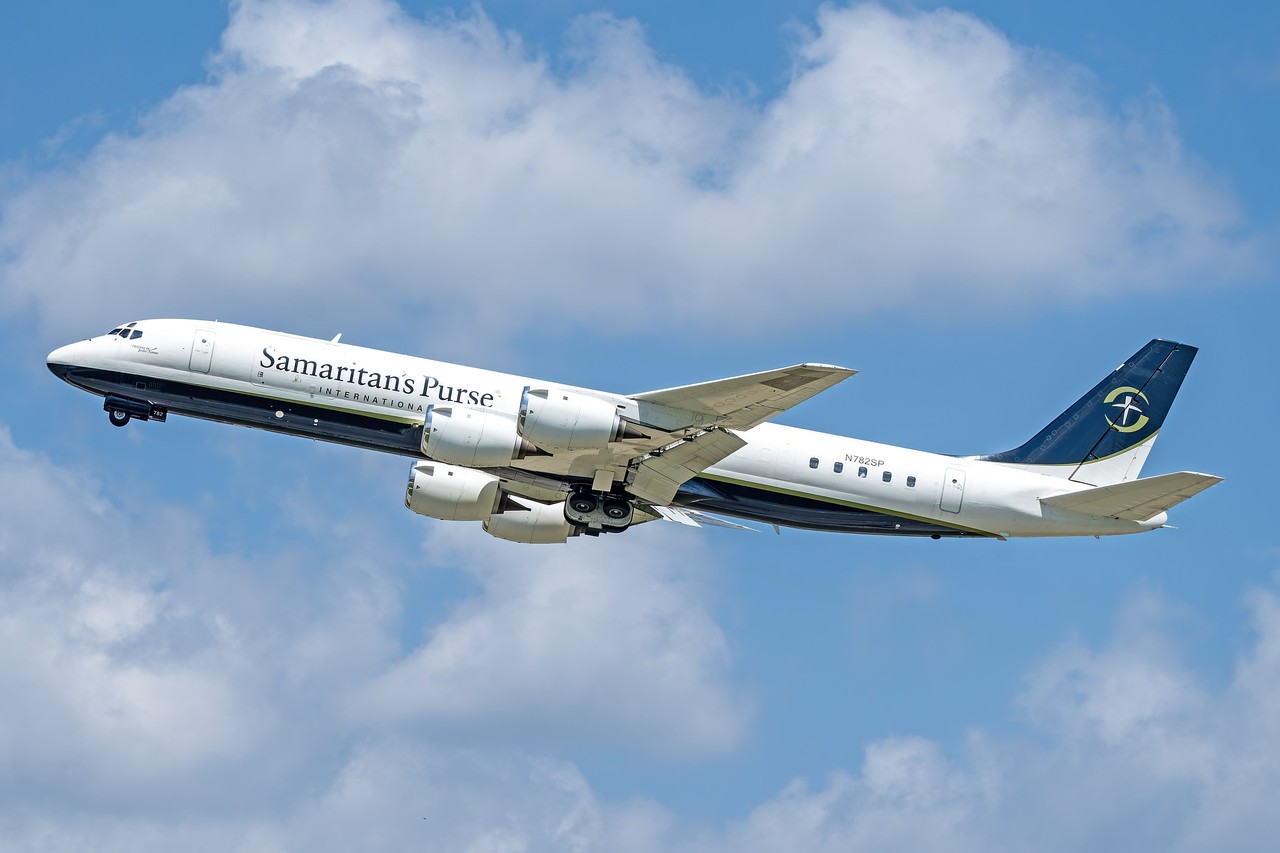
The DC-8-70 series emerged from necessity rather than ambition. By the mid-1970s, airlines faced increasingly stringent noise regulations and soaring fuel costs that threatened to ground their existing DC-8 fleets. Rather than abandon these capable aircraft, McDonnell Douglas partnered with Cammacorp, Grumman Aerospace, and CFM International to create an unprecedented retrofit program that would breathe new life into aging jetliners.
Engineering Innovation
The heart of the DC-8-70 transformation lay in its powerplant replacement. Engineers removed the original turbojet engines and installed four CFM56-2 turbofans, manufactured by CFM International, a joint venture between General Electric and France's Snecma. These high-bypass engines delivered a seven percent improvement in range while meeting Stage 3 noise compliance requirements mandated by the 1977 US Congress regulations.
The conversion process proved complex and demanding. Aircraft were disassembled at facilities operated by McDonnell Douglas in Tulsa, along with Delta Air Lines, Air Canada, and UTA maintenance bases. Each retrofit required extensive structural modifications to accommodate the larger, more efficient engines while maintaining the aircraft's original flight characteristics.
Production and Timeline
Conversion work commenced in 1975, with the first DC-8-71 variant completing its maiden flight in August 1981. The program encompassed three primary variants: the DC-8-71, DC-8-72, and DC-8-73, all sharing the ICAO designation DC87. Unlike traditional aircraft production, no new airframes were manufactured; instead, all 110 conversions utilized existing DC-8 Super 60 series aircraft originally built between 1958 and 1972.
The retrofit program concluded between 1986 and 1988, having successfully transformed nearly twenty percent of the 556 total DC-8 aircraft produced at Douglas's Long Beach facility. Seven airlines had placed initial orders for 78 conversions by May 1979, demonstrating strong industry confidence in the program's viability.
The Douglas Legacy
The DC-8-70 series represented the final chapter in a distinguished lineage that began with Donald Douglas Sr.'s vision in the 1950s. The original DC-8 program emerged from Douglas Aircraft Company's unsuccessful bid for a USAF tanker contract in May 1954, which ultimately went to Boeing's KC-135 design. Undeterred, Douglas redirected their four-engine jetliner concept toward commercial aviation.
Test pilot A.G. Heimerdinger commanded the first DC-8 prototype flight on May 30, 1958, from Long Beach Airport. The two-hour, seven-minute inaugural flight launched Douglas into the jet age, though the company would face fierce competition from Boeing's 707, which ultimately achieved 865 total sales compared to the DC-8's 556 aircraft.
Commercial Operations
The DC-8-70 series attracted operators seeking to extend their aircraft's operational lives while meeting evolving regulatory requirements. Airlines including Delta Air Lines, United Airlines, Pan Am, SAS, Air Canada, and UTA incorporated the re-engined aircraft into their fleets. The improved fuel efficiency enabled extended routes such as SAS's Copenhagen-Los Angeles service, previously challenging for earlier DC-8 variants.
Most DC-8-70 aircraft transitioned from passenger service during the 1980s and 1990s, finding new purpose as freight haulers. The type's substantial cargo capacity and improved economics made it particularly valuable for dedicated freighter operations, extending operational lives well into the 2010s.
Technical Specifications
The DC-8-70 series maintained the stretched dimensions of its Super 60 predecessors, measuring approximately 187 feet in length with a 142-foot wingspan and 42-foot height. Maximum operating speed reached Mach 0.82, with a service ceiling exceeding 41,000 feet. The CFM56-2 engines, part of a turbofan family that would eventually exceed 30,000 total production units across all variants, provided the reliability and efficiency necessary for extended commercial operations.
Flight crews of three operated the aircraft, managing systems largely unchanged from earlier DC-8 variants despite the powerplant modifications. This commonality simplified training requirements and maintenance procedures for airlines already operating DC-8 equipment.
Enduring Legacy
The DC-8-70 retrofit program demonstrated the viability of comprehensive aircraft modernization decades before such practices became commonplace. While most examples have retired from active service, several re-engined DC-8 freighters continued flying into the 2010s, testament to the program's engineering success.
The series holds particular significance as the final evolution of Douglas's pioneering jetliner design, bridging the gap between the dawn of commercial jet aviation and modern efficiency standards. Though McDonnell Douglas itself ceased to exist following its 1997 acquisition by Boeing, the DC-8-70 program remains a remarkable example of innovative thinking applied to extending aircraft operational lives.