
Service History
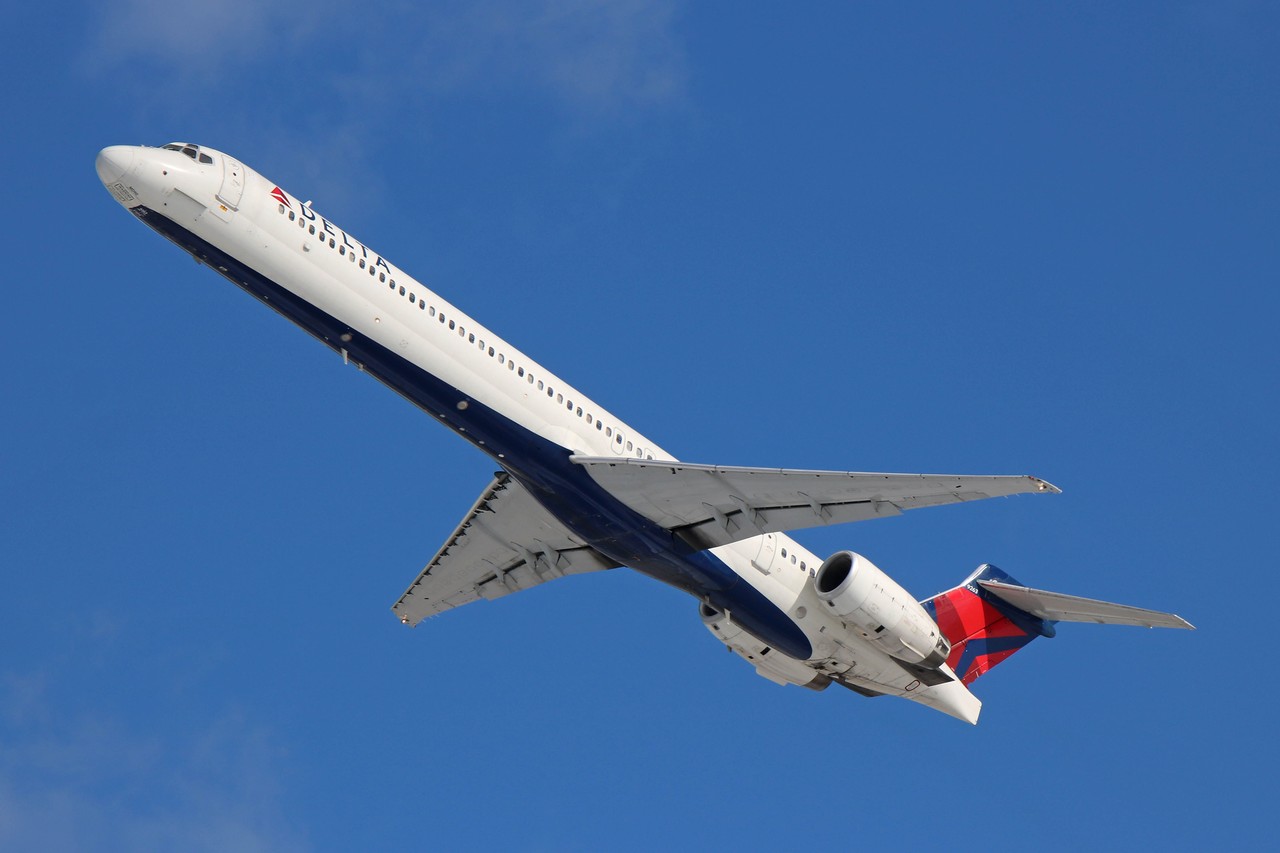
The MD-90 achieved only limited commercial success despite its advanced design, with Delta Air Lines dominating operations by purchasing the overwhelming majority of the 116 aircraft produced. Delta initially ordered 50 MD-90s with options for 110 additional aircraft on November 14, 1989, launching the program with high expectations. The airline later expanded its fleet by acquiring second-hand MD-90s from carriers including China Eastern Airlines, SAS, and China Southern. Other notable operators included Saudia, Japan Airlines, and UNI Air, though their fleets remained small compared to Delta's substantial commitment.
Delta deployed the MD-90 on high-demand routes throughout its network, particularly from Atlanta to major hubs across the Midwest and East Coast. The aircraft's impressive performance at hot and high-altitude airports provided operational flexibility for both short-haul and longer routes across North America. Delta estimated annual fuel savings of hundreds of thousands of gallons per aircraft compared to the MD-88, demonstrating the type's improved efficiency.
The Manufacturer
McDonnell Douglas launched the MD-90 program during a period of intense competition in the narrow-body market, building on decades of success with the DC-9 family that began in the 1960s. The company manufactured the aircraft at its Long Beach Airport facility in California, continuing a tradition of commercial aircraft production that had made McDonnell Douglas a major player in aviation. An ambitious Trunkliner program initially planned for 40 MD-90s to be assembled in Shanghai by Shanghai Aircraft, though this was later reduced to 20 and only two were actually completed.
The aviation landscape changed dramatically in August 1997 when McDonnell Douglas merged with Boeing. Boeing Commercial Airplanes continued MD-90 production until 2000, but the merger effectively sealed the aircraft's fate as Boeing focused resources on its own 737 Next Generation family. This corporate consolidation marked the end of the McDonnell Douglas commercial aviation legacy that had produced iconic aircraft from the DC-3 through the MD-11.
Engine & Technical Details
The MD-90 marked a significant technological leap as the first DC-9 family derivative powered by high-bypass turbofan engines, specifically the IAE V2525-D5 with an option to upgrade to the more powerful V2528. These International Aero Engines powerplants represented a departure from the low-bypass engines used on earlier DC-9 variants, delivering substantially improved fuel efficiency and dramatically reduced noise levels. The aircraft earned recognition as "one of the quietest aircraft ever built" in its class when it entered service in 1995.
Engineering challenges arose from the heavier turbofan engines, requiring innovative solutions including specially designed engine pylons equipped with flaps that deflect 30 degrees downward during stall recovery. These flaps activate automatically when the control column is pushed fully forward, assisting in pitch-down moments necessary for safe stall recovery with the changed weight distribution.
The aircraft featured a modern glass cockpit with electronic flight instrument systems, representing a significant advancement over the analog instrumentation of earlier DC-9 family members. This digital cockpit reduced crew workload and improved situational awareness while maintaining the two-pilot configuration that had made the DC-9 family economically attractive to airlines.
Production & Legacy
Production ran from 1993 to 2000, yielding only 116 aircraft against initial projections for much higher numbers. The MD-90 entered commercial service on April 2, 1995, with Delta operating the inaugural flight between Dallas and Reno. Despite its technical merits, the aircraft faced formidable competition from the Airbus A320 family and Boeing's 737 Next Generation series, both of which offered airlines more comprehensive product families and stronger manufacturer support.
The MD-90's market failure stemmed partly from timing, arriving during a period when airlines increasingly preferred aircraft families that offered multiple variants for fleet commonality. While passengers appreciated the MD-90's exceptionally quiet cabin and comfortable ride quality, airlines found greater value in the competing Boeing and Airbus offerings that provided better economies of scale and more extensive route networks.
By the early 2020s, all MD-90s had been retired from commercial service, making the type increasingly rare at airports worldwide. The aircraft's brief service life of approximately 25 years contrasted sharply with its DC-9 predecessors, many of which operated for decades. Today, the MD-90 represents a fascinating footnote in aviation history—a technically advanced aircraft that arrived too late to establish a market foothold against entrenched competition, marking the end of McDonnell Douglas's commercial aviation ambitions.