
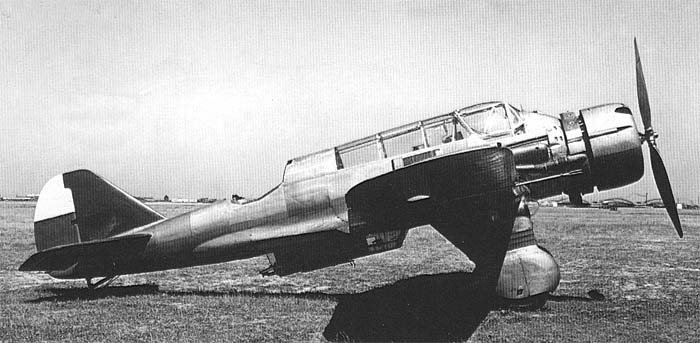
Development and Design Philosophy
The PZL-102 Kos emerged from Poland's determination to rebuild its aviation industry following World War II devastation. PZL-OKECIE, the successor to the prestigious pre-war PZL company that had produced world-class fighters like the P.11 and P.24, embarked on developing a modern light aircraft suitable for both flight training and recreational flying. Test pilot Mieczysław Miłosz took the prototype aloft for its maiden flight on May 21, 1958, marking a significant milestone in Polish aviation recovery.
The aircraft's name "Kos," meaning blackbird in Polish, reflected its sleek all-metal construction and graceful flight characteristics. Engineers designed it as a semi-aerobatic machine capable of basic maneuvers while maintaining docile handling for student pilots. The low-wing cantilever configuration provided excellent performance characteristics, while the enclosed cockpit with side-by-side seating arrangement facilitated effective instruction.
Technical Innovation and Powerplant Evolution
The original prototype featured Poland's own Narkiewicz WN-1 flat-four engine producing 65 horsepower, representing an attempt at complete domestic production. However, reliability concerns and performance limitations led designers to specify the American Continental C90-12F engine for the production variant. This 95-horsepower, four-cylinder, horizontally-opposed powerplant provided superior reliability and performance, driving a two-bladed fixed-pitch wooden propeller measuring 5 feet 11 inches in diameter.
The production PZL-102B, which first flew in October 1959, incorporated significant improvements including revised wing construction and the more powerful Continental engine. These modifications enhanced the aircraft's performance envelope, achieving a maximum speed of 120 mph, cruise speed of 108 mph, and service ceiling of 12,500 feet. The aircraft's fuel capacity of 19.8 US gallons provided a range of 400 miles at economical cruise settings.
Production Challenges and International Sales
Despite its sound design and pleasant flying characteristics, the PZL-102 faced significant production obstacles. The decision to use imported Continental engines created supply chain vulnerabilities and increased costs substantially. Currency restrictions and import complexities in communist Poland made engine procurement challenging, ultimately limiting production to moderate numbers before the program ended in 1964.
Seven aircraft found homes in international markets, demonstrating the type's export potential despite production constraints. Austrian operators discovered the aircraft's versatility by adapting it for agricultural spraying operations, installing chemical tanks in the passenger seat position. This agricultural application showcased the design's flexibility beyond its intended training and touring roles.
Operational Achievements
The PZL-102's capabilities gained international attention through Antoni Szymański's remarkable demonstration flight between May 13 and June 8, 1960. Covering 9,000 kilometers, his route took him from Warsaw through Vienna, Geneva, Reims, London, Luxembourg, and Berlin before returning to Poland. This ambitious journey proved the aircraft's reliability and range capabilities while promoting Polish aviation technology across Western Europe.
Operators in six countries including Poland, Austria, Brazil, Finland, Lebanon, and South Africa validated the design's international appeal. The diverse geographic and climatic conditions these aircraft encountered, from European winters to African heat, demonstrated robust construction and adaptable performance characteristics.
Manufacturing Heritage
PZL-OKECIE carried forward the legacy of the original Państwowe Zakłady Lotnicze (State Aviation Works), established in 1928 as Poland's premier aerospace manufacturer. The original PZL had earned international recognition for innovative fighter designs and advanced manufacturing techniques before wartime destruction ended operations. The post-war revival represented not merely industrial reconstruction but restoration of Polish aeronautical expertise and national pride.
The company's decision to develop the Kos reflected confidence in Poland's ability to compete in international light aircraft markets. While the aircraft never achieved large-scale production success, it demonstrated technical competence and design sophistication that would inform future Polish aviation projects.
Legacy and Survivors
Today, the PZL-102 Kos exists primarily as a testament to Polish aviation resilience rather than widespread operational success. One aircraft has been restored to airworthy condition bearing registration SP-EFA, allowing modern pilots to experience this piece of aviation history. South Africa maintains another restored example at Jack Taylor Airfield in Krugersdorp, while Brazil preserves PT-BGP as part of that nation's aviation heritage.
These surviving aircraft represent more than mere museum pieces; they embody Poland's determination to reclaim its place in international aviation following wartime devastation. The Kos may not have achieved commercial success, but it demonstrated that Polish engineers retained their innovative spirit and technical capabilities despite decades of disruption. For aviation enthusiasts, the PZL-102 remains an intriguing example of post-war European light aircraft development and the challenges facing smaller manufacturers in an increasingly competitive global market.