
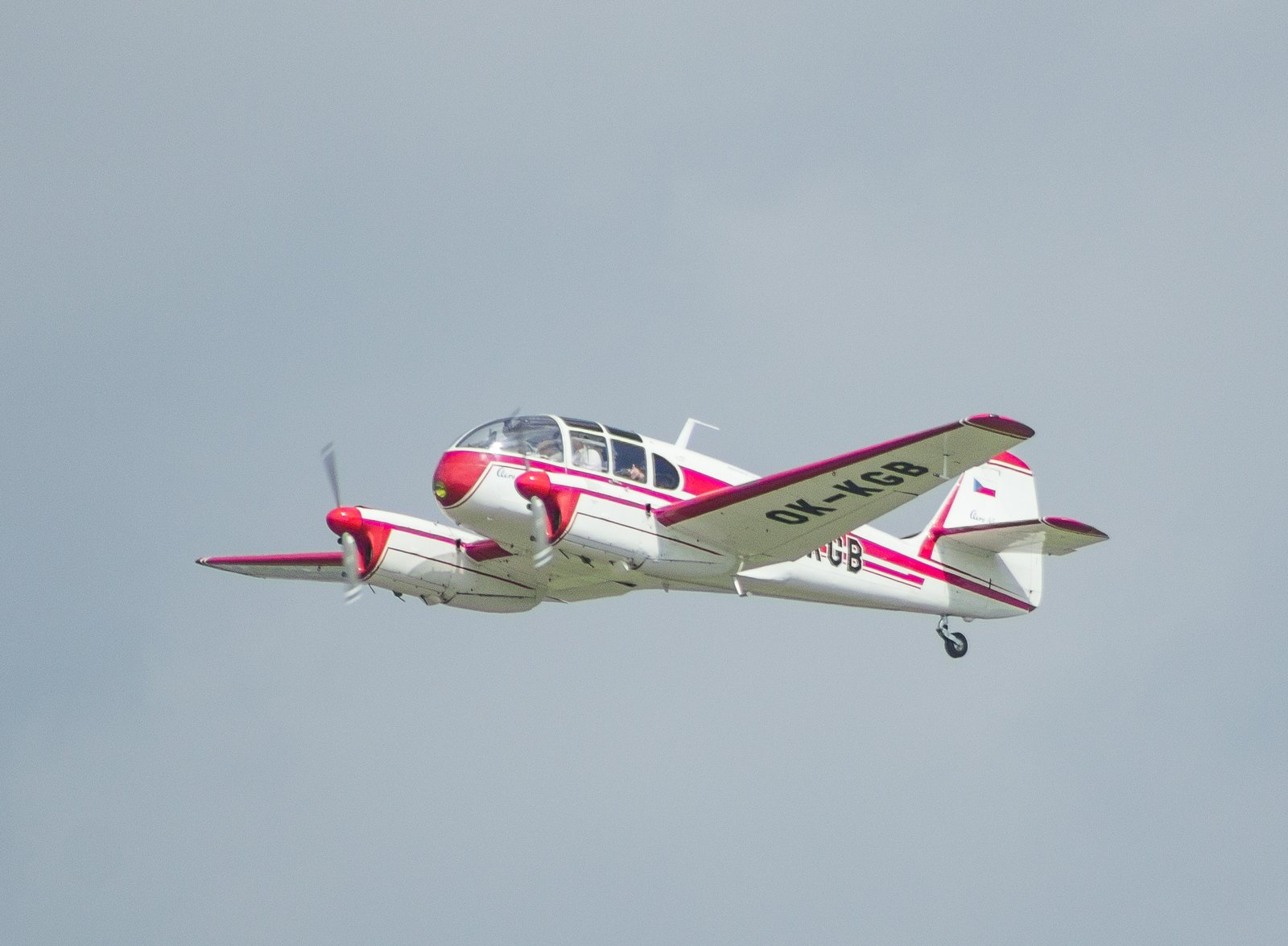
The Aero Ae 50 was a specialized reconnaissance and artillery-spotting aircraft developed by Aero Vodochody in Czechoslovakia. Emerging during the immediate post-World War II era, the aircraft was part of a broader effort by the newly nationalized Aero company to restore indigenous aviation design capabilities. This followed a period between 1938 and 1945 during which the company had been forced by German occupation to produce Luftwaffe designs, such as the Siebel Si 204 and Bücker Bü 131.
Designed as a single-engine monoplane, the Ae 50 was intended for observation and reconnaissance roles. The aircraft's development coincided with other early postwar projects, most notably the Ae-45 light twin-engine aircraft, which saw significant production between 1948 and 1951. The Ae 50 prototype first took to the air on 14 April 1949. While the aircraft was built as a new prototype cell, no specific lead designer or engineering team has been credited with its creation in available records.
Technical details regarding the Ae 50 are sparse due to its limited production. It is documented as a landplane, though specific dimensions, weights, and performance metrics such as maximum speed or service ceiling remain unknown. While the engine model and power output were not recorded, the aircraft was configured as a single-engine type. Given the regional aviation trends of the time, it likely utilized a piston engine, though this is not explicitly confirmed in the source documentation.
Despite its successful first flight, the Aero Ae 50 never progressed to series production. Only one airframe was completed, and it never entered operational service with the Czechoslovak Air Force or any other military entity. The lack of adoption may have been driven by the rapid evolution of military aviation in the late 1940s, as the industry shifted toward higher-performance aircraft and jet propulsion. Consequently, the Ae 50 left no operational legacy and no known examples survive in museums today. The company that produced it, now known as AERO Vodochody AEROSPACE a.s., eventually became world-renowned for its jet trainers, including the L-29 Delfín and L-39 Albatros.