
Design and Development
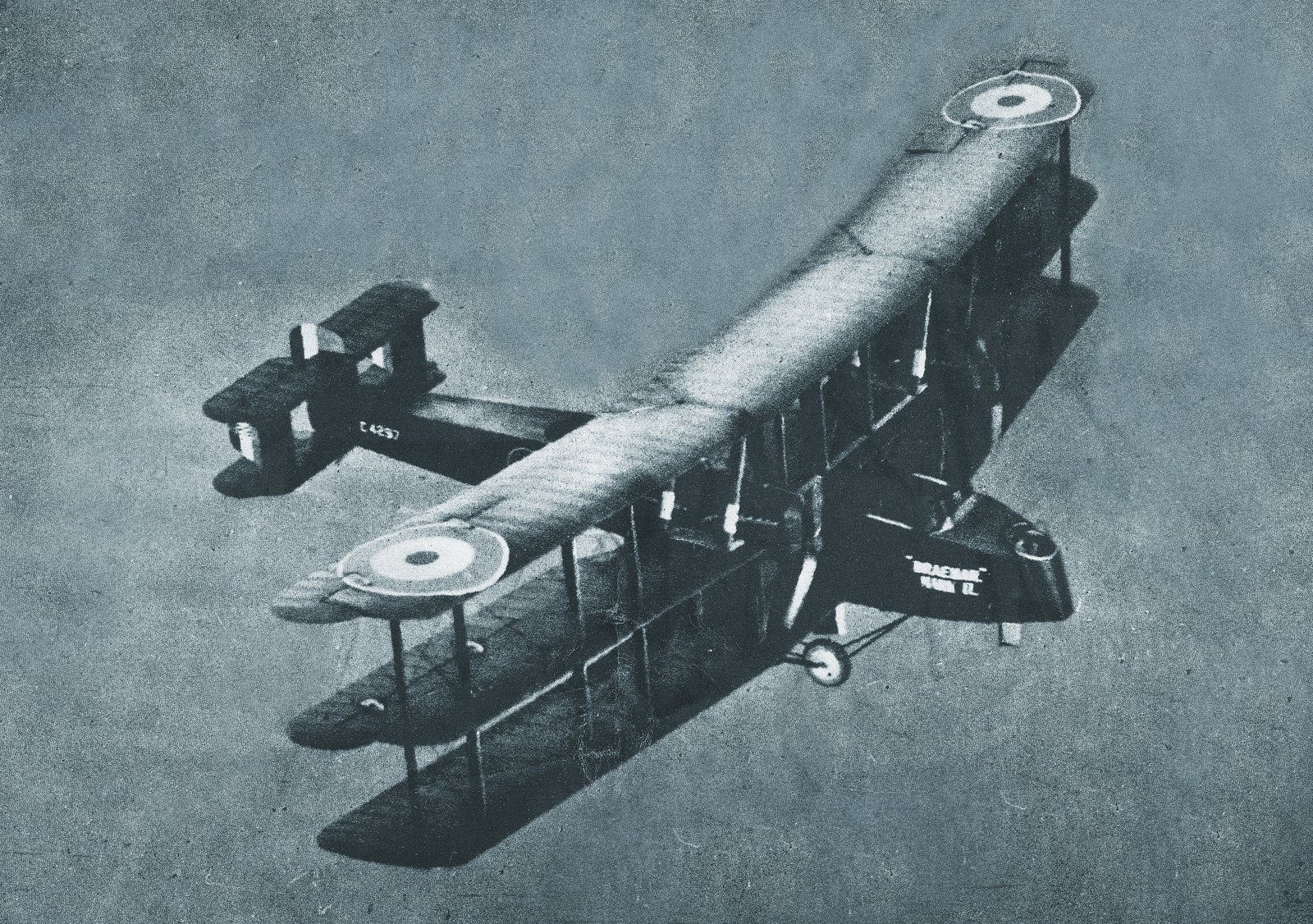
The Bristol Braemar was conceived as a strategic, very long-range heavy night bomber capable of attacking targets deep within Germany, including Berlin, from bases in Britain. Designed by Frank Sowter Barnwell, the company's chief designer who was also responsible for the F.2B Fighter and the Scout, the Braemar was an ambitious response to the "super-bomber" concepts of 1917–1918. The aircraft featured a distinctive three-bay triplane configuration and was one of the largest British bombers of the First World War era.
Technical Configuration
To support its massive size and weight, the Braemar utilized four piston engines. These were arranged in two paired nacelles positioned between the wings. While the specific engine models and power outputs were not recorded in the available documentation, the multi-engine layout was a significant departure from the more common two-engine bombers of the period. The aircraft was a landplane with a fixed undercarriage, designed for a multi-crew operation including a pilot, bombardier, and gunners.
Production and Prototypes
The aircraft was built by the Bristol Aeroplane Company at its main works in Filton, near Bristol, England. Production was limited strictly to experimental prototypes, with three aircraft completed in total. The first prototype, the Braemar Mk I (serial C4296), first flew in August 1918. This was followed by the Braemar Mk II, which first flew in February 1919 and incorporated various design refinements. A third aircraft, known as the Pullman, was a civil derivative designed as an airliner capable of transporting 14 passengers; it first flew in May 1920.
Service History and Legacy
Despite its potential, the Braemar never entered operational military service or series production. The first prototype flew only three months before the Armistice, and subsequent post-war cutbacks and shifting requirements led to the project's cancellation. While the Pullman explored the possibility of converting heavy bombers into commercial transports, there is no evidence it ever entered regular scheduled service. No examples of the Braemar or Pullman survive today; the aircraft is remembered only through archival photographs, drawings, and models. The project served as a critical stepping stone for Frank Barnwell and Bristol, facilitating the company's transition from wartime fighters to the larger bombers and airliners of the inter-war period.