
Design and Development
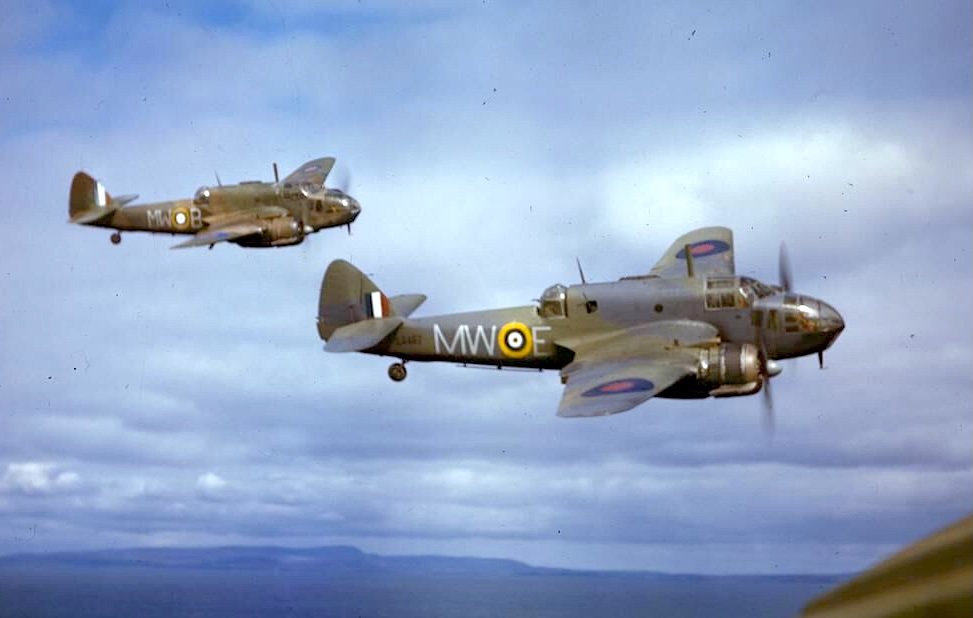
The Bristol Beaufort was developed by the Bristol Aeroplane Company to meet specific Air Ministry requirements for a versatile maritime aircraft. It holds a unique place in aviation history as the only monoplane produced for the Royal Air Force (RAF) that was designed from the outset to perform the dual roles of torpedo bombing and general reconnaissance. The aircraft featured an all-metal construction, a retractable undercarriage, and a power-operated gun turret to defend the crew of four. The prototype first took to the skies on 15 October 1938.
Production and Manufacturing
Initial production took place at the Bristol Aeroplane Company's facilities in Filton, Bristol, Somerset. The company, which had been operating since 1910 (originally as the British & Colonial Aeroplane Company), had a long history of supplying aircraft during both world wars. As the demand for maritime strike aircraft grew, production expanded to include manufacturing in Australia. A total of 1,380 Beauforts were built, with 700 of those units produced in Australia. The lineage of the Bristol aircraft business eventually became part of the modern aerospace entity BAE Systems.
Technical Specifications
The Beaufort was powered by two piston engines. While the Mk.I variant utilized different powerplants, the Mk.II was equipped with two 1,200 hp Pratt & Whitney Twin Wasp R-1830-S3C4G engines paired with Curtiss Electric propellers. These specifications provided the aircraft with the long range and exceptional manoeuvrability required for hazardous maritime operations.
Military Service
Entering service in November 1939 with No. 22 Squadron, the Beaufort became the standard torpedo bomber for RAF Coastal Command until 1943. Its operational history spanned the North Sea, the English Channel, and the Atlantic. Beyond torpedo attacks, the aircraft was utilized as a mine layer; starting in the spring of 1940, Beauforts deployed magnetic mines in enemy coastal waters, a mission that continued until mid-1943. By 1942, shifting strategic threats led to the deployment of all Beaufort squadrons to the Indian Ocean and the Mediterranean. In the Mediterranean, Malta-based aircraft achieved significant success attacking Axis shipping during the North African campaign. In the Pacific, the Royal Australian Air Force (RAAF) operated the type across 10 different squadrons, with the Beaufort flying the final wartime operation in New Guinea on 15 August 1945.