
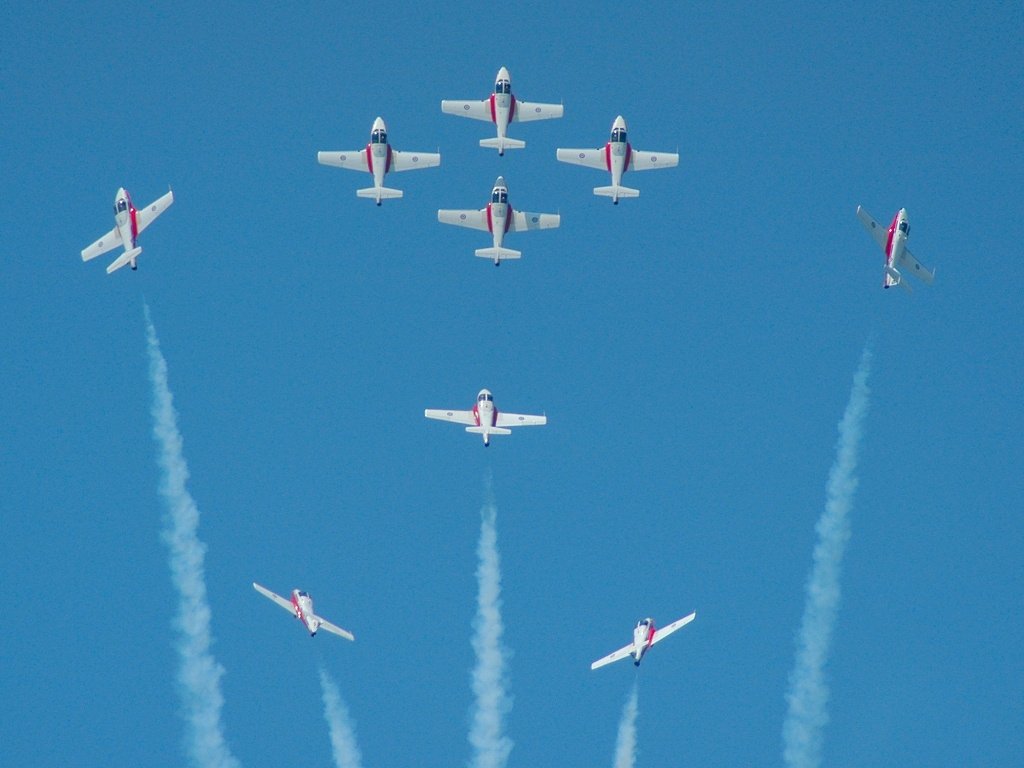
Service History
The CL-41 Tutor dominated Canadian military pilot training from the early 1960s until 2000, operating primarily from CFB Moose Jaw in Saskatchewan and CFB Cold Lake in Alberta. During its 40-year service life, the aircraft trained virtually every Canadian military jet pilot, establishing itself as the backbone of the Royal Canadian Air Force's and later Canadian Armed Forces' flight training programs. The type earned the affectionate nickname "Toot" among pilots and ground crews who worked with it daily.
International Operations
Beyond Canadian service, the Royal Malaysian Air Force operated a specialized variant designated CL-41G Tebuan from 1967 until its retirement in June 1986. Unlike the training-focused Canadian aircraft, the Malaysian Tebuans were configured for ground-attack missions, representing the only combat-capable version of the design. This export success demonstrated the aircraft's versatility beyond its primary training role.
The Manufacturer
Canadair developed the CL-41 as a private venture before 1960, recognizing the RCAF's need for a modern jet trainer to replace older aircraft. The company, which had established itself as a major Canadian aircraft manufacturer, took the financial risk of developing the aircraft without a guaranteed contract. This bold move paid off when the Canadian government selected the design for military service. Canadair was later acquired and integrated into what eventually became Bombardier Aerospace, though the original Canadair name no longer operates independently.
Design and Development
The prototype CL-41 took to the skies on January 13, 1960, marking the beginning of extensive flight testing and development. Canadair's engineering team focused on creating an efficient and reliable jet trainer that would provide pilots with a smooth transition to more advanced combat aircraft. The design emphasized safety and ease of handling, crucial characteristics for training inexperienced pilots in jet aircraft operations.
Production Variants
Canadair produced several distinct variants during the aircraft's production run. The initial prototypes carried registrations CF-LTW-X and CF-LTX-X, followed by the CL-41A production model, of which 190 were built and designated CT-114 Tutor in Canadian service. The CL-41G Tebuan variant was specifically developed for Malaysia's ground-attack requirements. Canadair also developed the CL-41R prototype as an electronic trainer featuring an F-104 Starfighter nose section, though this variant never entered production.
Upgrades and Modifications
In 1976, the Canadian military initiated a significant upgrade program affecting 113 of its CT-114 aircraft. This modernization included advanced avionics systems and provisions for two external fuel tanks, each carrying 41 US gallons. These modifications extended the aircraft's operational capabilities and ensured its continued relevance in the evolving training environment of the 1970s and beyond.
Operational Legacy
The CL-41 Tutor maintained an exemplary safety record throughout its training mission, though like all military aircraft, it experienced occasional accidents. Serial number 26018 was lost in a crash on October 22, 1992, representing one of the few documented losses during the aircraft's extensive service career. The type's reliability and forgiving flight characteristics made it an ideal platform for training new pilots in jet aircraft operations.
Current Status
When the Canadian military retired the CT-114 in 2000, approximately 25 aircraft remained in airworthy condition. The CT-155 Hawk and CT-156 Harvard II assumed the Tutor's training responsibilities, marking the end of an era in Canadian military aviation. Today, several examples are preserved in museums, including serial number 26001 at the CFB Trenton RCAF Memorial Museum, which received a complete repaint during the winter of 2003-2004. Other aircraft, such as serial 26025, remain in storage at locations like CFB Mountain View in Ontario as of November 2008, representing tangible links to Canada's aviation training heritage.