
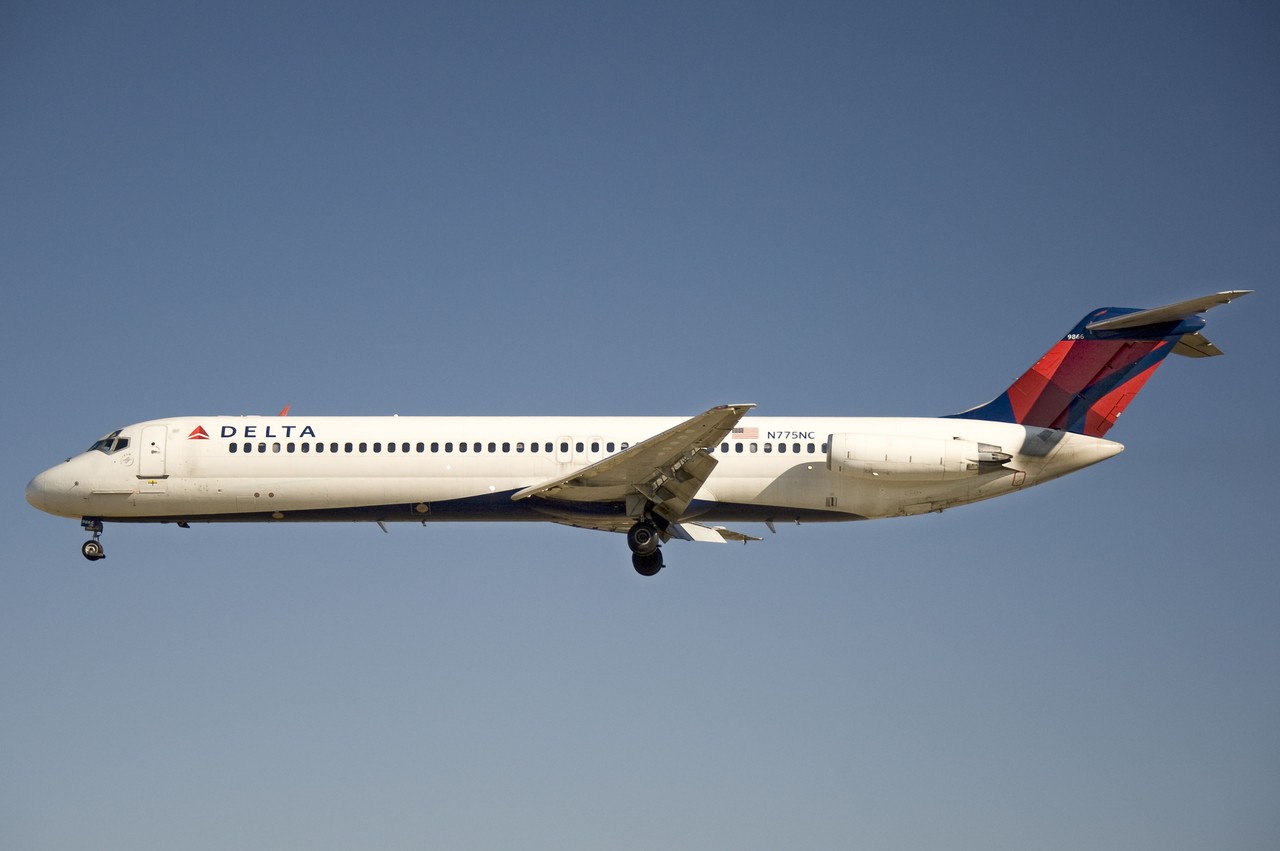
Commercial Service Launch
Eastern Air Lines inaugurated DC-9-50 passenger service in August 1975, configuring their aircraft for 139 passengers and establishing the type as a workhorse for medium-density routes. The aircraft filled a crucial gap in airline fleets, offering more capacity than the DC-9-40 while maintaining the short-runway performance that made the DC-9 family revolutionary. Delta Air Lines had pioneered DC-9 family operations on December 8, 1965, proving the viability of rear-engined jets for regional routes.
Manufacturing Legacy
McDonnell Douglas produced the DC-9-50 at their Long Beach, California assembly facility, where the entire DC-9 family took shape from 1965 through 1982. The aircraft emerged from the original Douglas Aircraft Company's design bureau, which had begun detailed development work in February 1963 following program approval on April 8, 1963. Douglas Aircraft, founded in 1920, merged with McDonnell Aircraft in 1967 to form McDonnell Douglas, which continued DC-9 production until Boeing acquired the company in 1997.
The DC-9-50's development represented Douglas's commitment to serving smaller airports that couldn't accommodate larger jets. Unlike Boeing's 727, which shared components with the 707, Douglas designed the DC-9 from scratch without reusing any DC-8 parts. This clean-sheet approach enabled optimized performance for short to medium-range routes while maintaining compatibility with 98 percent of American airports in 1965.
Technical Innovation
Powered by two rear-mounted Pratt & Whitney JT8D low-bypass turbofan engines, the DC-9-50 delivered enhanced performance compared to earlier DC-9 variants. The JT8D engines, mounted on either side of the rear fuselage, provided the additional thrust necessary to handle the stretched airframe's increased weight and passenger capacity. This rear-engine configuration, combined with the T-tail design, kept the wing clean of engine nacelles and allowed for shorter landing gear.
The fuselage stretch of eight feet over the DC-9-40 enabled airlines to carry 135 passengers while maintaining the operational flexibility that defined the DC-9 family. Extended wingtips, similar to those on the DC-9-30, improved fuel efficiency and handling characteristics. The aircraft's ability to operate from shorter runways opened jet service to communities previously served only by turboprops.
Production Challenges
Despite its technical merits, the DC-9-50 faced intense competition in the narrowbody market. Airlines increasingly favored the longer DC-9 variants and the emerging Boeing 737 family for their route networks. Production ended in 1982 after just 96 aircraft were delivered, making the DC-9-50 one of the rarer variants in the DC-9 family tree.
The limited production run reflected changing airline preferences and the success of the MD-80 series, which offered greater capacity and range. Airlines found the MD-80's additional stretch and improved engines more attractive for their expanding route networks, leading to the DC-9-50's relatively brief production life.
Operational Legacy
The DC-9-50 contributed to the broader success of the DC-9 family, which totaled 2,441 aircraft including derivatives through 2006. The type enabled airlines to introduce jet service on routes previously served by smaller aircraft, transforming regional aviation in the 1970s and 1980s. Its stretched configuration influenced subsequent McDonnell Douglas designs, particularly the MD-80 series that dominated short to medium-haul markets for decades.
Today, few DC-9-50s remain in active service, with most retired from passenger operations. The broader DC-9 family has largely transitioned to cargo and military roles, with approximately 16 original DC-9 aircraft still flying as of recent surveys. The first DC-9, bearing registration N9DC and serial number 45695, resides at North Texas Regional Airport in Sherman, Texas, where it has served as a parts source since 1992.
Historical Significance
The DC-9-50 represented the pinnacle of Douglas's original narrowbody design philosophy before the company fully embraced the longer, more powerful MD-80 concept. Test pilots George R. Jansen, Paul H. Patten, and flight test engineer Duncan Walker had first lifted the DC-9 prototype into the air on February 25, 1965, launching a family that would serve airlines worldwide for more than four decades.
Though produced in limited numbers, the DC-9-50 demonstrated the versatility of the basic DC-9 design and helped establish McDonnell Douglas as a major force in commercial aviation. The aircraft's influence extended far beyond its 96-unit production run, contributing valuable operational experience that informed the development of more successful stretched variants and cementing the rear-engine, T-tail configuration as a viable alternative to conventional designs.