
Development and Design
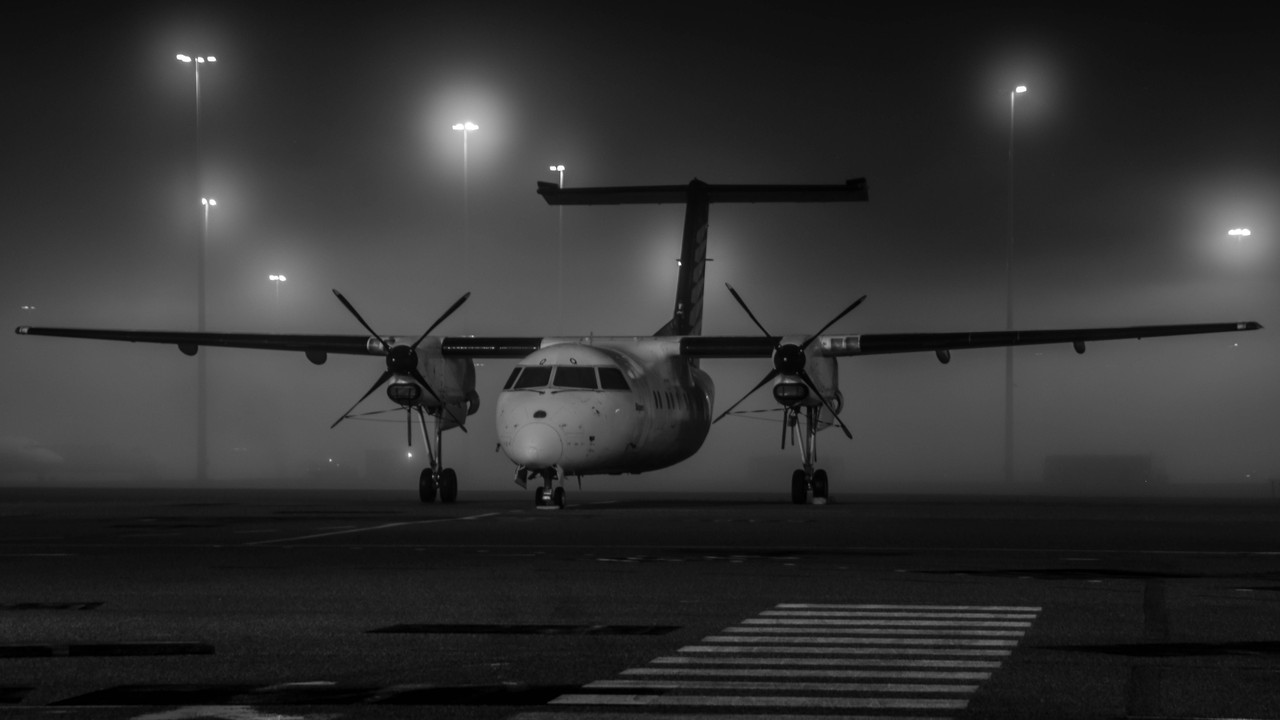
The DHC-8-300 emerged during the mid-1980s expansion of De Havilland Canada's Dash 8 program, representing the company's response to airline demands for higher-capacity regional aircraft. Building upon the successful DHC-8-100 and -200 variants, the -300 model incorporated a longer fuselage to accommodate additional passengers while retaining the proven aerodynamic and structural foundations of the earlier aircraft.
Manufacturing Heritage
De Havilland Canada's journey with the Dash 8 program reflects the complex evolution of the Canadian aerospace industry. Originally established as a Crown Corporation when the Canadian government purchased the company from British owner Hawker Siddeley Aviation in 1974, DHC underwent significant ownership changes that shaped the aircraft's development trajectory.
In 1985-1986, the Canadian government privatized the company, selling it to Boeing for approximately 155 million Canadian dollars, consisting of 90 million in cash and 65 million in deferred payments. Boeing's ownership brought substantial investment in product development and facility modernization, contributing to the Dash 8's technical advancement during this crucial period.
The program experienced another major transition in 1992 when Boeing, following the loss of a significant Air Canada contract to Airbus in 1988, divested DHC to Montreal-based Bombardier Aerospace. Under Bombardier's stewardship, the Dash 8 line flourished, expanding to encompass four distinct models including the DHC-8-300 and the larger Q-400 variant that would later dominate regional aviation markets.
Modern Era and Continued Production
The Dash 8 program entered its current phase in 2019 when Bombardier sold the entire product line to Longview Aviation Capital Corporation for approximately 300 million US dollars. This acquisition encompassed all variants including the 100, 200, and 300 series aircraft, along with the actively produced Q400 program, positioning Longview as North America's largest commercial turboprop aircraft manufacturer.
On August 1, 2024, De Havilland Aircraft of Canada Limited completed a comprehensive amalgamation with Longview Aviation Capital Corp., with the newly formed entity retaining the historic De Havilland Aircraft of Canada Limited designation. This restructuring solidified the company's position in the global turboprop market while honoring its Canadian aviation heritage.
Operational Characteristics
The DHC-8-300's high-wing configuration provided exceptional short-field performance capabilities, enabling operations from airports with limited runway lengths that constrained larger regional jets. This design philosophy aligned with De Havilland Canada's traditional emphasis on versatile aircraft suitable for diverse operational environments, from major metropolitan airports to remote northern communities.
The twin-turboprop powerplant configuration offered airlines superior fuel efficiency compared to early regional jets while delivering reliable performance in adverse weather conditions. These characteristics made the DHC-8-300 particularly attractive to carriers serving routes with challenging airport infrastructure or demanding environmental conditions.
Production and Service Legacy
While specific production numbers for the DHC-8-300 variant remain limited in available documentation, the aircraft formed an integral component of the broader Dash 8 family's commercial success. Airlines worldwide recognized the type's operational flexibility, leading to widespread adoption across diverse route networks spanning commuter services, regional connections, and specialized charter operations.
The aircraft's robust construction and proven reliability established strong residual values in the secondary market, with many examples transitioning between operators throughout their service lives. This longevity reflected the fundamental soundness of the DHC-8-300's design and the comprehensive support network developed by successive manufacturers.
Contemporary Operations
Today, De Havilland Canada continues supporting DHC-8-300 operators through comprehensive aftermarket services based at the historic Downsview Facility in Toronto. The company has expanded its manufacturing capacity through strategic acquisitions, including Field Aviation Company's Calgary-based aircraft parts manufacturing operations in February 2024 and Fleet Canada Inc. in April 2025, ensuring continued parts availability and technical support for the global DHC-8-300 fleet.
These investments demonstrate the enduring commercial viability of the Dash 8 platform and the manufacturer's commitment to supporting operators of all variants, including the DHC-8-300, throughout their operational lifespans.