
Service History
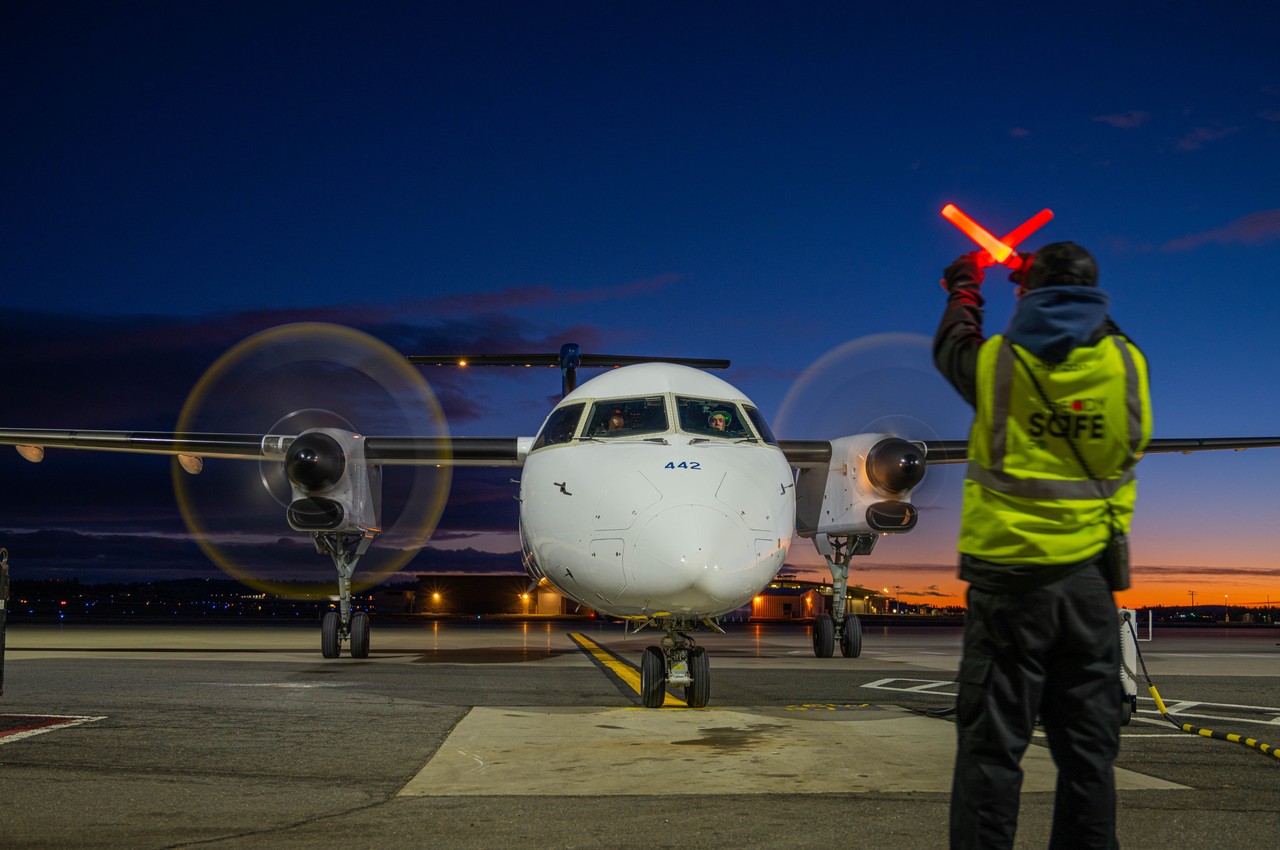
The DHC-8-400 revolutionized regional aviation by bridging the gap between smaller turboprops and regional jets, offering airlines unprecedented capacity in the turboprop market. With over 620 aircraft delivered to more than 75 operators worldwide, the type became the backbone of regional fleets across North America, Europe, and beyond. Major operators including Porter Airlines, Alaska Airlines, and numerous European carriers adopted the aircraft for its ability to serve both high-density short routes and longer regional connections with superior fuel efficiency compared to competing regional jets.
The aircraft's versatility extended beyond passenger service, with variants serving as cargo freighters, aerial firefighting platforms, and specialized mission aircraft. Its ability to operate from shorter runways while maintaining jet-like speeds made it invaluable for connecting smaller communities to major hub airports.
The Manufacturer
De Havilland Canada established itself as a pioneer in regional aviation, building a legendary reputation with aircraft like the DHC-3 Otter, DHC-6 Twin Otter, and DHC-7 Dash 7 that connected Canada's remote northern communities. The company was privatized in 1986, and the Dash 8 program was later acquired by Bombardier Aerospace, which continued development and production for decades.
In late 2018, Longview Aviation acquired the program and reformed De Havilland Aircraft of Canada, returning the historic name to active production. The company announced plans in September 2022 to construct a new manufacturing facility called De Havilland Field in Wheatland County, Alberta, approximately 30 minutes east of Calgary, with construction beginning in late 2023.
Engine & Technical Innovation
The DHC-8-400's powerplant represented a significant advancement in turboprop technology, featuring two Pratt & Whitney Canada PW150A engines each producing 4,850 shaft horsepower. These engines drove revolutionary six-bladed Dowty R408 propellers with a 13.5-foot diameter, certified on July 29, 1999. The R408 propellers marked the first full electric control system with a Pratt & Whitney engine and single removable blade system certified for the Bombardier Dash 8 Q-400.
Operating at a cruise rpm of 850 revolutions per minute, each propeller weighed 555 pounds and contributed significantly to the aircraft's noise reduction capabilities. Bombardier emphasized this quiet operation by rebranding the aircraft as the "Q400" in 1998, with the "Q" specifically denoting "Quiet" performance.
Design Evolution
The DHC-8-400 emerged as a logical evolution of the Dash 8 family, responding to competitive pressure from the ATR-72 and market demand for 70-plus seat regional aircraft. Development began in the mid-1990s when De Havilland Canada recognized a portfolio gap and the over-engineering issues that had affected the earlier DHC-7's commercial success in U.S. markets.
The original Dash 8 first flew in June 1983 and entered service in December of that year. The 50-seat DHC-8-300 followed in 1987, setting the stage for the stretched DHC-8-400 design. The aircraft rolled out on November 21, 1997, incorporating design objectives focused on lower operating costs, reduced fuel consumption, and competitive performance against regional jets.
Performance & Capabilities
The DHC-8-400 achieved remarkable performance specifications that established new standards for turboprop airliners. With a maximum seating capacity of 90 passengers in high-density configuration, it offered both single and dual-class layout options. The aircraft cruised at 360 knots (667 km/h), providing jet-like speeds while maintaining turboprop fuel efficiency.
Modern cabin enhancements available from De Havilland include new seating options, wireless in-flight entertainment systems, satellite Wi-Fi connectivity, Active Noise and Vibration Suppression (ANVS) technology, and HEPA filtration systems. These improvements addressed passenger comfort concerns that had historically challenged turboprop acceptance on longer routes.
Environmental Leadership
The DHC-8-400 achieved significant environmental compliance milestones, meeting U.S. Federal Aviation Administration Stage 5 noise standards and earning EASA certification for ICAO Chapter 14 compliance. As of October 2021, De Havilland noted that the DHC-8-400 exceeded environmental standards that competing regional jet designs were still years away from achieving.
This environmental advantage, combined with superior fuel efficiency compared to regional jets, positioned the aircraft as an increasingly attractive option for environmentally conscious airlines and route networks focused on sustainability.
Legacy & Future
The DHC-8-400 continues active production and service, with De Havilland offering continuous upgrades and improvements for existing operators. The aircraft's proven versatility in passenger, cargo, and specialized mission roles ensures its relevance in modern aviation markets. With plans for expanded production at the new Alberta facility and potential development programs extending into the 2030s, the DHC-8-400 represents both a successful culmination of De Havilland's turboprop expertise and a foundation for future regional aviation innovation.