
The Flying Truck That Changed Bush Aviation
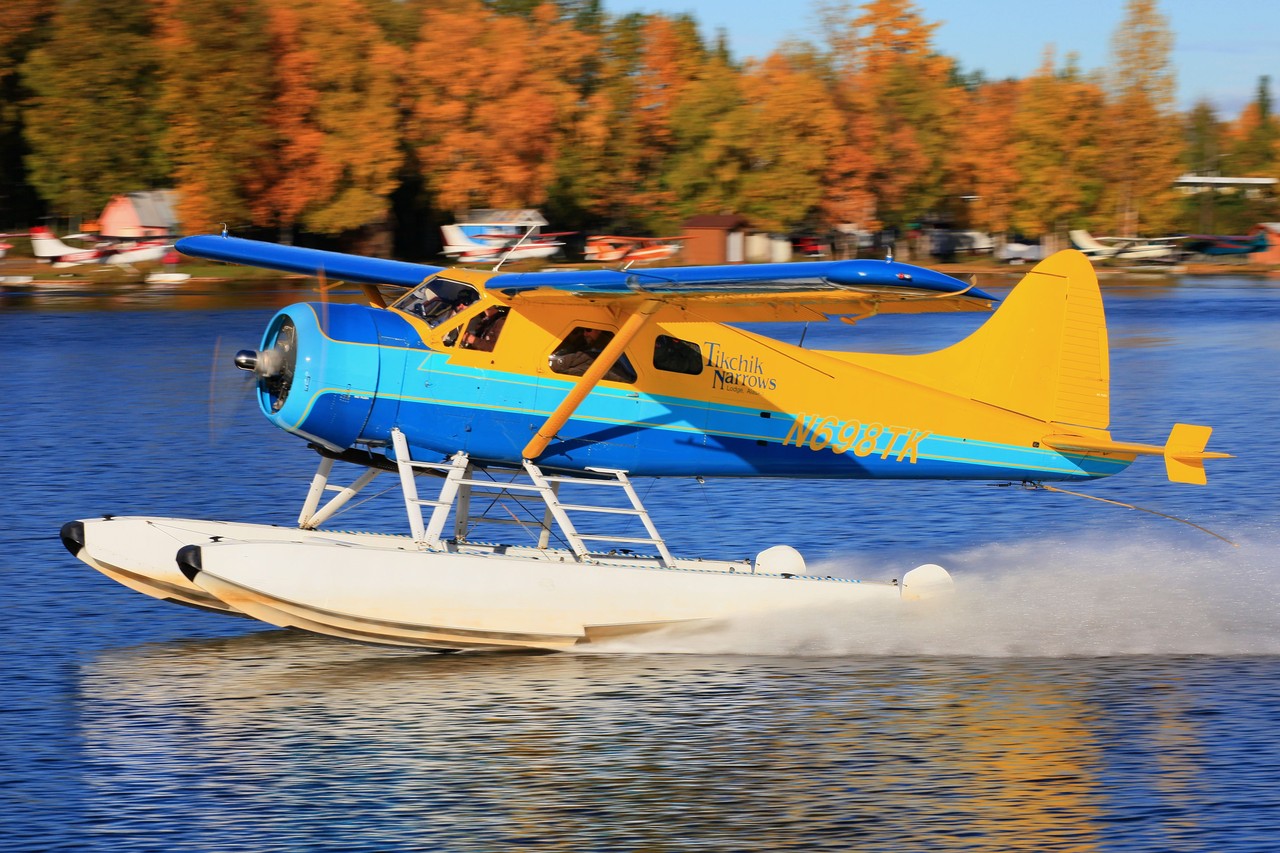
The Beaver emerged from de Havilland Canada's post-war strategy to create civilian bush aircraft based on pilot feedback, particularly from Canadian aviation legend C.H. "Punch" Dickins. The design team at DHC developed the aircraft as a rugged STOL "flying truck" with operator-requested features including compatibility with skis, wheels, and floats. Test pilot Russell Bannock, a World War II ace, lifted the prototype from Downsview on that historic August morning in 1947, launching what would become aviation's most celebrated bush plane.
Military Service and the Korean War
The Beaver's military career began during the Korean War, where it earned the nickname "Flying Jeep" for its versatility in medical evacuation, transport, and support roles. The U.S. Army ordered 970 aircraft designated L-20A and later U-6A, marking the first time the American military purchased a non-U.S.-built aircraft. Over 900 Beavers served U.S. forces, while more than 30 nations operated military variants for utility, transport, and reconnaissance missions.
During the Vietnam conflict, Beavers continued their support role, while the Royal New Zealand Air Force deployed the type during the 1958 Commonwealth Trans-Antarctic Expedition, supporting Sir Edmund Hillary's historic South Pole trek. The aircraft's ability to operate from improvised strips made it invaluable for military logistics worldwide.
Commercial Operations and Bush Flying
The Ontario Department of Lands and Forests took delivery of the first production Beaver in April 1948, beginning the aircraft's legendary career in civilian bush operations. Manitoba Government Air Services, Central British Columbia Airways, and countless bush operators worldwide adopted the type for its unmatched ability to reach remote locations. With seating for six passengers plus one or two crew members, the Beaver could haul substantial loads into areas previously accessible only by foot or canoe.
The aircraft's 2,100-pound useful load and STOL capabilities made it ideal for air-taxi operations on rough terrain, while its all-metal construction provided durability that wooden competitors could not match. Export sales reached 62 countries, with 981 aircraft delivered to U.S. civil and military operators alone.
Engine and Technical Excellence
The heart of the Beaver was the Pratt & Whitney R-985 Wasp Junior, a nine-cylinder radial engine producing 450 horsepower. This powerplant, first manufactured in 1929, proved exceptionally reliable and perfectly matched the Beaver's durability requirements. The engine drove a Hamilton-Standard controllable-pitch propeller measuring 8 feet 6 inches in diameter, while 79 imperial gallons of fuel provided substantial range for wilderness operations.
The high-wing configuration provided excellent ground clearance and stability during short-field operations, while the robust landing gear could absorb the punishment of countless rough-field landings. These design features, combined with the aircraft's forgiving flight characteristics, made it accessible to bush pilots of varying experience levels.
The Manufacturer's Legacy
De Havilland Canada, operating as an independent entity from 1928 until the late 1960s, built its reputation on aircraft designed for Canadian conditions. Following acquisition by Hawker Siddeley in 1969 and later integration into Bombardier Aerospace, the original de Havilland Canada ceased independent operations. However, Viking Air acquired the DHC-2 type certificates and tooling in 2006, continuing parts production and supporting remanufactured Beavers under the revived de Havilland Canada name through Longview Aviation Capital.
Production and Enduring Legacy
Between 1947 and 1967, de Havilland Canada produced 1,631 Mk.I Beavers, one Mk.II prototype, and 60 Mk.III Turbo Beavers powered by Pratt & Whitney Canada PT6 turboprops, totaling 1,692 aircraft. Aviation researcher Neil Aird has tracked the fate of every aircraft built, testament to the type's enduring significance.
Hundreds of Beavers remain airworthy today, many upgraded through supplemental type certificates. Companies like Kenmore Air have developed "zero-hour" remanufacturing programs, extending aircraft life indefinitely. The prototype CF-FHB was preserved after retirement in 1980, while aircraft like C-FMAA (serial 1,500) are displayed at institutions including the Royal Aviation Museum of Western Canada.
The Association of Industrial Designers named the Beaver one of Canada's best designs, while market values reached $300,000 by 1997—nearly ten times the original 1960s price of $32,000. This appreciation reflects the aircraft's irreplaceable role in bush aviation, where no modern equivalent matches its combination of payload, performance, and operational versatility. The Beaver's legacy continues wherever aviation reaches into the world's remaining wilderness areas.