
Service History
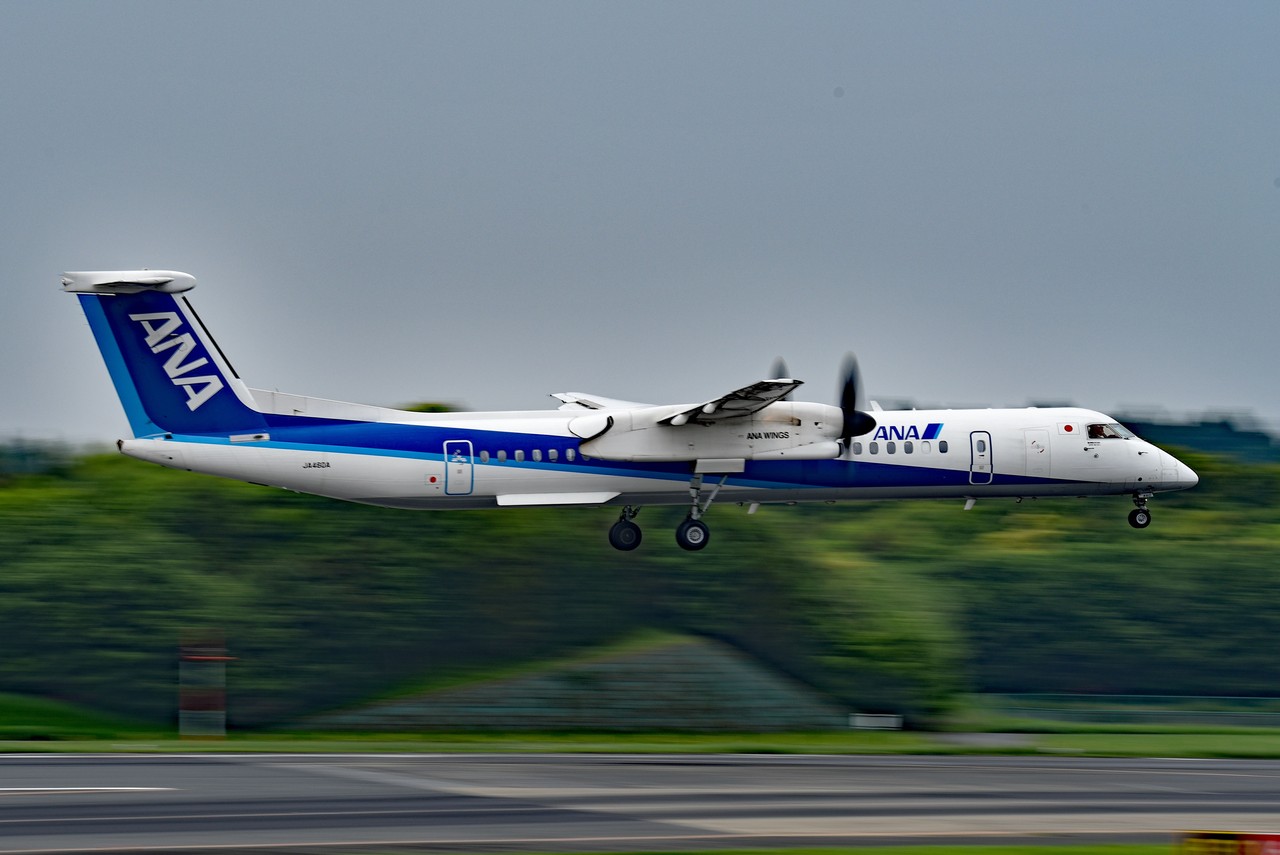
The DHC-8-200 emerged during the regional aviation boom of the 1980s, filling a crucial gap between smaller commuter aircraft and larger mainline jets. Regional carriers across North America and Europe embraced the type for its ability to serve smaller airports with shorter runways while providing jet-like passenger comfort. The aircraft's 37 to 39-passenger capacity made it ideal for thin routes that couldn't support larger aircraft, helping airlines expand service to previously underserved communities.
Operators appreciated the DHC-8-200's operational flexibility, with many carriers using the type for both scheduled passenger service and charter operations. The aircraft's high-wing design and robust landing gear allowed operations from unpaved or poorly maintained airstrips, opening new markets for regional airlines.
The Manufacturer
De Havilland Canada's journey with the Dash 8 series reflected the turbulent nature of the aerospace industry. Originally established as a subsidiary of the British De Havilland company, the Canadian operation gained independence when the government acquired it from Hawker Siddeley Aviation in 1974, transforming it into a Crown Corporation.
The company's ownership changed hands multiple times during the Dash 8's production run. In 1985, Boeing purchased De Havilland Canada for 155 million Canadian dollars, consisting of 90 million in cash and 65 million in deferred payments. However, Boeing's ownership proved short-lived, and in 1992, the company was sold to Quebec-based Bombardier Aerospace and the province of Ontario.
Under Bombardier's stewardship, the Dash 8 line expanded to include four distinct models, with the largest being the Q400. The program found new life in 2019 when Bombardier sold the entire Dash 8 operation to Longview Aviation Capital Corporation for approximately 300 million US dollars. This acquisition made Longview North America's largest commercial turboprop aircraft manufacturer.
The story came full circle on August 1, 2024, when Longview Aviation Capital completed an amalgamation of its Canadian aviation corporations under the name De Havilland Aircraft of Canada Limited. Today, the company continues production of Q400 aircraft at the historic Downsview Facility in Toronto while providing comprehensive after-market services for all Q-Series aircraft.
Engine & Technical Details
The DHC-8-200's powerplant configuration centered on twin Pratt & Whitney Canada PW123 turboprops, each driving four-blade propellers. This engine choice provided the reliability and fuel efficiency that regional operators demanded while delivering sufficient power for consistent performance across varying weather conditions and airport elevations.
The aircraft's high-wing design offered several operational advantages, including improved ground clearance for the propellers, natural stability characteristics, and easier passenger boarding. The wing's position also allowed for simple, gravity-fed fuel systems and provided excellent short-field performance capabilities.
Crew requirements remained minimal, with the DHC-8-200 typically operated by a two-pilot crew. The cockpit featured modern avionics for its era, though specific configurations varied depending on customer requirements and delivery dates.
Production & Legacy
While exact production figures for the DHC-8-200 variant remain unclear from available records, the aircraft formed an integral part of the broader Dash 8 family's success story. The type's development represented De Havilland Canada's commitment to providing operators with a range of capacity options within a common aircraft family, reducing training costs and maintenance complexity.
The DHC-8-200's legacy extends beyond its direct service record. It served as a crucial stepping stone in the evolution of regional aviation, bridging the gap between smaller commuter aircraft and the larger regional jets that would later dominate the market. The experience gained from operating the DHC-8-200 helped many regional carriers develop the route networks and operational expertise that would prove essential as the industry evolved.
Today, while newer aircraft have largely replaced the DHC-8-200 in front-line service, examples of the type continue to operate in various roles worldwide. Some have found second lives in cargo service, while others serve specialized missions in remote regions where their rugged design and reliable performance remain valued attributes.
The aircraft's contribution to regional aviation development cannot be understated. It helped prove that passengers would accept turboprop aircraft for short-haul flights when those aircraft offered appropriate comfort levels and reliable service. This acceptance proved crucial for the success of later turboprop designs and helped establish the regional aviation network that connects smaller communities to major transportation hubs today.