
Development Origins
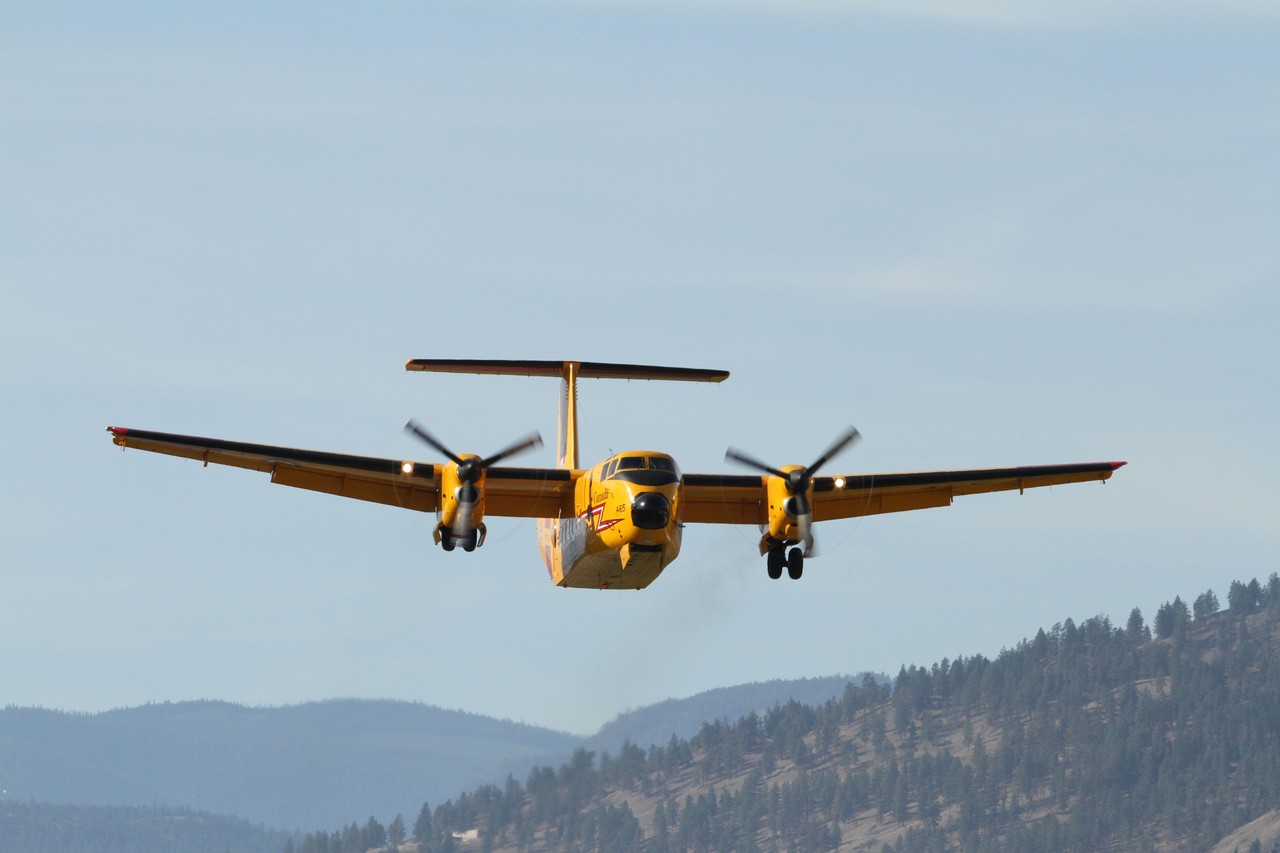
The Buffalo emerged from a unique tri-national partnership in 1960 when the U.S. Army, Canadian government, and De Havilland Canada each contributed equal funding to develop a turboprop successor to the piston-powered DHC-4 Caribou. American military planners demanded an aircraft capable of transporting loads equivalent to a Boeing CH-47 Chinook helicopter, including complete Pershing missile systems, 105mm howitzers, or three-quarter-ton trucks, while operating from forward airstrips too rough for conventional transports.
Military Prototype Program
Four prototypes designated YAC-2 underwent extensive testing after the maiden flight in April 1964, with delivery to U.S. forces completing in 1965. The aircraft demonstrated remarkable capabilities, lifting nearly double the Caribou's payload while achieving superior short-field performance compared to much smaller aircraft. However, American aerospace manufacturers successfully lobbied against foreign competition, effectively blocking U.S. military adoption despite the Buffalo's technical superiority.
Canadian Military Service
The Royal Canadian Air Force became the Buffalo's primary military operator, acquiring 15 DHC-5A aircraft designated CC-115 between 1967 and 1968. The first aircraft, CC-115452, entered service with 429 Squadron at Canadian Forces Base St-Hubert, Quebec, on July 8, 1967. Six aircraft received specialized modifications for maritime patrol duties, extending their operational flexibility beyond pure tactical transport missions.
International Military Success
Despite American rejection, the Buffalo found substantial international markets among allied air forces seeking reliable short-field transports. The improved DHC-5D variant, introduced in 1974 with more powerful CT64-820-4 turboprops producing 3,130 equivalent horsepower, attracted orders from 15 nations. Egypt acquired the largest fleet with 10 aircraft, followed by Kenya with 8, and Zambia with 7. Additional operators included Abu Dhabi, Brazil, Cameroon, Chile, Ecuador, Mauritania, Mexico, Peru, Sudan, Tanzania, Togo, and Zaire.
Research Applications
NASA and other research organizations extensively modified Buffalo airframes for advanced aerodynamic studies. The XC-8A augmentor wing program tested blown-flap technology for enhanced STOL performance, while another XC-8A investigated Air-Cushion Landing Systems using inflatable rubber gear. The most radical conversion created the Quiet Short-haul Research Aircraft (QSRA), replacing the Buffalo's turboprops with four Avco Lycoming turbofans to study urban airport operations.
Commercial Variants
De Havilland Canada developed the DHC-5E Transporter for civilian markets, receiving Canadian certification in 1981. Ethiopian Airlines operated two aircraft configured for 44-passenger service, though quick-change interiors allowed rapid conversion between passenger, cargo, and VIP layouts. The civil Buffalo served bush operations and cargo hauling across more than 20 countries, proving its versatility beyond military applications.
Production Challenges
Manufacturing occurred in two distinct phases, with initial production running from 1964 through 1978, then resuming in 1974 specifically for the enhanced DHC-5D model due to continuing international demand. The final aircraft was delivered in April 1985, concluding a 21-year production run totaling 122 aircraft. This relatively modest output reflected the specialized nature of the STOL transport market rather than technical shortcomings.
Operational Characteristics
Pilots praised the Buffalo's docile handling characteristics and exceptional short-field capabilities, though the aircraft demanded respect during single-engine operations due to its high wing loading. The twin General Electric T64 turboprops provided reliable power in harsh environments, while the spacious cargo compartment featured a full-width rear ramp for vehicle loading. Maximum cargo capacity reached 18,000 pounds, making the Buffalo competitive with much larger conventional transports on a payload-per-runway-foot basis.
Modern Legacy
Viking Air announced intentions in 2008 to modernize surviving Canadian Forces Buffalos with new Pratt & Whitney Canada PW150 engines, but the Royal Canadian Air Force ultimately selected the EADS CASA C-295 as its next-generation tactical transport. Many international operators continued flying their Buffalos well into the 21st century, testament to the aircraft's robust construction and reliable powerplants. The Buffalo's combination of payload capacity, short-field performance, and operational flexibility established benchmarks that influenced subsequent STOL transport designs.