
Service History
The MD-81 entered commercial service on October 10, 1980, when launch customer Swissair operated the inaugural flight from Zurich to London Heathrow. The aircraft quickly gained acceptance among airlines seeking higher capacity than the DC-9 while maintaining operational efficiency on regional routes. Major operators included Republic Airlines, Alaska Airlines, Delta Air Lines, and Japan Airlines Domestic, which received the final MD-81 on June 24, 1994. Frontier Airlines became an early adopter, taking delivery of their first five aircraft in 1982.
The MD-81's ability to serve routes up to 1,800 nautical miles with 143 passengers in two-class configuration made it ideal for connecting secondary cities and feeding hub operations. The aircraft type helped advance the regional jet concept by demonstrating that stretched narrow-body aircraft could efficiently serve markets previously requiring larger, less economical equipment.
The Manufacturer
McDonnell Douglas emerged from the April 29, 1967 merger of McDonnell Aircraft and Douglas Aircraft Company, combining military expertise with commercial aviation heritage. The company operated independently for three decades, producing iconic aircraft including 976 DC-9s between 1965 and 1982. Under the leadership of executives like Gareth C.C. Chang, McDonnell Douglas pioneered international manufacturing partnerships, establishing joint production in China in 1985 that yielded 20 MD-80 aircraft before cancellation.
Production peaked at 12 units per month in 1991, but market shifts after 1992 reduced demand. Boeing acquired McDonnell Douglas in 1997, completing remaining MD-80 production that same year before focusing on their own narrow-body programs. The Long Beach facility, which had been McDonnell Douglas's primary commercial aircraft manufacturing center, continued under Boeing ownership for other programs.
Engine & Technical Innovation
The MD-81's powerplant consisted of two Pratt & Whitney JT8D-217 turbofan engines, each producing approximately 20,000 to 21,000 pounds of thrust. These engines represented an evolution of the JT8D series, which Pratt & Whitney had been producing since 1963, ultimately manufacturing more than 14,000 engines across all JT8D variants. The -217 model incorporated efficiency improvements over earlier DC-9 powerplants while maintaining the proven reliability that made the JT8D family the backbone of narrow-body aviation.
The rear-mounted engine configuration provided several advantages, including reduced cabin noise and the ability to operate from shorter runways with less foreign object debris risk. This design choice also allowed for a clean wing design optimized for cruise efficiency. The aircraft required a two-pilot crew and incorporated systems commonality with the DC-9 to reduce training costs and operational complexity for airlines transitioning between types.
Performance Characteristics
The MD-81 achieved a maximum speed of approximately Mach 0.75 and a service ceiling of 37,000 feet. The stretched fuselage, measuring 40.9 meters compared to the DC-9's shorter length, accommodated the increased passenger capacity while the enlarged wing provided the additional lift and fuel capacity necessary for extended range operations. The aircraft could carry over 10,000 pounds more fuel than the original DC-9, enabling the 1,800-nautical-mile range that opened new route possibilities for operators.
Pilots appreciated the MD-81's handling characteristics, which retained the responsive flight controls and stable approach characteristics of the DC-9 family. The aircraft's ability to operate from shorter runways while carrying full passenger loads made it particularly valuable for serving airports with challenging runway limitations.
Production Legacy
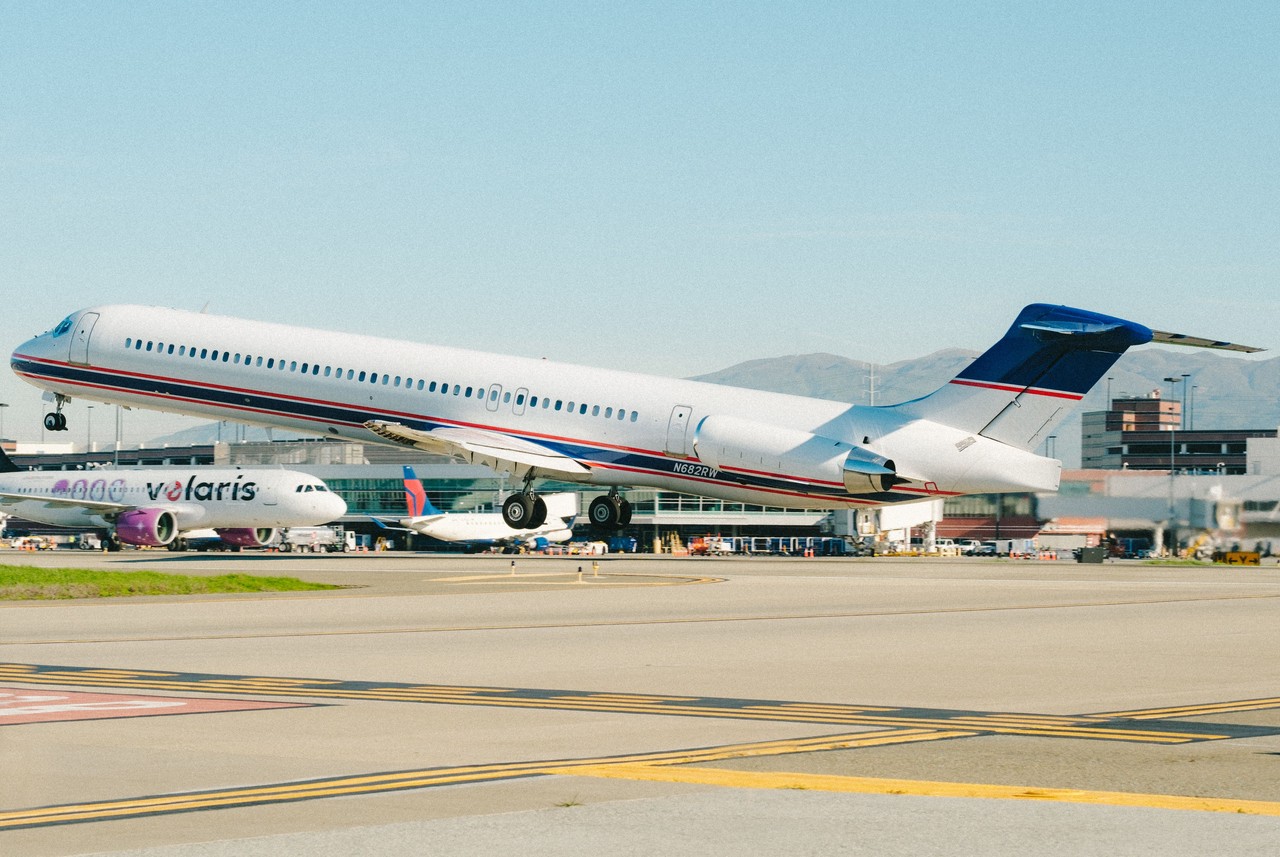
Of the 132 MD-81s manufactured, only one remains in active service as of 2024: Olympia Aviation's N682RW, nicknamed "Red Bird III." This aircraft, serial number 48006, was the 19th MD-81 produced and was originally delivered to Swissair in April 1981. Now based at Detroit Metropolitan Airport in Michigan, it represents the sole survivor of the MD-81 fleet still conducting regular operations.
The MD-81 contributed to the broader success of the MD-80 family, which totaled more than 1,100 aircraft across all variants. The program's success validated the concept of stretching proven designs to meet evolving market demands. The MD-80 series earned the affectionate nickname "Mad Dog" among aviation enthusiasts and crews, reflecting both its McDonnell Douglas heritage and spirited performance characteristics.
The aircraft's influence extends beyond its operational service, as retained tooling and design elements contributed to the development of China's Comac ARJ21 regional jet. This technological transfer demonstrates the lasting impact of McDonnell Douglas engineering on contemporary aircraft development, even decades after the company's acquisition by Boeing.