
Service History
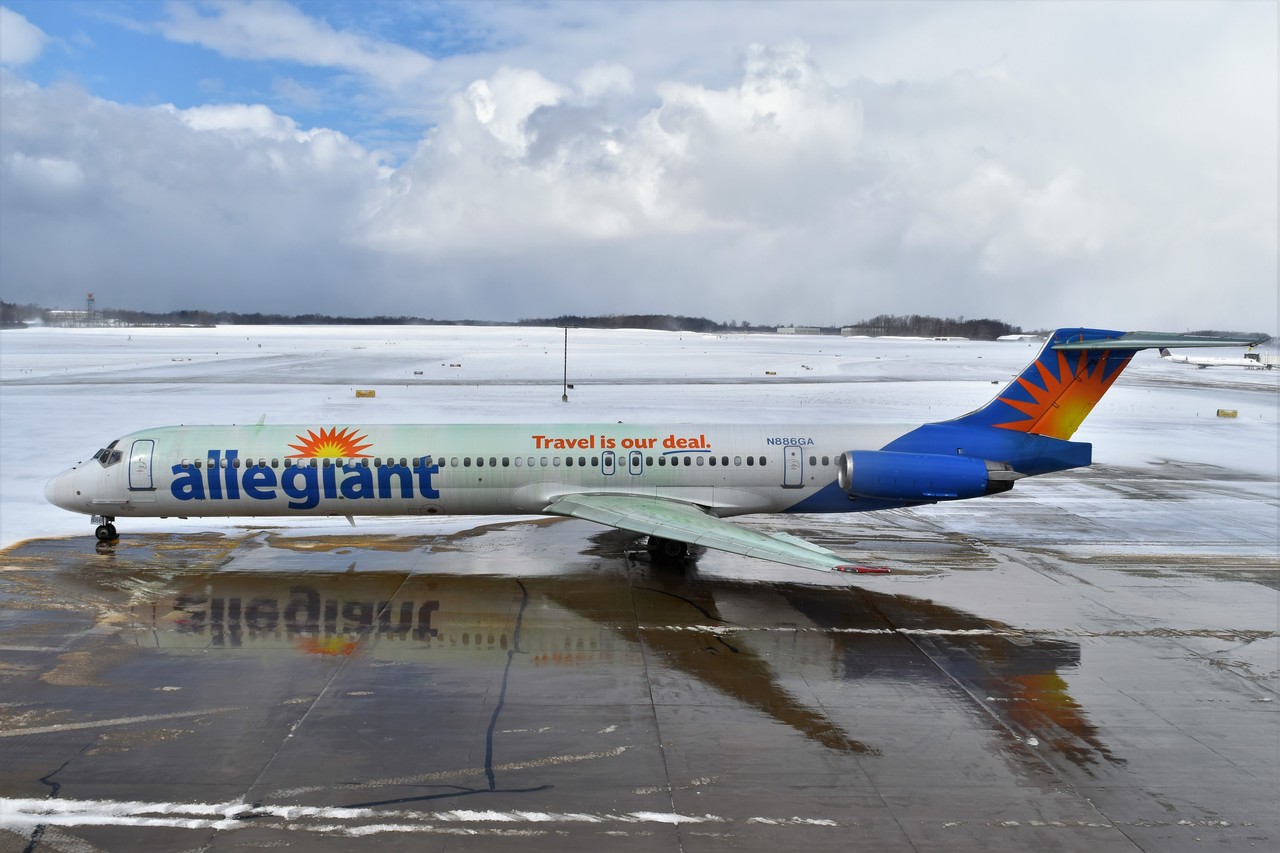
The MD-82 dominated regional and transcontinental routes throughout the 1980s and 1990s, becoming the backbone of numerous airline fleets. Republic Airlines launched commercial service on August 5, 1981, followed by major operators including Continental Airlines, Trans World Airlines, and Alaska Airlines. During the production peak in 1991, McDonnell Douglas delivered 140 MD-80 series aircraft, manufacturing 12 units per month to meet overwhelming demand from airlines seeking DC-9 replacements.
The aircraft's commercial success stemmed from its compatibility with existing DC-9 ground equipment and maintenance procedures, allowing airlines to upgrade their fleets without extensive infrastructure changes. This strategic advantage helped the MD-82 compete directly against the Boeing 737 Classic and early Airbus A320 family members during the narrow-body market's most competitive period.
The Manufacturer
McDonnell Douglas produced the MD-82 from 1981 to 1997 at their Long Beach, California facility, with additional licensed assembly beginning in November 1986 through Shanghai Aviation Industrial Corporation in China. The company operated as an independent aircraft manufacturer during the MD-82's development years, building on decades of experience from the original Douglas Aircraft Company heritage.
Boeing acquired McDonnell Douglas in August 1997, taking over the final months of MD-82 production before delivering the last aircraft to U-Land Airlines of Taiwan on November 17, 1997. McDonnell Douglas had previously produced the legendary DC-3, DC-8, DC-9, and DC-10, establishing themselves as pioneers in commercial aviation before the Boeing merger eliminated them as an independent entity.
Engine & Technical Details
Two Pratt & Whitney JT8D-200 high-bypass turbofan engines powered the MD-82, representing a significant advancement over earlier JT8D variants with improved fuel consumption and reduced noise levels. The engines mounted on the rear fuselage in the distinctive DC-9 configuration, allowing for a clean wing design and simplified ground operations.
The aircraft featured a revolutionary two-pilot cockpit arrangement that eliminated the flight engineer position required on competing three-crew aircraft like the Boeing 727. This advancement reduced operating costs significantly while maintaining safety standards through improved avionics and systems automation. The design retained the proven DC-9 fuselage cross-section while incorporating aerodynamic improvements and an enlarged wing for better performance.
Production & Legacy
McDonnell Douglas manufactured 1,191 total MD-80 series aircraft between 1979 and 1999, with the MD-82 representing the most popular variant in the family. Production declined sharply after 1992 when only 84 aircraft were delivered compared to the previous year's peak of 140 units, reflecting reduced air traffic and market shifts toward newer generation aircraft.
The MD-82 earned the affectionate nickname "Mad Dog" among aviation enthusiasts and airline crews, becoming a cultural icon that appeared in Hollywood films including Continental Airlines' N16807, which starred in major motion pictures. As of August 2022, 116 MD-80 series aircraft remained in active service worldwide, though most major U.S. carriers had retired their fleets by 2020.
Museum Preservation
Several MD-82s have found permanent homes in aviation museums, including Meridiana's former aircraft (construction number 49247) displayed at Italy's Volandia museum since 2016. The final commercial passenger flight of an MD-88 variant within the United States occurred on June 2, 2020, when Delta Air Lines retired their last "Mad Dog," marking the end of an era for the DC-9 family in major airline service.
Michigan's USA Jet Airlines added MD-88s to their cargo fleet in 2021, demonstrating the aircraft's continued utility in specialized roles. The MD-82's 16-year production run proved McDonnell Douglas could successfully modernize classic designs for contemporary markets, serving as a bridge between first-generation jets and today's advanced narrow-body aircraft.