
Service History
The P.136 carved out a specialized niche in both military and civilian aviation markets during the 1950s and 1960s. The Italian Air Force became the aircraft's primary military operator, acquiring 22 units designated as P.136F models for air-sea rescue and coastal patrol missions throughout the Mediterranean. Peru's Air Force supplemented this military presence by operating four P.136L-2 variants during the same period, demonstrating the aircraft's appeal beyond European borders.
In civilian markets, the aircraft found favor among private operators seeking amphibious capability. Kearney and Trecker Corporation's Royal Aircraft subsidiary imported 32 aircraft as kits to the United States, marketing them under the "Royal Gull" designation with approximately 75 modifications to meet North American certification standards.
The Manufacturer
Piaggio's aviation heritage stretches back to 1884, when the company first established operations in Italy. Following World War II, the manufacturer diversified aggressively, achieving global recognition with the Vespa scooter in 1946 while simultaneously developing aerospace capabilities. The P.136 project represented Piaggio's engineering team's collective effort to establish the company as a serious aircraft manufacturer, building upon earlier designs like the 1930s P.16.
Today operating as Piaggio Aerospace, the company continues aircraft production despite facing financial restructuring challenges in recent decades. The P.136's design philosophy directly influenced the subsequent P.166 land-based transport, which achieved greater commercial success with over 150 units produced.
Engine & Technical Innovation
The P.136's evolution reflected ongoing powerplant improvements throughout its production life. Initial P.136F models utilized 215-horsepower Franklin 6AD-215-B9F six-cylinder engines, but these proved inadequate for the aircraft's weight and performance requirements. Engineers subsequently adopted Lycoming powerplants, progressing through 270-horsepower GO-480-B engines in the P.136L variant to the definitive 340-horsepower GSO-480 and GTSIO-480 engines in the L-1 and L-2 models.
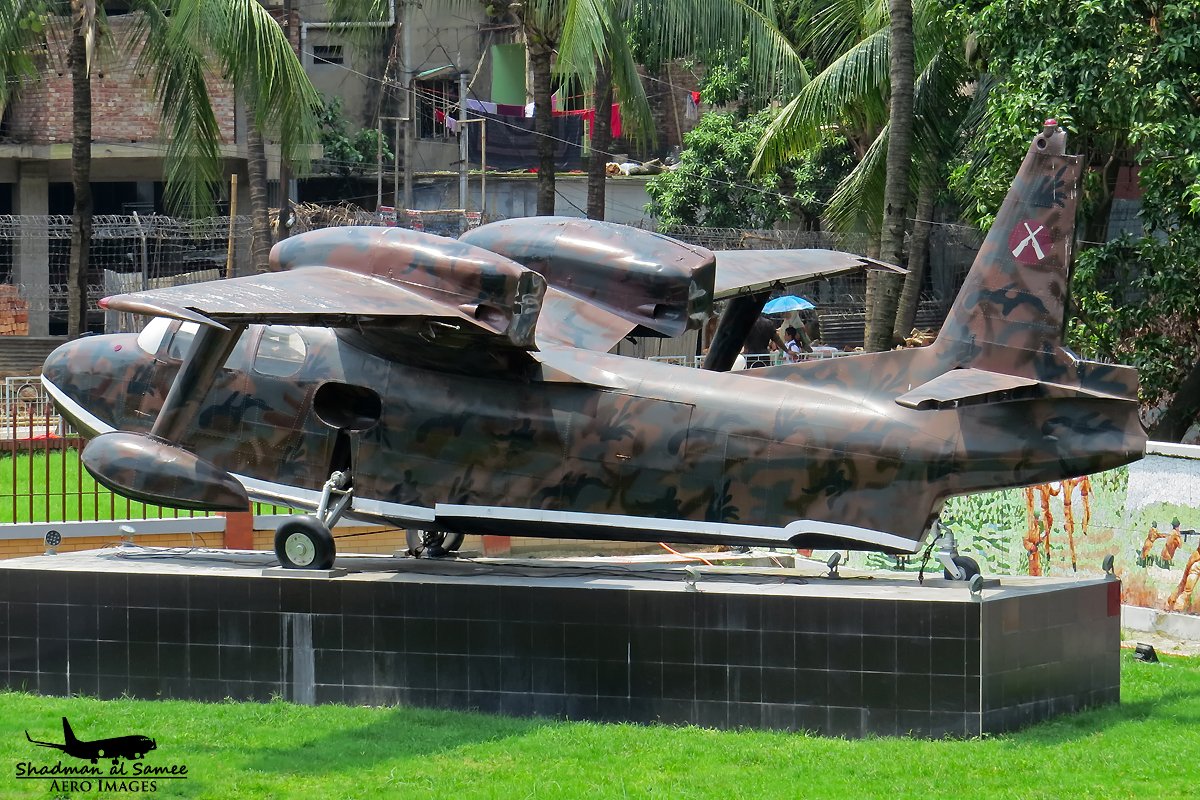
The aircraft's pusher propeller configuration represented its most distinctive design feature, positioning three-bladed Piaggio P.1033 or Hartzell HC-83X20-2AL propellers behind the wing for unobstructed water operations. This layout eliminated propeller spray concerns during water takeoffs and landings while providing excellent forward visibility for the single pilot.
Performance Characteristics
Measuring 35 feet 5 inches in length with a maximum gross weight of 6,600 pounds, the P.136 achieved respectable performance figures for its era. The aircraft's 167-mph maximum cruise speed and 900-mile range provided practical transportation capability, while its 28,000-foot service ceiling exceeded most contemporary light aircraft. The 193-gallon fuel capacity supported extended over-water operations essential for rescue missions.
Pilots appreciated the aircraft's gentle handling characteristics and reliable amphibious capabilities, though the pusher configuration required careful attention to center-of-gravity calculations and engine cooling management during extended climbs.
Production Legacy
Piaggio's 18-year production run from 1948 to 1966 yielded 63 completed aircraft across all variants, with manufacturing concentrated in Italy supplemented by American kit assembly operations. The modest production numbers reflected the specialized amphibian market rather than design deficiencies, as the aircraft fulfilled its intended roles effectively.
Current Status
Few P.136 aircraft remain airworthy today, with notable examples including N222A, a 1954-built P.136L-1 owned by Barry Hammarback and based at New Richmond Regional Airport in Wisconsin, and N1449Z, a P.136L-2 variant. These survivors occasionally appear at seaplane gatherings and aviation events like Oshkosh AirVenture, where they demonstrate the graceful lines that earned the aircraft recognition as one of the most aesthetically pleasing amphibians ever produced.
The P.136's historical significance extends beyond its operational record to represent Italy's successful transition from wartime destruction to peaceful aerospace innovation, establishing design principles that influenced subsequent Piaggio aircraft development for decades.