
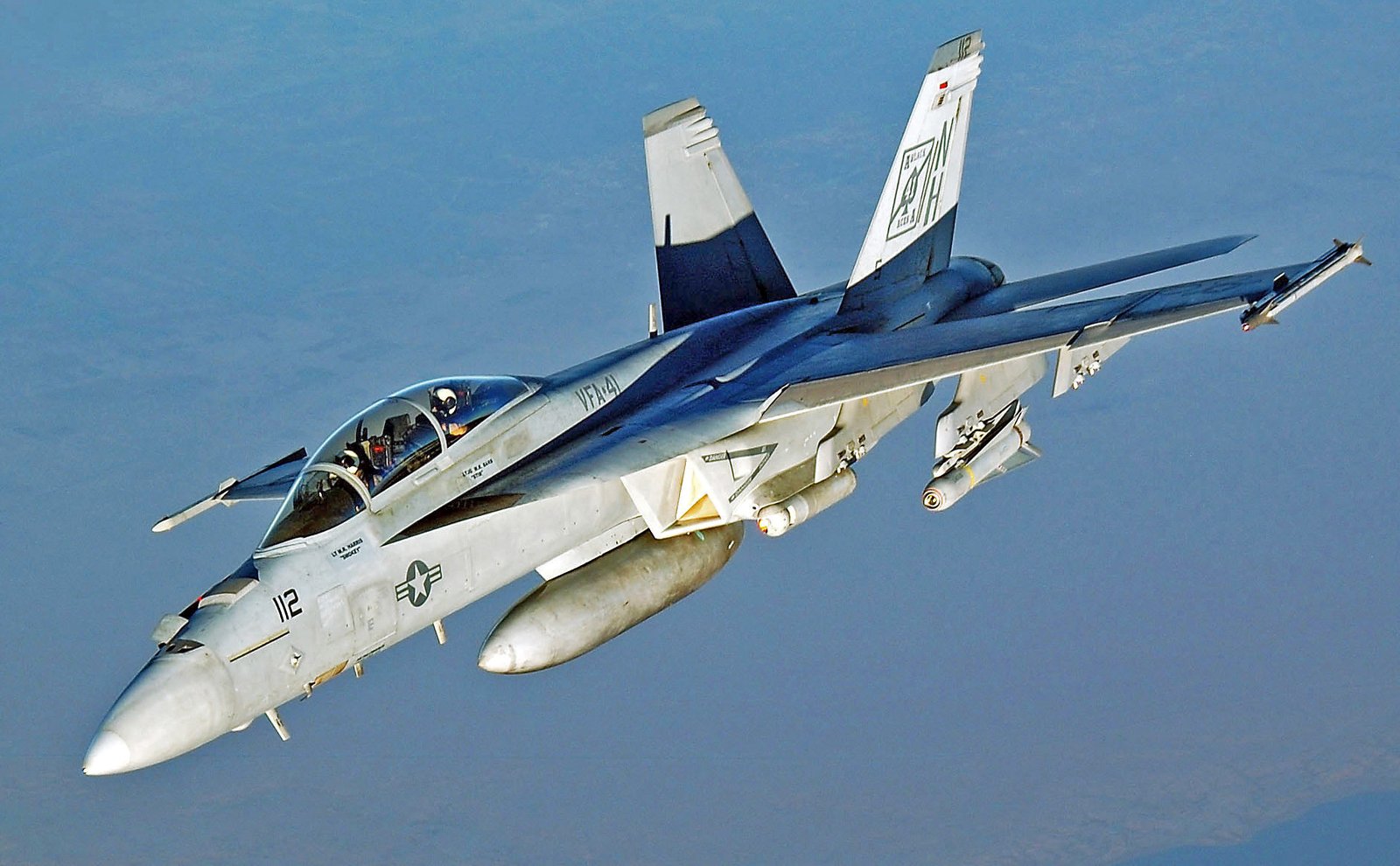
Service History
The Super Hornet achieved initial operational capability with VFA-115 Eagles in September 1999, marking the beginning of its dominant role in U.S. naval operations. By 2008, the aircraft had completely replaced the F-14 Tomcat in carrier air wings, consolidating multiple mission roles into a single platform. More than 600 Super Hornets currently serve with the U.S. Navy across 27 operational squadrons, providing approximately 60 percent of strike fighter capability aboard aircraft carriers.
Operational History
The Super Hornet first saw combat during Operation Iraqi Freedom in 2003, where it demonstrated exceptional versatility in both air superiority and ground attack roles. During operations over Iraq and Afghanistan, Super Hornets accumulated over 500,000 flight hours while maintaining a mission capable rate exceeding 80 percent. The aircraft played crucial roles in Operation Inherent Resolve against ISIS, conducting precision strikes throughout Syria and Iraq from 2014 onward.
The Manufacturer
Boeing acquired the Super Hornet program through its 1997 merger with McDonnell Douglas, inheriting a rich legacy of naval aviation excellence. McDonnell Douglas had originally won the contract in 1992 to develop an enlarged derivative of the original F/A-18 Hornet. Boeing's St. Louis facility continues production today, having delivered over 800 aircraft to the Navy and international customers since 1999.
Engine & Technical Details
Two General Electric F414-GE-400 turbofan engines power the Super Hornet, each producing 22,000 pounds of thrust with afterburning. The engines represent a 35 percent increase in thrust over the original Hornet's F404 powerplants. A single pilot operates the F/A-18E model, while the F/A-18F accommodates a two-person crew with a weapons systems officer. The aircraft features 11 external hardpoints capable of carrying up to 17,750 pounds of ordnance and fuel.
Pilot Perspective
Navy pilots praise the Super Hornet for its forgiving handling characteristics and exceptional situational awareness provided by the APG-79 Active Electronically Scanned Array radar. The aircraft achieves a maximum speed of Mach 1.8 and maintains a service ceiling above 50,000 feet. With internal fuel capacity of 14,400 pounds, the Super Hornet achieves a combat radius exceeding 450 nautical miles on interdiction missions. Pilots particularly value the aircraft's ability to perform aerial refueling missions, serving as both receiver and tanker.
International Operations
Australia operates 24 Super Hornets acquired in 2007 as an interim solution before F-35 Lightning II deliveries. The Royal Australian Air Force designated these aircraft as F/A-18F models, operating them from land bases rather than aircraft carriers. Kuwait ordered 28 Super Hornets in 2016, with deliveries beginning in 2020, making it the second international operator of the type.
Production & Legacy
Boeing has produced more than 800 Super Hornets since production began in 1995, with manufacturing continuing at approximately 24 aircraft annually. The Navy plans to operate Super Hornets until at least 2040, with ongoing service life extension programs adding 4,000 flight hours to each airframe. Current Block III variants incorporate advanced networking capabilities, conformal fuel tanks, and enhanced electronic warfare systems, ensuring the platform's relevance against emerging threats. Museums displaying Super Hornets include the National Museum of Naval Aviation in Pensacola, Florida, and the USS Intrepid Sea, Air & Space Museum in New York City.