
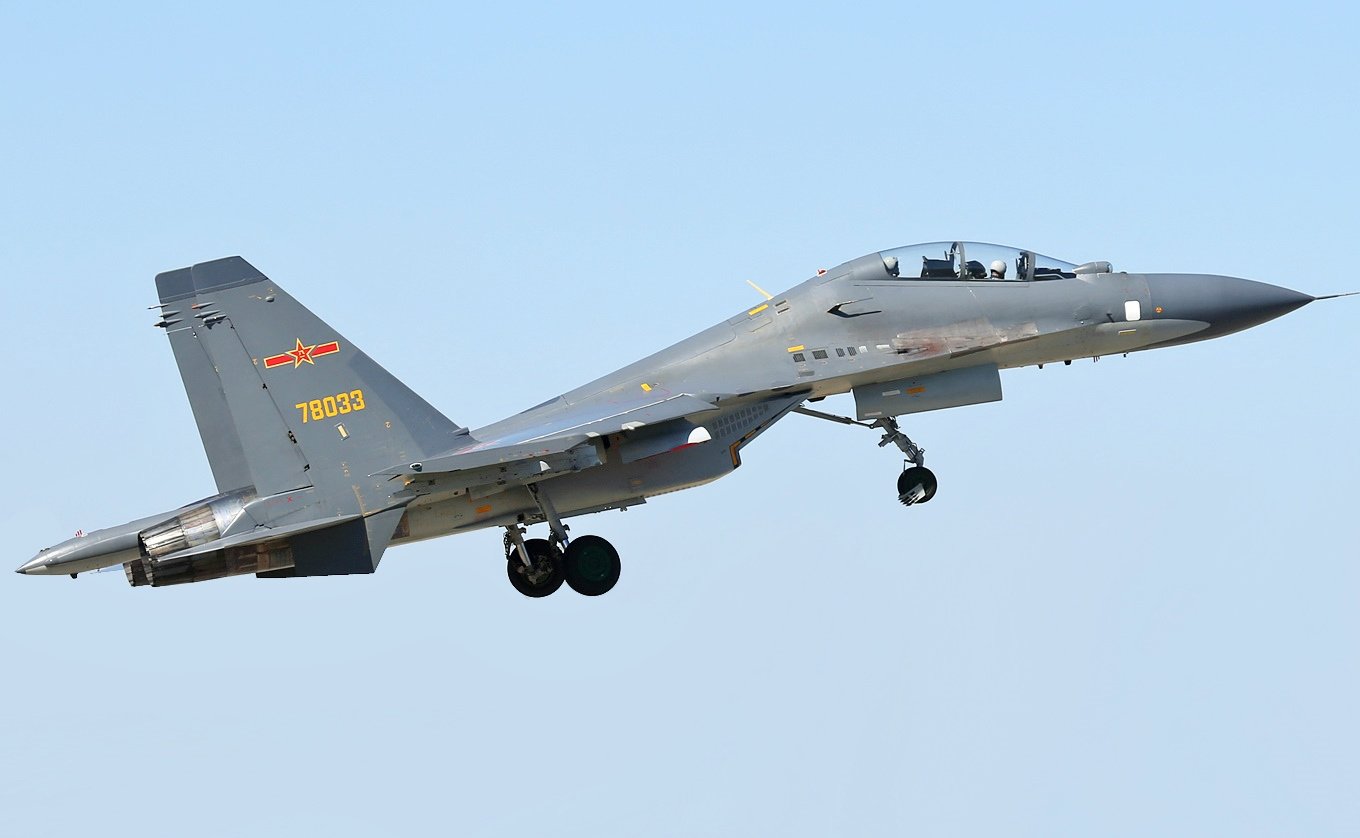
The Su-30MKK is a multirole fighter variant of the Sukhoi Su-27 family, specifically developed for the People's Liberation Army Air Force (PLAAF). The aircraft was manufactured at the Komsomolsk-on-Amur Aircraft Plant (also known as KNAAPO or KnAAZ), located in Komsomolsk-on-Amur, Khabarovsk Krai, Russia. This facility is recognized as the largest aircraft-manufacturing company in Russia and operates as part of the United Aircraft Corporation (UAC) within the Sukhoi and Yakovlev corporate structures.
The Komsomolsk-on-Amur plant has a long industrial history, beginning with a 1932 Soviet government decision to establish an aviation plant on the Amur River. Early production included the Tupolev R-6 reconnaissance aircraft and the Ilyushin DB-3 bomber, of which nearly 2,800 units (including the Il-4 variant) were supplied during World War II. The plant transitioned to jet fighters in the 1940s with the MiG-15 and MiG-17, eventually becoming the primary site for the Su-27 Flanker in the mid-1980s. The Su-30MKK emerged as a direct export baseline from this lineage, preceding the Su-30MK2, which remained in serial production at the Komsomolsk plant until February 2015.
While the Su-30MKK was designed by the Sukhoi Design Bureau, its production at Komsomolsk-on-Amur solidified the plant's role as a hub for export-oriented heavy fighters. The Su-27 family, including the Su-30MK, Su-33, and Su-35, is described as the backbone of numerous air forces globally. The Su-30MKK specifically served as the foundation for later variants such as the Su-30MK2, which was produced for the Chinese naval air arm (PLANAF). Following the cessation of Su-30MK2 production in 2015, the Komsomolsk facility shifted its focus toward the production of the Su-35 and the fifth-generation Su-57. The legacy of the Su-30MKK lies in its role as a premier fourth-generation multirole fighter that expanded the global reach of Russian aviation technology.