
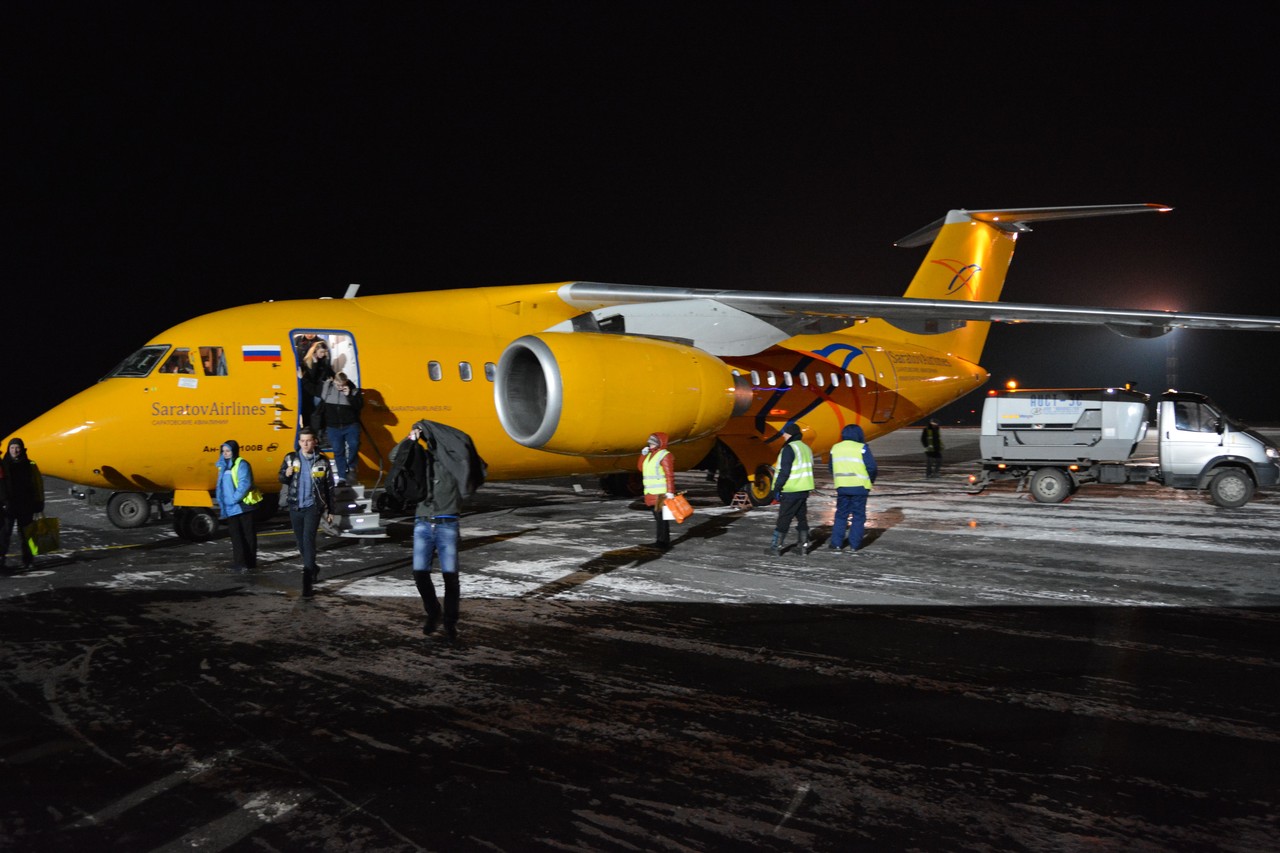
Development and Design
The An-148 emerged from Antonov's determination to modernize post-Soviet regional aviation in the 1990s. Chief designer Oleg Kapustin led the development team with ambitious objectives: create a technologically advanced regional jet that could compete internationally while incorporating at least 70 percent Russian and Ukrainian components. The design featured innovative supercritical wings for improved fuel efficiency and robust construction enabling operations in temperatures as low as minus 50 degrees Celsius.
The high-wing configuration distinguished the An-148 from most regional jets, allowing operations from shorter runways while providing ground clearance for the underwing-mounted engines. Three prototypes accumulated approximately 600 test flights before certification was granted by Russia's Interstate Aviation Committee and Ukraine's State Aviation Administration on February 26, 2007.
Production Challenges
Production began in 2002 at the AVIANT plant in Kyiv, Ukraine, but proceeded at a frustratingly slow pace. The first prototype flew in December 2004, followed by a second in April 2005. To accelerate output, Antonov partnered with Russia's Voronezh Aircraft Production Association (VASO), which produced its first An-148 on June 28, 2009.
Total production reached only 47 aircraft by 2018, distributed across the years as follows: one aircraft in 2004-2005, two in 2009, six in 2010-2011, four in 2012, nine in 2013, five in 2014-2015, three in 2016, two in 2017, and three in 2018. This modest output reflected the challenges facing non-Western manufacturers in the competitive regional jet market.
The Manufacturer
Antonov, founded in 1946 by legendary designer Oleg Antonov, relocated from Novosibirsk to Kyiv in 1952 and became synonymous with robust, practical aircraft designs. The company produced over 22,000 aircraft, including the ubiquitous An-2 biplane, the massive An-124 Ruslan cargo aircraft, and the world's largest airplane, the An-225 Mriya. Despite political upheavals and the 2022 Russian invasion of Ukraine, Antonov continues as a Ukrainian state enterprise, maintaining its design capabilities under challenging circumstances.
Engine and Technical Specifications
The An-148 relied on two Progress D-436-148 turbofan engines, each producing 15,060 pounds of thrust. These high-bypass engines, manufactured by Ukraine's Ivchenko-Progress, derived from the proven D-36 family that entered production in the 1980s. The D-436 series powered various aircraft including the Yak-42 and An-72/74, with over 1,000 units built across all variants.
The aircraft required a two-person crew and offered flexible passenger configurations from 68 to 85 seats depending on airline requirements. Maximum speed reached 513 miles per hour, with a service ceiling of 40,026 feet. The 1,305-mile range suited regional routes perfectly, though early operators reported reliability concerns with both airframe and engines.
Commercial Service and Operations
Commercial service commenced on December 21, 2009, when Rossiya Airlines operated inaugural flight FV135 from Saint Petersburg's Pulkovo Airport to Moscow's Sheremetyevo. However, operational challenges quickly emerged. By May 2010, Rossiya Airlines reported reliability issues and pilot shortages despite accumulating only 915 flight hours and 710 landings across their fleet.
Other operators included Ukraine International Airlines, Cubana de Aviación, and Angara Airlines. Cubana received their first An-158 variant on April 18, 2013, but operational difficulties persisted across the fleet. The aircraft carried a list price between 24 and 30 million dollars, positioned competitively against Western rivals.
Tragedy and Grounding
The An-148's reputation suffered a devastating blow on February 11, 2018, when Saratov Airlines flight 703 crashed shortly after takeoff from Moscow, killing all 71 people aboard. Russian authorities immediately grounded all An-148 and An-158 aircraft pending investigation. Cubana followed suit in May 2018, grounding their An-158 fleet for technical issues, effectively ending the type's commercial viability.
Russian production ceased in October 2018 amid deteriorating Ukraine-Russia relations, with VASO delivering its final An-148. This marked the end of meaningful production for the program.
Legacy and Current Status
Fewer than 20 An-148s remain active as of recent assessments, with most aircraft stored, parked, or written off. The type represents Ukraine's ambitious but ultimately unsuccessful attempt to establish a foothold in the global regional jet market dominated by Embraer and Bombardier.
The An-148's brief career illustrates the enormous challenges facing aircraft manufacturers outside the established Western and Brazilian companies. Despite innovative design features and competitive specifications, production difficulties, reliability issues, and geopolitical tensions combined to limit the program's success. The aircraft stands as a testament to Ukrainian aerospace ambitions constrained by economic realities and international market dynamics.