
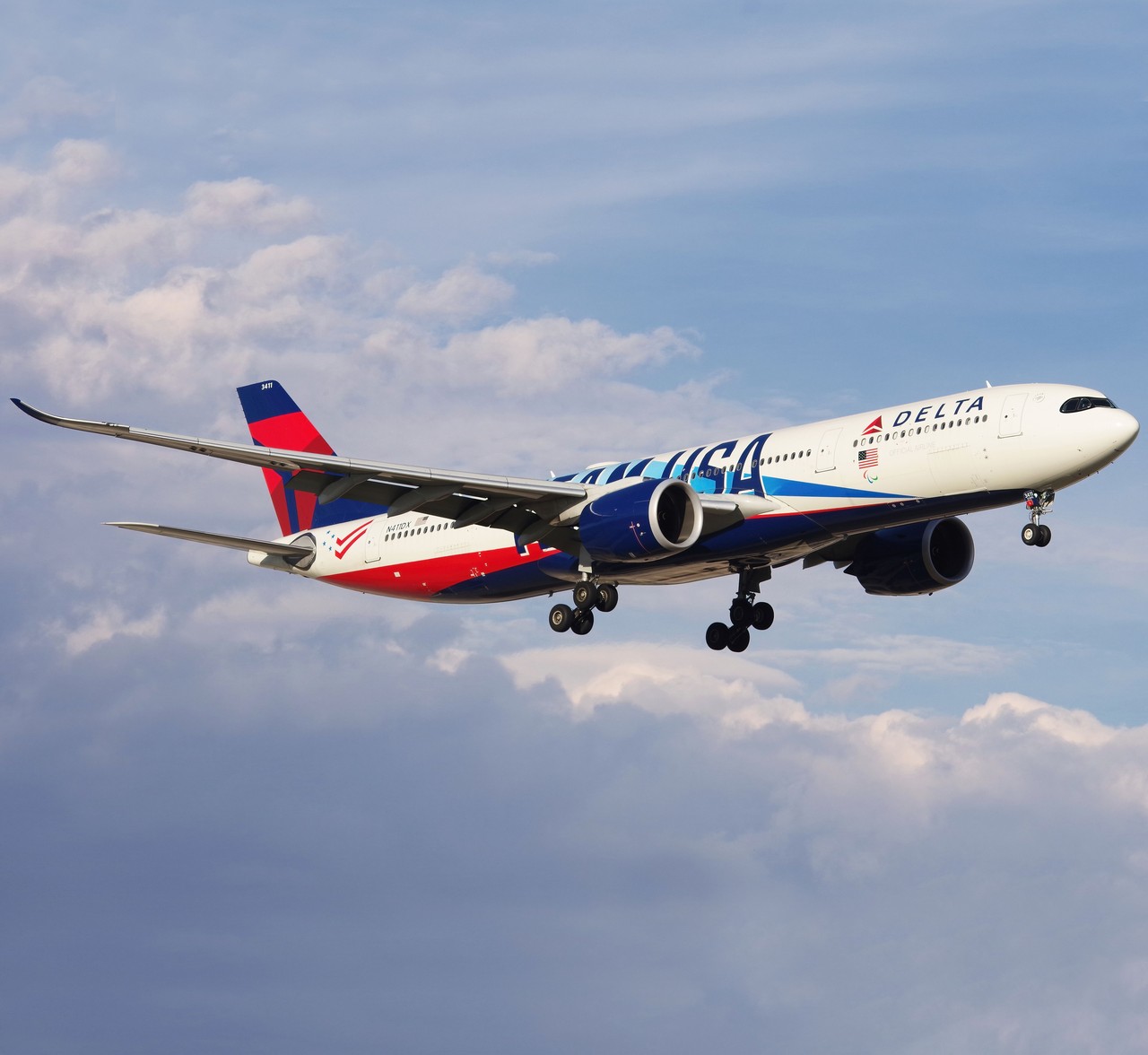
Market Dominance and Commercial Impact
The A330-900neo has captured the majority of A330neo orders, with 433 of the total 445 orders across both variants going to the larger -900 model. This overwhelming preference demonstrates the aircraft's ability to fill the sweet spot between capacity and range that airlines demand for medium to long-haul routes. TAP Air Portugal, the launch customer, deployed their first aircraft on high-density routes including Lisbon to São Paulo, showcasing the type's transatlantic capabilities.
Delta Air Lines placed the largest single order with 37 aircraft, while leasing companies including CIT Group, Avolon, and Air Lease Corporation collectively ordered 93 aircraft, indicating strong investor confidence in the type's rental market appeal. Recent orders from VietJet for 40 aircraft and Cathay Pacific for 30 units demonstrate continued market demand despite industry challenges.
Development and Certification
Airbus launched the A330neo program to extend the life of their successful A330 platform against competition from Boeing's 787 Dreamliner. The development program required a comprehensive 1,400-hour flight test campaign using three prototypes plus the first production aircraft. The A330-900 portion consumed 1,100 of those test hours, with the remainder dedicated to the smaller A330-800 variant.
Engine development proved challenging, with Rolls-Royce's Trent 7000 powerplant causing a six-week program delay in December 2016. The engines finally arrived at Airbus facilities in June 2017, enabling the maiden flight four months later. Despite these setbacks, the aircraft achieved EASA type certification on 26 September 2018, maintaining Airbus's reputation for meeting regulatory standards.
Airbus: European Aviation Giant
Airbus emerged from a 1970 European consortium designed to compete with American aerospace dominance, later evolving into a single integrated company. The A330-900neo represents the culmination of decades of wide-body expertise, building on the original A330's success while incorporating modern technology. The company's distributed manufacturing approach sees components built across Europe: high-lift devices in Bremen, fuselage sections in Hamburg, center wing-boxes in Nantes, and titanium engine pylons in Toulouse, with final assembly at the Toulouse facility.
The manufacturer's other notable aircraft include the A320 family, which revolutionized short-haul aviation with fly-by-wire technology, and the massive A380 superjumbo. This diverse portfolio positions Airbus as Boeing's primary competitor across all commercial aviation segments.
Technical Innovation and Performance
The Rolls-Royce Trent 7000 engines represent the latest in high-bypass turbofan technology, designed specifically for the A330neo program. These powerplants deliver the fuel efficiency improvements that justify the aircraft's existence in an increasingly competitive market. The engines' development challenges reflected the complexity of modern turbofan design, where marginal efficiency gains require sophisticated engineering.
The aircraft's 6,550-nautical-mile range enables non-stop service on routes like Lisbon to Chicago O'Hare and Washington Dulles, which TAP Air Portugal operates five times weekly. This capability places the A330-900neo in direct competition with the Boeing 787-9, offering airlines a choice between proven A330 reliability and 787 advanced materials technology.
Service Entry and Operational History
TAP Air Portugal received the first A330-900neo on 26 November 2018, leased from Avolon, and operated the type's inaugural commercial flight on 15 December 2018. The Lisbon to São Paulo route highlighted the aircraft's long-haul capabilities, with the initial aircraft configured for 298 passengers across three cabin classes: 34 full-flat business, 96 economy plus, and 168 economy seats.
Subsequent operators have adapted the aircraft to diverse route networks. Kuwait Airways operates both A330-900 and A330-800 variants, while low-cost carriers like AirAsia X and Cebu Pacific have chosen high-density configurations. This operational flexibility demonstrates the platform's adaptability to different business models.
Production Challenges and Future Outlook
A330 production faced significant challenges during the COVID-19 pandemic, with monthly output reduced from 3.5 to 2 aircraft in April 2020. Earlier, 2019 had already seen total A330 production cut to 50 annual deliveries, with more than half being neo variants. These production adjustments reflect broader industry turbulence but also the transition from classic A330s to the more efficient neo variants.
Despite these challenges, recent orders from established carriers like Cathay Pacific and emerging markets through airlines like Flynas indicate sustained demand. The aircraft's position as a modernized version of a proven platform appeals to airlines seeking reliability over the technological risks associated with all-new designs. With production continuing at Toulouse and orders extending through 2025, the A330-900neo appears positioned for long-term commercial success.