
Limited Market Success
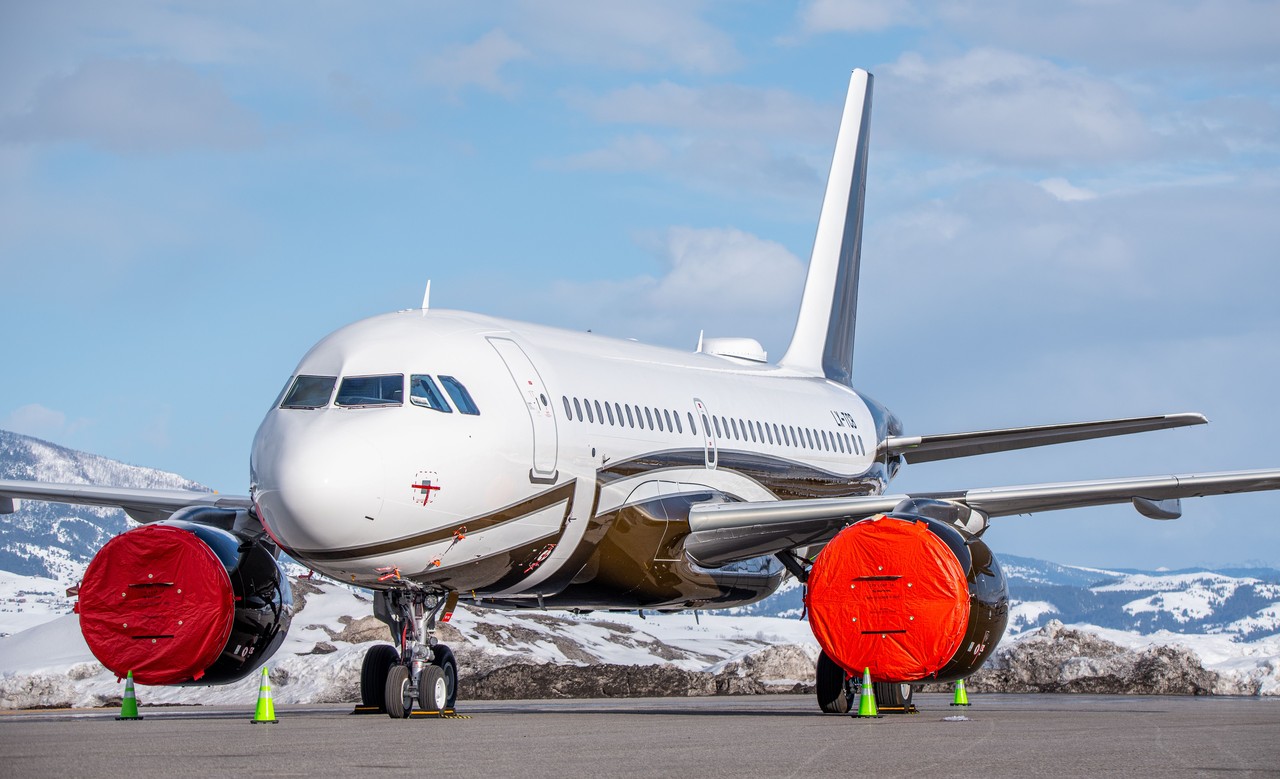
Despite its technological advances, the A319neo has struggled to find commercial acceptance in the airline market. By May 2025, only 57 aircraft had been ordered, representing merely one percent of total A320neo family orders. This stark contrast to the popularity of larger A321neo and A320neo variants reflects airlines' preference for higher-capacity aircraft that offer better economics on popular routes. Production has remained minimal, with Airbus delivering approximately one A319neo monthly as of September 2025.
Manufacturing Heritage
Airbus manufactures the A319neo exclusively at its Hamburg-Finkenwerder facility in Germany, continuing a tradition established in the 1990s when Hamburg began final assembly of A320 family aircraft. This marked a significant milestone for German aircraft manufacturing, positioning Hamburg as a crucial production center for European commercial aviation. The facility's specialization in A319 variants has made it the sole source for these compact narrowbody aircraft.
Development and Certification
The A319neo emerged from Airbus's comprehensive A320 Enhanced modernization program that began in 2006, culminating in the A320neo family announcement in December 2010. The aircraft completed its maiden flight from Toulouse on March 31, 2017, powered by CFM International LEAP-1A engines. A second variant equipped with Hamilton Standard propellers and featuring additional aerodynamic improvements, including distinctive winglets known as "sharklets," conducted its first flight from Hamburg on May 31, 2017.
Certification proceeded with multiple engine options, as Airbus sought to provide airlines flexibility in powerplant selection. The Pratt & Whitney GTF (Geared Turbofan) variant, designated MSN 6464, underwent extensive flight testing before achieving certification in the fourth quarter of 2019, expanding operational options for potential customers.
Engine Technology
Two advanced turbofan engines power the A319neo, each representing cutting-edge propulsion technology for narrowbody aircraft. The CFM International LEAP-1A served as the initial powerplant during early certification campaigns, offering improved fuel efficiency and reduced emissions compared to previous generation engines. The alternative Pratt & Whitney GTF features innovative geared turbofan technology that allows the fan and low-pressure turbine to operate at optimal speeds independently.
Both engine options contribute significantly to the aircraft's promised 15 percent fuel savings compared to the original A319ceo, achieved through advanced materials, improved aerodynamics, and more efficient combustion systems. These powerplants represent the latest evolution in commercial aviation propulsion, designed specifically for next-generation narrowbody operations.
Airbus Legacy
Airbus, headquartered in Toulouse, France, developed the A319neo as part of its strategy to modernize the entire A320 family with contemporary technology. The European multinational aerospace corporation continues operations today, maintaining its position as a leading commercial aircraft manufacturer alongside Boeing. The A319neo represents Airbus's commitment to providing airlines with fuel-efficient options across all market segments, even those with limited demand.
The company's A320 family, introduced in the 1980s, pioneered digital fly-by-wire flight controls and side-stick technology in commercial aviation. The A319neo maintains these innovative control systems while incorporating modern engine technology and aerodynamic improvements, preserving pilot commonality across the entire A320neo family.
Operational Characteristics
As the shortest member of the A320neo family, the A319neo targets regional routes and lower-density markets where larger aircraft would prove uneconomical. The aircraft maintains the same fuselage width as other A320 family members while offering reduced passenger capacity, making it suitable for airlines serving smaller airports or routes with limited demand.
The 15 percent fuel efficiency improvement over the A319ceo provides operational advantages for airlines focusing on environmental responsibility and fuel cost reduction. Combined with modern avionics and the proven A320 family flight deck design, the A319neo offers airlines a contemporary solution for regional operations.
Market Reality
The A319neo's commercial performance reflects broader industry trends favoring larger, more economical aircraft. While the original A319ceo achieved reasonable success with 1,518 deliveries by August 2025, including 1,264 active aircraft, the neo variant has attracted minimal interest. Airlines increasingly prefer A320neo and A321neo variants that offer better seat-mile economics and higher revenue potential on popular routes.
This market reality demonstrates the challenges facing smaller narrowbody aircraft in contemporary commercial aviation, where airlines prioritize capacity and efficiency over route flexibility. Despite its technological merits, the A319neo remains a niche product serving specific operational requirements rather than achieving mainstream commercial success.