
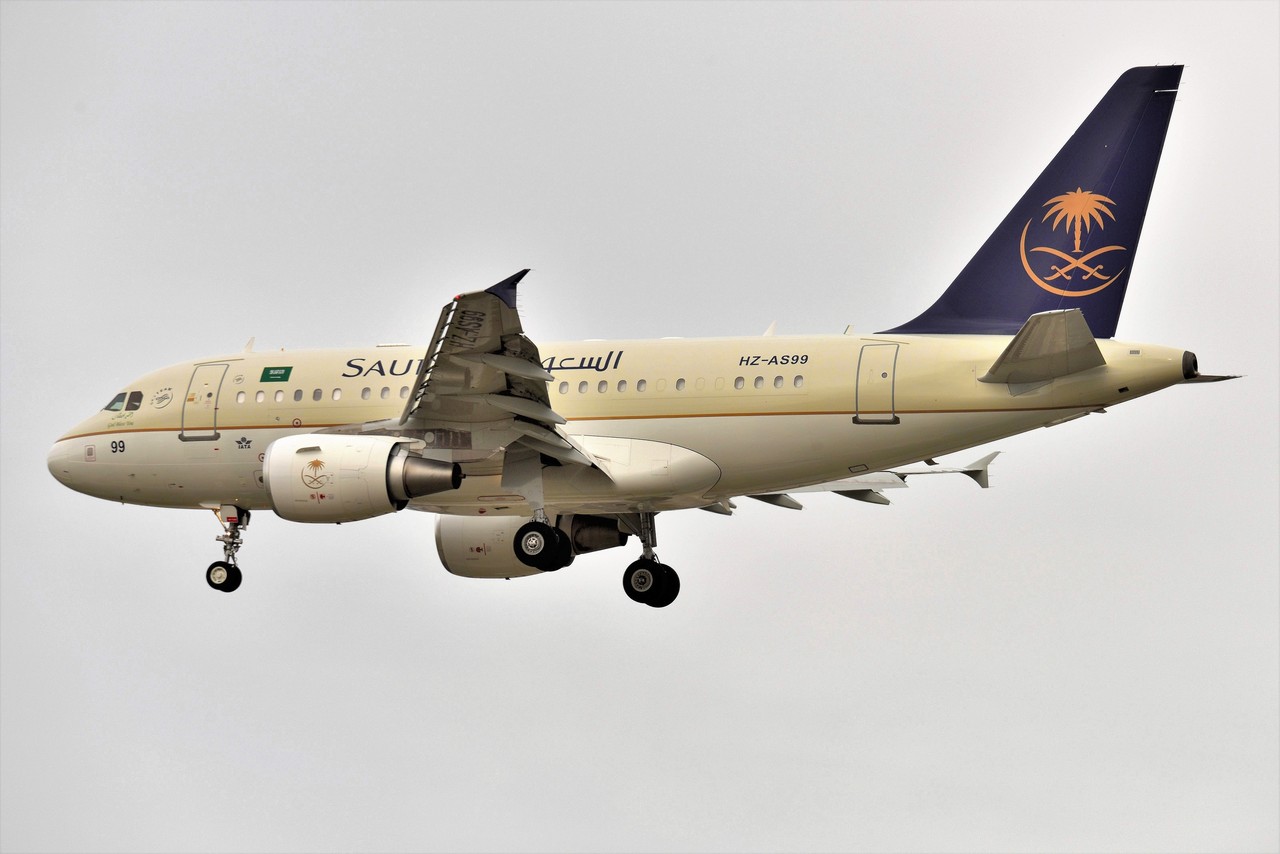
The Smallest Giant
Despite belonging to one of the most successful airliner families in aviation history, the A318 struggled to find its market niche in an industry recovering from the September 11 attacks. The aircraft emerged from Airbus engineering teams as a shortened derivative of the A319, internally designated A319M5, with the fuselage reduced by 0.79 meters ahead of the wing and 1.6 meters behind it. This compact configuration maintained 95 percent commonality with other A320 family members while incorporating innovative laser welding techniques on the lower fuselage—a first for commercial aviation that reduced both weight and manufacturing costs.
Manufacturing Innovation and Challenges
Airbus SE, the Toulouse-based manufacturer that evolved from the 1970 European consortium of Aérospatiale, Deutsche Airbus, Hawker Siddeley, and VFW-Fokker, built all 80 A318s at its Hamburg-Finkenwerder facility in Germany. The company had already established itself as Boeing's primary competitor with the A320 family launch in 1984, but the A318 represented a calculated risk to penetrate the 100-seat market dominated by regional jets and turboprops.
The prototype F-WWIA, the 1,599th airframe in the A320 family lineage, took to the skies on January 15, 2002, initially powered by Pratt & Whitney PW6000 engines. However, engine selection became a critical factor in the aircraft's commercial struggles, as the PW6000 suffered development delays and fuel efficiency problems that exceeded expectations. CFM International's CFM56-5B engines, produced by the joint venture between GE Aviation and Safran, emerged as the more reliable powerplant option, though most operators had to wait for Pratt & Whitney certification completed in November 2005.
Commercial Service Record
Frontier Airlines earned the distinction of becoming the A318's launch customer, receiving aircraft N801FR (manufacturer serial number 1939) on July 22, 2003. The Denver-based carrier operated 11 A318s before retiring the type in August 2013, citing operational efficiency concerns in favor of larger aircraft. Air France became the type's largest operator with 18 aircraft, including F-GUGM delivered in April 2006, and maintained commercial service longer than any other airline before transitioning to the Bombardier A220 series.
British Airways demonstrated the A318's versatility by obtaining steep-approach certification in 2007, enabling operations into London City Airport's challenging runway. The carrier later deployed the type on transatlantic routes to New York's JFK Airport starting in 2009, showcasing the aircraft's range capabilities of 3,350 kilometers with a full passenger load.
Technical Excellence, Commercial Reality
Engineering achievements couldn't overcome market timing and economic pressures that plagued the A318 throughout its production life. The aircraft featured a taller vertical stabilizer for enhanced stability compared to its A319 sibling, and pilots appreciated the common type rating shared across the entire A320 family. With a maximum cruise speed of Mach 0.82 and service ceiling of 12,500 meters, the A318's performance matched passenger expectations, but airlines increasingly favored larger aircraft that offered better seat-mile economics.
Post-September 11 order cancellations from Air China, America West, and TWA devastated early sales projections. The collapse of these commitments, combined with fuel price volatility and airline industry consolidation, left Airbus with limited market opportunities for an aircraft positioned between traditional regional jets and mainline narrowbodies.
Specialized Applications
While commercial passenger service remained limited, the A318 found a niche in corporate and VIP markets through the A318 Elite variant. Comlux became the launch customer for this luxurious configuration in 2005, taking delivery of three aircraft that demonstrated the type's adaptability to specialized missions. These high-end conversions featured extended range capabilities and custom interior configurations serving wealthy individuals and government operators.
Legacy and Current Status
Production concluded in 2013 after exactly 80 deliveries, making the A318 the rarest member of the A320 family that has otherwise achieved tremendous commercial success with over 10,000 total orders across all variants. Air France operated the final commercial passenger services before retiring their fleet in favor of more efficient alternatives, though several aircraft continue flying in corporate and government roles worldwide.
The A318's legacy extends beyond its modest production numbers through technological innovations that benefited subsequent Airbus programs. The laser welding techniques pioneered on the type became standard across the manufacturer's product line, while lessons learned about market positioning influenced the development strategy for the A220 series acquired from Bombardier. Today, fewer than 20 A318s remain in active service, primarily serving specialized operators who value the aircraft's combination of A320 family reliability and compact size for unique mission requirements.