
The Khrunichev State Research and Production Space Center, known as GKNPTs im. M. V. Khrunicheva, is a prominent Russian aerospace entity with a history rooted in early 20th-century industrialization. The organization began as an automobile factory established at Fili, near Moscow, in 1916 by the Russo-Baltic Wagon Works. During the 1920s and 1930s, the Fili plant evolved into one of the Soviet Union's primary aircraft manufacturing hubs, though it functioned largely as a production site for designs created by other Soviet design bureaus, such as those led by Tupolev, Ilyushin, and Petlyakov.
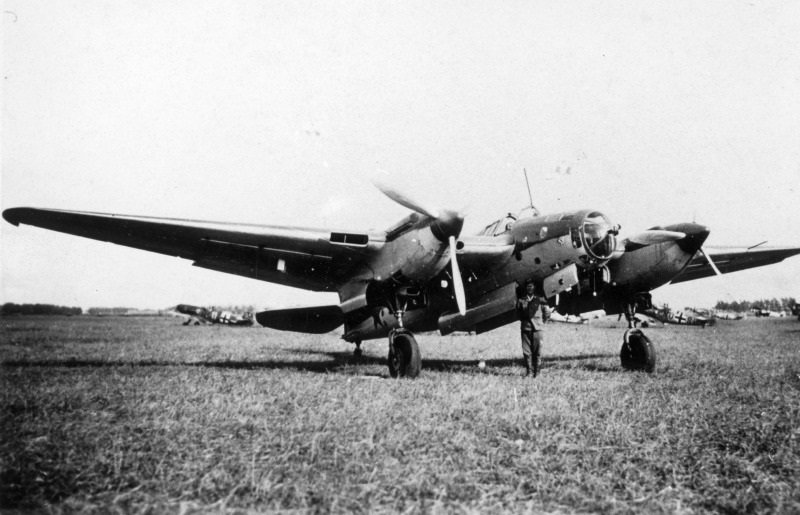
Despite this extensive history of aviation production, there is no verifiable evidence in authoritative records that the center ever designed or produced a landplane designated as the Ar-2. While the Fili plant produced various aircraft during the post-war era, including the Ilyushin Il-28, the Ar-2 designation does not appear in the manufacturer's documented portfolio. Historical records indicate that the only widely recognized Soviet aircraft with the Ar-2 designation was the Arkhanguelskiy Ar-2, a derivative of the SB bomber; however, this aircraft is associated with the Arkhangelskiy design bureau and is not linked to the Khrunichev enterprise.
Over the decades, the organization shifted its focus away from fixed-wing aircraft toward the development of ballistic missiles and space hardware. By the modern era, the center became specialized in the production of heavy-lift launch vehicles and spacecraft, most notably the Proton, Rokot, and Angara rocket families. The enterprise was eventually consolidated as the Khrunichev State Research and Production Space Center, named after Mikhail V. Khrunichev, the former Soviet minister of defense industry. Today, the company remains an active federal state unitary enterprise of the Russian Federation, focusing exclusively on space systems rather than the design or production of civil or military landplanes.