
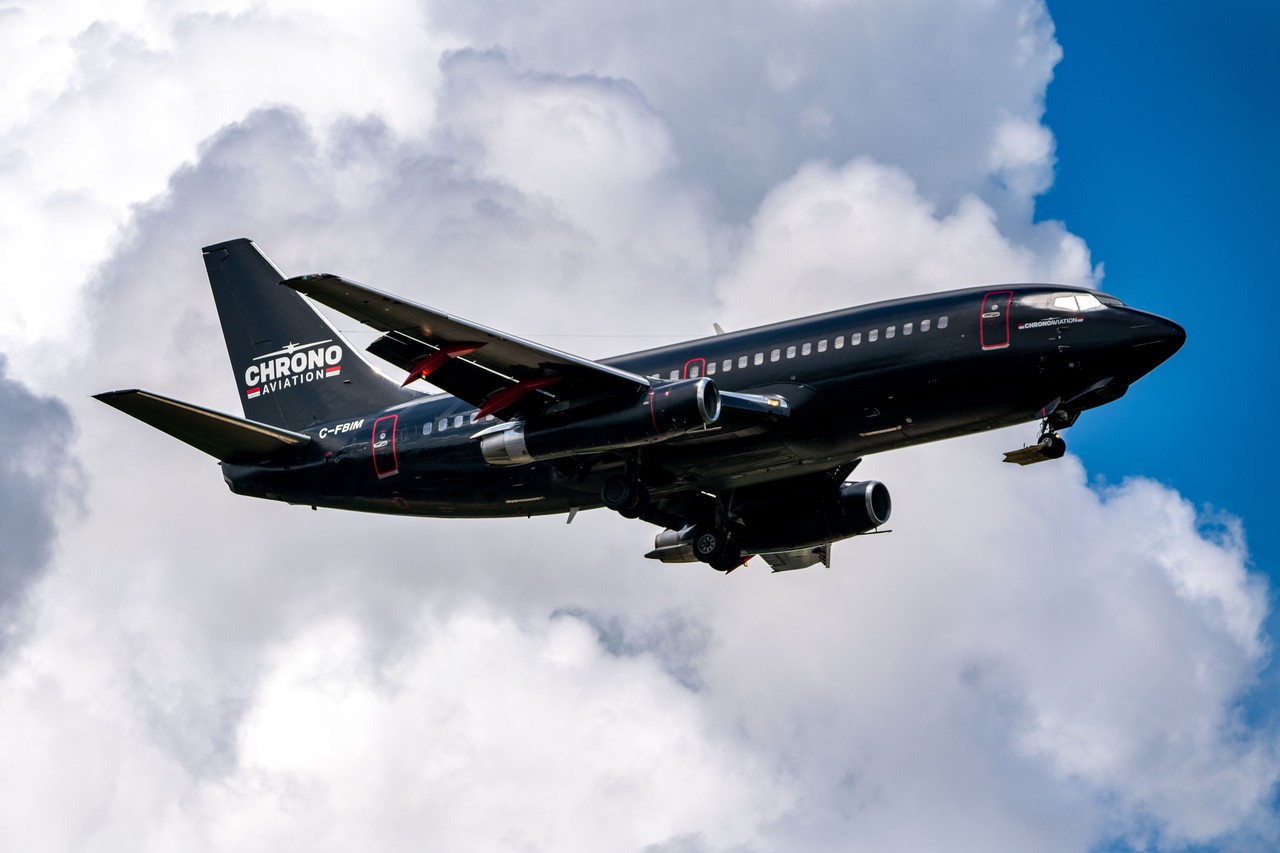
Service History
The 737-200 transformed short-haul aviation by providing airlines with an economical twin-engine alternative to larger four-engine aircraft on domestic routes. United Airlines launched commercial service on April 28, 1968, operating the inaugural revenue flight from Chicago to Grand Rapids. The aircraft quickly dominated the short-haul market, with major operators including Southwest Airlines, USAir, Piedmont Airlines, and internationally with All Nippon Airways, which introduced the Advanced variant on May 20, 1971. Boeing delivered the final 737-200 to Xiamen Airlines in August 1988, concluding a 21-year production run.
The Manufacturer
Boeing developed the 737-200 under chief engineer Joe Sutter's leadership to compete directly with the BAC One-Eleven and Douglas DC-9 in the emerging short-haul jet market. The Boeing Company, founded by William E. Boeing in 1916, had evolved through strategic mergers including the 1997 acquisition of McDonnell Douglas. The Renton plant near Seattle became the exclusive manufacturing site for all 737 variants, a tradition continuing today as Boeing maintains production of newer 737 generations at the same facility.
Engine & Technical Details
Powered by twin Pratt & Whitney JT8D low-bypass turbofans, the 737-200 utilized engines producing between 14,000 and 21,700 pounds of thrust depending on the specific JT8D variant. Pratt & Whitney, now part of RTX Corporation, produced over 32,000 JT8D engines across all applications, making it one of aviation's most successful powerplants. The aircraft featured a two-pilot cockpit configuration with accommodation for a third crew member when required by regulations. Boeing stretched the fuselage 36 inches forward and 40 inches aft of the wing compared to the original 737-100, creating the capacity increase that made the variant commercially viable.
Pilot Perspective
The 737-200 earned pilot approval for its straightforward handling characteristics and reliable performance. The aircraft demonstrated a service ceiling of 37,000 feet with a climb rate of approximately 3,000 feet per minute, providing operational flexibility across diverse route structures. Its short-field performance capabilities, particularly enhanced in the Advanced variant introduced in 1971 with improved flaps and leading-edge slats, allowed operations into airports with challenging runway lengths. The twin-engine configuration offered operational economics superior to three or four-engine competitors while maintaining dispatch reliability that exceeded 99 percent for many operators.
Production & Legacy
Boeing's production of exactly 1,114 aircraft established the 737-200 as the foundation for what would become aviation's most produced commercial aircraft family, with over 17,000 total 737s delivered across all variants since 1967. The aircraft succeeded by filling the capacity gap between smaller regional jets and larger narrow-body aircraft, enabling the growth of point-to-point airline networks that bypassed traditional hub-and-spoke systems. Boeing offered multiple configurations including the 737-200C Combi for mixed passenger-cargo operations and the 737-200QC Quick Change variant for airlines requiring rapid reconfiguration between passenger and freight service.
Military applications remained limited, with the most notable being 19 T-43A aircraft delivered to the United States Air Force beginning in 1973 for navigator training missions. These military variants retained the basic 737-200 airframe while incorporating specialized navigation equipment and instructor stations.
Today, few 737-200s remain in commercial service, with the oldest surviving example dating to 1971 deliveries, representing over 54 years of operational life by 2025. Most aircraft have been retired to storage or scrapping as newer 737 variants and competing aircraft offer superior fuel efficiency and reduced maintenance costs. The 737-200's legacy endures through its role in proving the viability of twin-engine short-haul operations and establishing Boeing's dominance in the narrow-body market segment that continues with current 737 MAX production.