
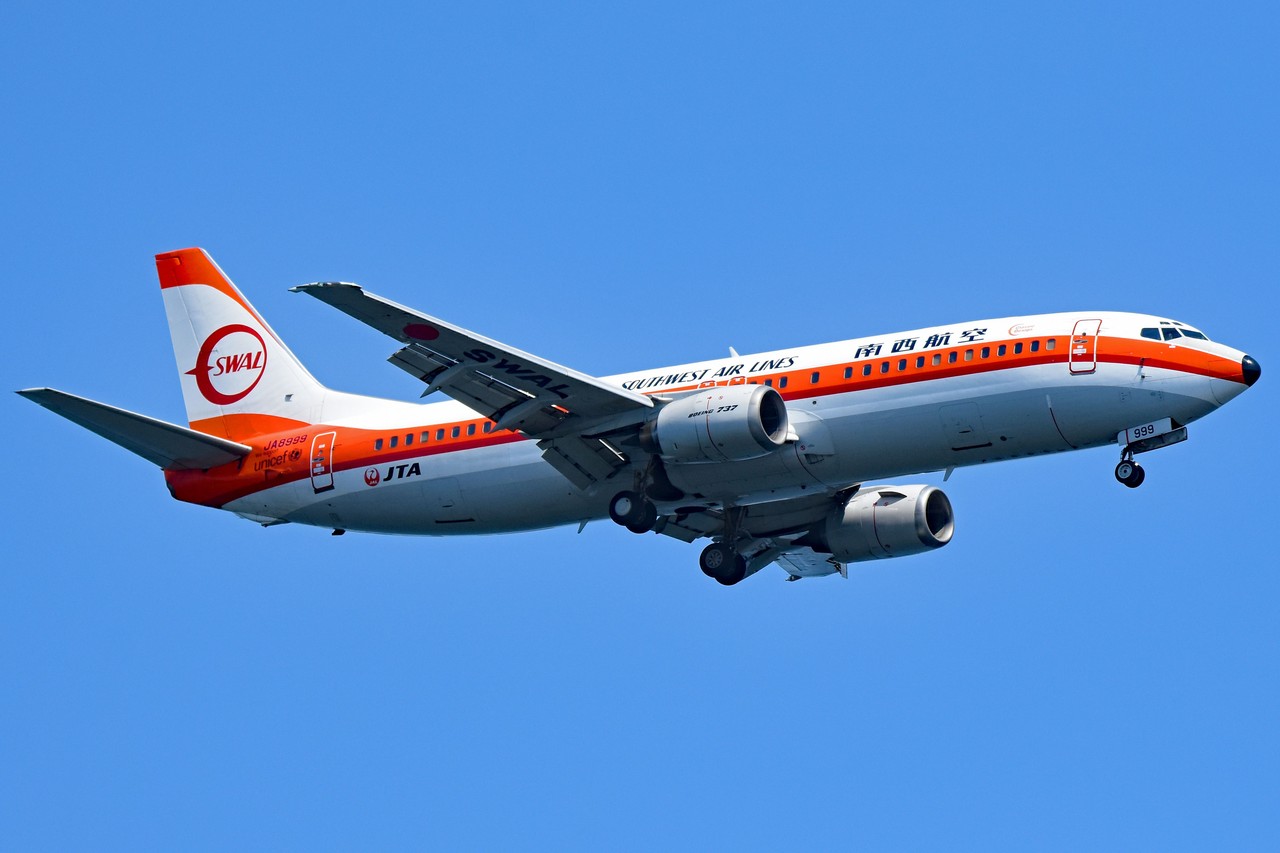
Service History
The 737-400 entered commercial service on September 15, 1988, with Piedmont Airlines, which served as the launch customer with an order for 25 aircraft. Southwest Airlines emerged as another significant early operator, helping establish the type's reputation for reliable short to medium-haul operations. The aircraft competed directly against the Airbus A320 and McDonnell Douglas MD-80 series in the highly contested 150-200 seat market segment.
As part of the Boeing 737 Classic family, which included the 737-300, 737-400, and 737-500, the stretched variant represented Boeing's strategic response to increasing airline demand for higher-capacity aircraft on popular routes. The Classic series achieved remarkable commercial success, with 1,988 total deliveries by the time production concluded in December 1999.
The Manufacturer
Boeing developed the 737-400 as part of their broader 737 program, which launched in 1967 and evolved into aviation's most successful commercial airliner family. The company manufactured all 737-400s at their Renton Factory in Renton, Washington, the same facility that continues producing 737 variants today. Boeing's 737 program has generated over 17,000 orders across all variants, making it one of the most successful aircraft programs in history, surpassed in total numbers only by the Cessna 172 and matched by the Douglas DC-3.
The Seattle-based manufacturer launched the 737-400 program in 1985, recognizing a market opportunity between their existing 737-300 and the larger 757-200. This strategic positioning allowed Boeing to offer airlines a comprehensive narrow-body lineup covering passenger capacities from 100 to nearly 200 seats.
Technical Design and Innovation
Engineering teams stretched the 737-400 fuselage by 10 feet compared to the 737-300, necessitating significant structural modifications to maintain safety and performance standards. The increased length required strengthened wing spars to handle the additional weight and stress loads during flight operations. Boeing incorporated a distinctive tail bumper to prevent costly tailstrike incidents during takeoff rotation, a lesson learned from operational experience with longer aircraft.
The 188-passenger capacity mandated the installation of four overwing emergency exits—two on each side of the cabin—to comply with federal evacuation regulations. This configuration became a identifying characteristic of the 737-400, distinguishing it visually from shorter variants in the Classic series.
Boeing's prototype aircraft rolled out on January 26, 1988, followed by the maiden flight on February 19, 1988. The compressed development timeline of less than three years from program launch to first flight demonstrated Boeing's engineering efficiency and manufacturing capabilities during the competitive late-1980s airliner market.
Production Legacy
Boeing delivered the final 737-400 to CSA Czech Airlines on February 28, 2000, concluding a 12-year production run that yielded 489 aircraft. The last Classic series aircraft rolled off the Renton assembly line on December 9, 1999, marking the transition to the Next Generation 737 family with updated avionics, engines, and aerodynamic improvements.
The 737-400's production numbers reflected the challenging market conditions of the 1990s, when airlines increasingly favored either smaller, more fuel-efficient aircraft for thin routes or larger wide-body jets for high-density markets. Despite this market pressure, the 737-400 found consistent demand from carriers requiring additional capacity on established narrow-body routes without the operational complexity of larger aircraft.
The aircraft's role in Boeing's product line proved transitional but vital, maintaining Boeing's competitive position against Airbus during a crucial period in commercial aviation. The engineering solutions developed for the 737-400, particularly the structural reinforcements and extended fuselage design, informed subsequent Boeing narrow-body development programs.
Operational Impact
The 737-400 served airlines worldwide on domestic and short-haul international routes, proving particularly valuable for carriers operating hub-and-spoke networks requiring consistent aircraft types for crew training and maintenance efficiency. Its capacity positioned it ideally for upgrading service on routes previously served by smaller aircraft as passenger demand grew throughout the 1990s.
While production numbers remained modest compared to other 737 variants, the 737-400 validated Boeing's market analysis and demonstrated the viability of stretched narrow-body designs. This experience directly influenced the development of the 737-800 and 737-900, which became cornerstone products of the Next Generation 737 family launched in the late 1990s.