
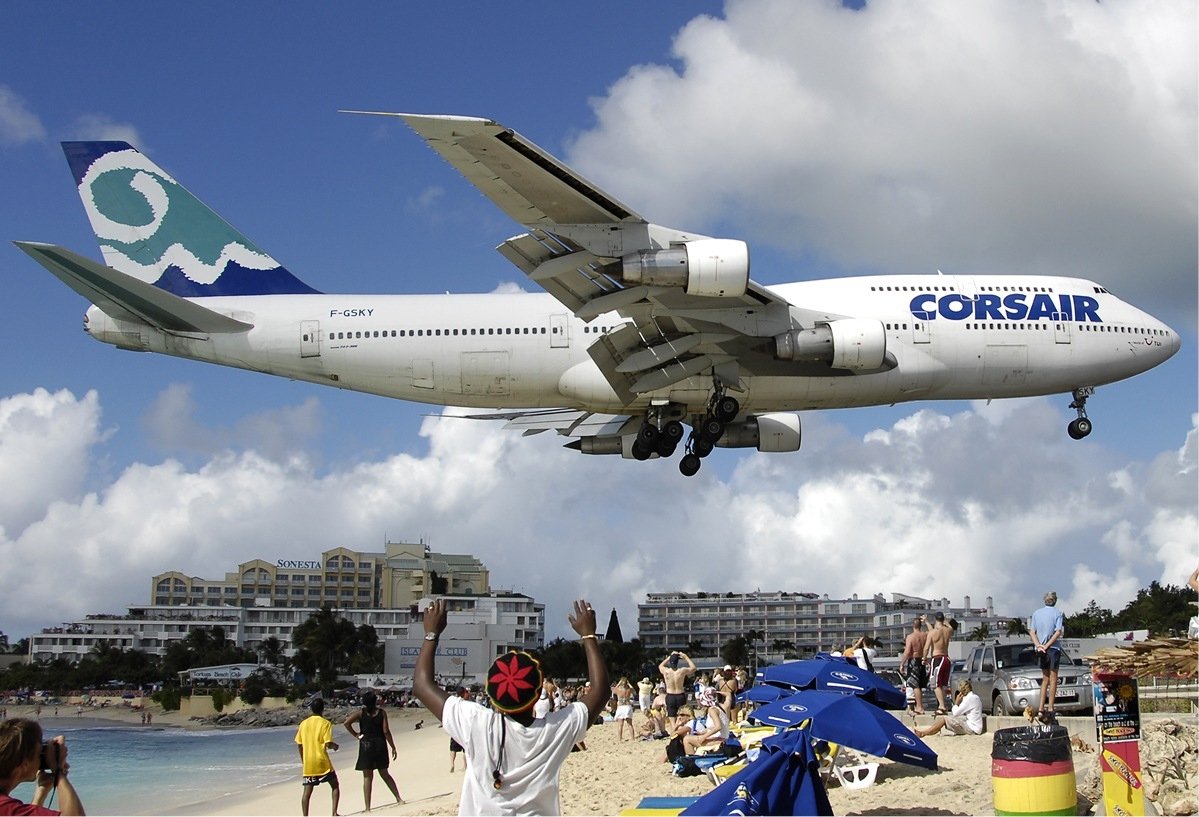
Service History
Swissair launched the 747-300 era when it placed the initial order on June 11, 1980, becoming the launch customer for Boeing's newest jumbo variant. The airline received the first production aircraft on March 23, 1983, and promptly inaugurated service on the prestigious Zurich-New York route. Despite Boeing's expectations, the 747-300 became the only 747 variant never ordered by a United States airline, finding its primary market among international carriers seeking high-capacity solutions.
Japan Air Lines emerged as a significant operator, acquiring four 747-300SR (Short Range) variants specifically configured for Japan's domestic market with ultra-high-density seating arrangements. Korean Air operated several examples including HL7469, which remained active through 1997. European carriers Air France and UTA (Union de Transports Aériens) integrated the type into their long-haul fleets, with UTA's F-GDUA entering service in 1983. Transaero operated VP-BGX as one of the final passenger-configured examples before the type's retirement from scheduled service.
The Manufacturer
The Boeing Company developed the 747-300 at its massive Everett Plant in Washington state, the world's largest building by volume. Founded in 1916 by William E. Boeing, the company had established itself as a pioneer in both military and commercial aviation through aircraft like the B-17 Flying Fortress during World War II and the revolutionary 707 jetliner in 1958. Boeing expanded through strategic acquisitions, absorbing Vertol's helicopter division in 1960, Rockwell's aerospace operations in 1996, and merging with McDonnell Douglas in 1997.
Boeing's engineering team, led by Joe Sutter who served as chief engineer for the original 747 program and oversaw subsequent variants, designed the 747-300 as an evolutionary step in jumbo jet development. The company ended 747 production on January 31, 2023, when it delivered the final 747-8F freighter to Atlas Air, concluding 54 years of production that yielded 1,574 total aircraft across all variants.
Engine & Technical Innovation
The 747-300 offered airlines flexibility through three powerplant options: Pratt & Whitney JT9D-7, General Electric CF6-50, or Rolls-Royce RB211-524 turbofan engines. Each engine type provided between 45,000 and 50,000 pounds of thrust, enabling the aircraft to achieve its 11,720-kilometer maximum range. The JT9D represented Pratt & Whitney's pioneering high-bypass turbofan technology from the 1970s, while General Electric's CF6 series debuted in 1971, and Rolls-Royce contributed the RB211 family that originated in the 1960s.
The aircraft's most significant innovation was its full-length stretched upper deck, extending the partial upper deck concept previously available as a modification on the 747-200SUD (Stretched Upper Deck). This design breakthrough increased maximum seating capacity to 660 passengers while maintaining the proven 747 fuselage structure. The prototype, registered N8277V, demonstrated these capabilities during its maiden flight on October 5, 1982.
Performance Characteristics
Pilots appreciated the 747-300's familiar handling characteristics inherited from earlier 747 variants, combined with improved passenger capacity. The aircraft achieved a maximum cruise speed of Mach 0.85 (approximately 920 kilometers per hour) at its service ceiling of 45,000 feet. Standard crew configuration required two pilots plus cabin crew to manage the two-deck passenger layout. The stretched upper deck provided airlines with unprecedented flexibility in cabin configuration, accommodating between 416 passengers in premium layouts to 660 in maximum-density arrangements.
Production & Market Reception
Boeing manufactured exactly 81 Boeing 747-300s during the nine-year production run from 1982 to 1991. The production breakdown included 56 standard passenger variants, 21 -300M combination passenger-cargo models, and four -300SR short-range high-density aircraft. This represented the second-lowest production total among 747 variants, exceeded only by the 45 examples of the 747SP.
The 747-300's commercial disappointment stemmed partly from Boeing's 1985 announcement of the 747-400, which promised superior range, fuel efficiency, and advanced avionics. Airlines chose to wait for the more advanced variant rather than commit to the transitional 747-300, limiting its market penetration despite its innovative upper deck design.
Current Status and Legacy
As of 2025, fewer than five Boeing 747-300s remain in active service, primarily in cargo configurations. TAE Avia continues operating EW-465TQ, a 1990-built example converted for freight service. Most passenger examples were retired by the 2010s as airlines transitioned to more fuel-efficient wide-body aircraft.
The 747-300's lasting contribution lies in popularizing the stretched upper deck concept that became standard on subsequent 747 variants and influenced modern high-capacity aircraft development. While commercially unsuccessful with only 81 sales, it served as a crucial stepping stone between the 747-200 and the highly successful 747-400, demonstrating the viability of two-story passenger cabins that would later inspire aircraft like the Airbus A380.