
Service History
The 747-400 entered commercial service on February 20, 1989, with Northwest Airlines operating the inaugural revenue flight between Tokyo and Honolulu. This variant quickly became the backbone of international aviation, with major operators including Singapore Airlines, KLM, Delta Air Lines, and Pan Am successors. The aircraft's ability to carry 416 passengers in a typical three-class configuration while maintaining economic efficiency per seat-mile made it indispensable for long-haul routes. Singapore Airlines received the 1,000th Boeing 747 ever built on September 10, 1993—a 747-412 with construction number 27068—highlighting the variant's commercial success.
The 747-400's impact on global connectivity cannot be overstated. It enabled airlines to offer previously uneconomical routes by efficiently moving large numbers of passengers across vast distances. The aircraft's 0.85 Mach cruise speed (567 mph) and maximum range of 13,446 kilometers allowed non-stop service between city pairs that had never been directly connected, effectively shrinking the world for international travelers.
The Manufacturer
Boeing, founded in 1916 by William E. Boeing, had evolved from building early seaplanes to pioneering jet airliners like the 707 in 1958. The company's decision to develop the original 747 in 1966 came in response to Pan American Airways' demand for a larger aircraft capable of handling growing passenger volumes. Through strategic acquisitions including Rockwell International's aerospace division in 1996 and McDonnell Douglas in 1997, Boeing consolidated its position as a leading aircraft manufacturer.
The company manufactured the 747-400 at its massive Everett factory in Washington state, the same facility where 747 production concluded in 2022 with the final 747-8. Boeing continues operations today as The Boeing Company, though the era of four-engine passenger aircraft has largely ended as twin-engine designs now dominate long-haul routes.
Engine & Technical Innovation
The 747-400 represented a quantum leap in aviation technology, featuring four high-bypass turbofan engines available from three manufacturers: Pratt & Whitney (PW4056/PW4062 series), General Electric (CF6), or Rolls-Royce (RB211). The prototype aircraft used PW4056 engines producing between 59,500 and 63,300 pounds of thrust each. This powerplant flexibility allowed airlines to choose engines based on their specific route requirements and maintenance preferences.
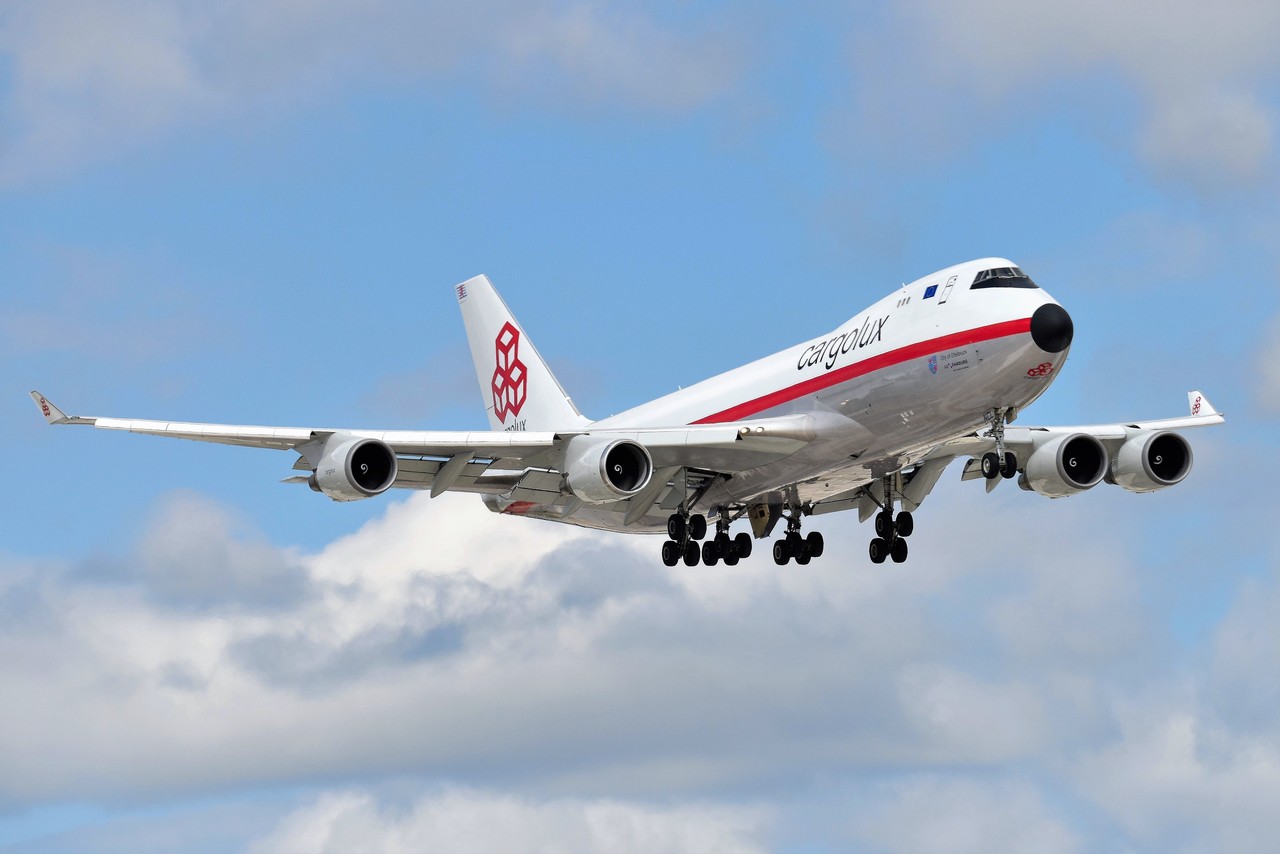
Perhaps the most revolutionary aspect was the aircraft's advanced "glass cockpit" that eliminated the need for a flight engineer, reducing the crew requirement to just two pilots. Digital flight management computers automated many tasks previously performed manually, while the cockpit displays provided unprecedented situational awareness. The distinctive winglets—vertical extensions at the wingtips—reduced fuel consumption by minimizing wingtip vortices, a feature that would become standard across modern commercial aviation.
The aircraft achieved impressive performance specifications: a maximum operating speed of 0.92 Mach (614 mph), service ceiling above 45,100 feet, and maximum takeoff weight of 875,000 pounds. The prototype N401PW set a weight record during its first flight, lifting off at 405,659 kilograms from Moses Lake, Washington.
Production Variants
Boeing produced multiple 747-400 configurations to serve different market segments. The standard passenger version manufactured from 1988 to 2005 represented the bulk of production. The 747-400F freighter variant, built from 1993 to 2009, featured a reinforced cargo floor and nose-loading door for efficient freight operations. The 747-400M "Combi" configuration, produced from 1989 to 2002, could simultaneously carry passengers and cargo on the main deck.
Specialized variants included the 747-400D for domestic Japanese routes with higher passenger density but reduced fuel capacity, and later the 747-400ER (Extended Range) and 747-400ERF (Extended Range Freighter) models. Each variant addressed specific operational requirements while maintaining the basic airframe's proven design.
Legacy and Current Status
Of the 694 aircraft produced, many 747-400s continue flying today, particularly in freighter service where their large cargo capacity remains valuable. The prototype aircraft, later designated N661US and operated by Delta Air Lines, was retired in 2015 and now resides at the Delta Flight Museum in Atlanta, Georgia.
The 747-400's cultural impact extends beyond aviation, appearing in Hollywood films and serving as a symbol of international travel's golden age. The variant held passenger capacity records until the Airbus A380's introduction in 2007, and its influence on winglet technology and two-pilot operations shaped modern airliner design.
While passenger 747-400 operations have declined as airlines favor more efficient twin-engine aircraft like the Boeing 777 and 787, the freighter variants continue providing essential cargo capacity worldwide. The 747-400 stands as perhaps the most successful wide-body airliner ever built, having transported billions of passengers and countless tons of cargo across six continents during its operational lifetime.