
Commercial Significance
The 747SP filled a crucial gap in the airline market of the 1970s, targeting "long and thin" routes that required extended range but couldn't fill a full-capacity jumbo jet. Pan American World Airways, the launch customer, ordered 10 aircraft in September 1973 for $280 million, seeking to operate non-stop flights on routes like New York to Tokyo that were previously impossible or uneconomical. The SP's record-breaking capabilities were demonstrated on November 12, 1975, when aircraft c/n 21025 completed a 6,927-mile New York-Tokyo flight with 200 passengers aboard, establishing new standards for long-haul commercial aviation.
Design and Development
The 747SP emerged from Boeing's 747 design team led by chief project engineer Joe Sutter, who had overseen the original 747 program since 1966. The design philosophy centered on creating a lighter, more fuel-efficient variant by removing 48 feet 4 inches from the fuselage while retaining the four-engine configuration for reliability and extended overwater operations. Engineers achieved weight savings of approximately 45,000 to 50,000 pounds through structural modifications including lighter wings, single-slotted flaps instead of triple-slotted, and the removal of entire fuselage sections.
Test pilot Jack Waddell, who had also piloted the original 747's maiden flight in 1969, took the first 747SP (msn 21022) aloft on July 4, 1975. The aircraft exceeded performance expectations, demonstrating cruise speeds up to Mach 0.92 and superior fuel efficiency compared to initial projections. The SP's climb performance and service ceiling of 45,000 feet surpassed the standard 747 due to its reduced weight.
The Boeing Company
Founded in 1916 by William E. Boeing, The Boeing Company evolved from a small seaplane manufacturer into one of the world's dominant aerospace corporations. The company gained prominence through military contracts during both World Wars and pioneered commercial aviation with innovative designs. Boeing's 1997 merger with McDonnell Douglas consolidated much of the American aerospace industry, bringing together the 747 production line with McDonnell Douglas's DC-10 and military aircraft programs. The Boeing Company continues operations today, though it delivered the final 747 variant in 2023, ending more than five decades of jumbo jet production.
Engine and Performance
All 747SP aircraft were powered by four Pratt & Whitney JT9D high-bypass turbofan engines, each delivering between 43,500 and 50,000 pounds of thrust. The JT9D series, first introduced in 1969 for the original 747-100, represented a breakthrough in turbofan technology as the first high-bypass engine designed for wide-body aircraft. Pratt & Whitney produced approximately 5,100 JT9D family engines over three decades of production, establishing the powerplant as a reliable workhorse for long-haul operations despite its reputation for higher fuel consumption during the oil crisis era of the 1970s.
The SP's reduced weight allowed for exceptional performance characteristics, including rapid climb rates and extended range capabilities that enabled airlines to serve previously impossible route combinations. The aircraft's ability to maintain high cruise speeds over vast distances made it particularly valuable for trans-Pacific and trans-Atlantic services.
Operational History
Pan Am received the first production 747SP on March 5, 1976—aircraft c/n 21025 named "Clipper Freedom"—and inaugurated revenue service in April 1976. Other major operators included Iran Air, American Airlines, United Airlines, TWA, Korean Air, and CAAC (later Air China). The aircraft enabled airlines to open new non-stop routes that bypassed traditional hub connections, particularly benefiting services between North America and Asia.
Despite its technical achievements, the 747SP faced commercial challenges as airline deregulation changed route structures and improved 747-200 variants offered better economics on many routes. Boeing had projected sales of 214 aircraft but ultimately built only 45 units between 1975 and 1987. The final regular production aircraft (c/n 22858) was delivered to the Iraqi Government on August 30, 1982, with one additional aircraft completed for the United Arab Emirates in 1987.
Legacy and Survivors
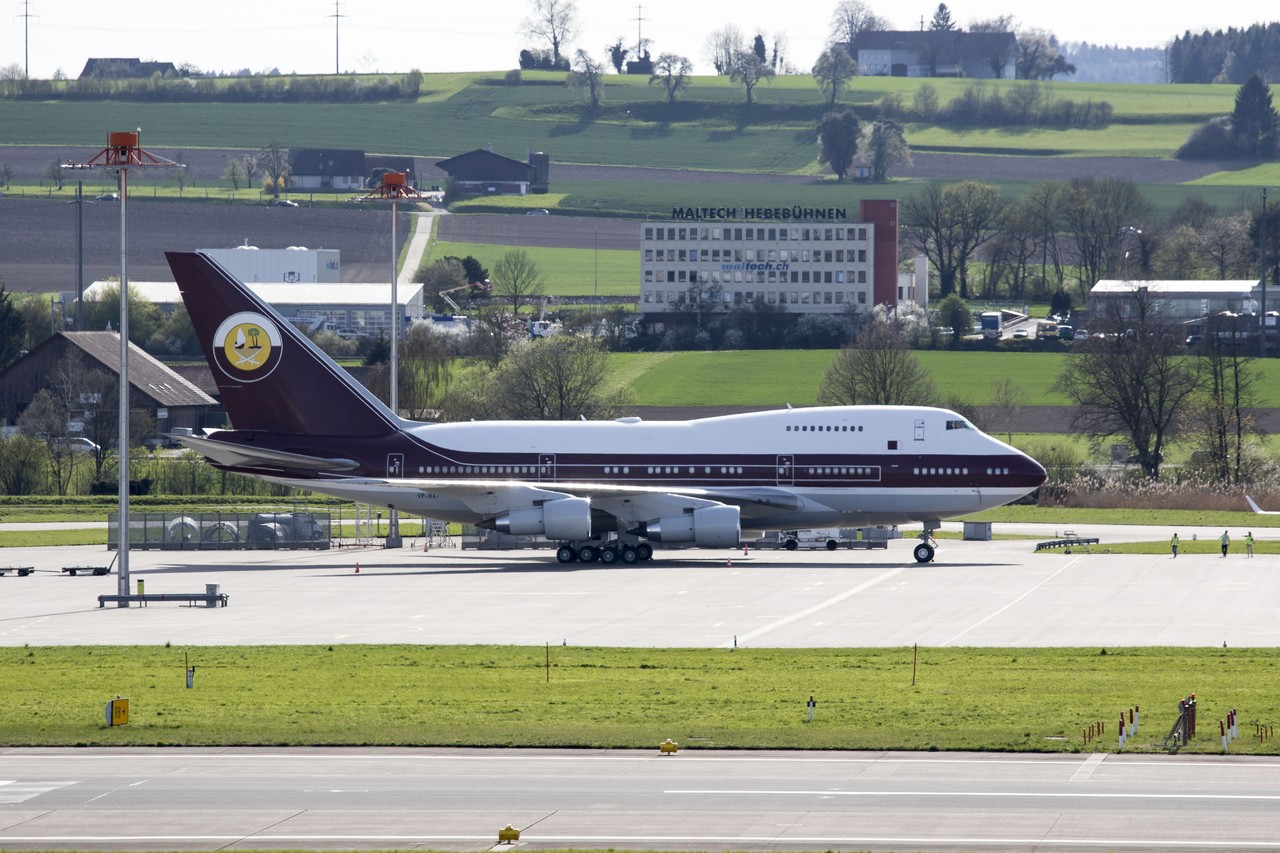
As of 2024, at least two 747SP aircraft remain in active service as engine testbeds for Pratt & Whitney Canada. Aircraft C-FPAW, originally delivered to Canadian Pacific in July 1980, and C-GTFF, first flown for Korean Air in January 1981, continue flying test missions decades after their commercial careers ended. Several other airframes serve ultra-high-net-worth individuals and corporations in VIP configurations.
The 747SP's legacy extends beyond its modest production numbers, proving the viability of shortened wide-body variants for specialized markets and influencing the development of extended-range twin-engine aircraft that would later dominate long-haul aviation. Aviation enthusiasts consider the SP the rarest and most distinctive 747 variant, with its proportionally larger tail and unique silhouette making it instantly recognizable to aircraft spotters worldwide.