
Design and Development
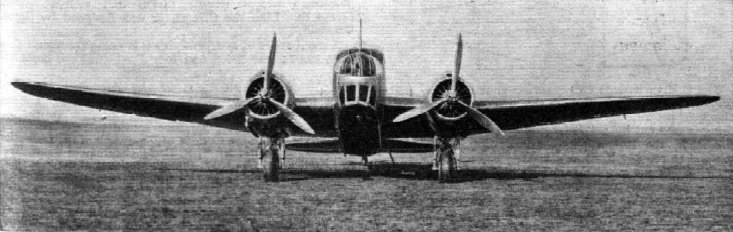
The Fiat BR.20 Cicogna was designed by aeronautical engineer Celestino Rosatelli for Fiat Aviazione. The aircraft was a landmark in Italian aviation as the first bomber built entirely of metal, utilizing a low-wing, twin-engine monoplane configuration with a stressed-skin structure. The fuselage consisted of a steel-tube frame, with duralumin skinning used for the forward section and fabric covering the remainder. The prototype first took to the skies in Turin on February 10, 1936, with Fiat test pilot Rolandi at the controls. Following six months of evaluation, the BR.20 officially entered service with the Regia Aeronautica in September 1936. At the time of its introduction, the 13º Stormo Bombardamento Terrestre was equipped with the type, making it potentially the most modern bomber unit in the world.
Technical Specifications
Powered by two Fiat A.80 R.C.41 air-cooled radial piston engines, the BR.20 produced 1,000 hp per engine at an altitude of 4,100 meters. The aircraft measured 16.75 meters in length with a wingspan of 21.60 meters. Its offensive capability included a bomb load of up to 1,600 kg of standard or fragmentation bombs. Defensive armament varied by configuration, typically featuring either four 7.7 mm machine guns (distributed dorsally, ventrally, and frontally) or a combination of one 12.7 mm Breda-SAFAT dorsal gun and two 7.7 mm machine guns.
Production and Variants
Produced in Turin, Italy, by Fiat Aviazione from the mid-1930s until the end of World War II, production numbers are estimated between 500 and 600 aircraft. A notable evolution was the BR.20M, introduced in 1939, which featured an improved defensive turret arrangement and a larger glazed nose. In September 1940, 80 new BR.20M aircraft were assigned to the 13º and 43º Stormo as part of the Corpo Aereo Italiano for operations during the Battle of Britain.
Operational History
The Cicogna saw extensive multinational service. It earned its "baptism of fire" in June 1937 during the Spanish Civil War, where the Aviazione Legionaria conducted both day and night bombing missions. The aircraft was also utilized by the Imperial Japanese Army Air Force during the Second Sino-Japanese War. Upon Italy's entry into World War II in June 1940, the BR.20 was the standard medium bomber of the Regia Aeronautica, with 219 units available (132 ready for immediate use). It operated across diverse theaters, including the English Channel, Greece, North Africa, and the Russian campaign. However, the design quickly became obsolete; by 1942, its role shifted from frontline bombing to maritime patrol, convoy escort, and crew training. By the September 1943 armistice, only 67 to 81 aircraft remained in service.