
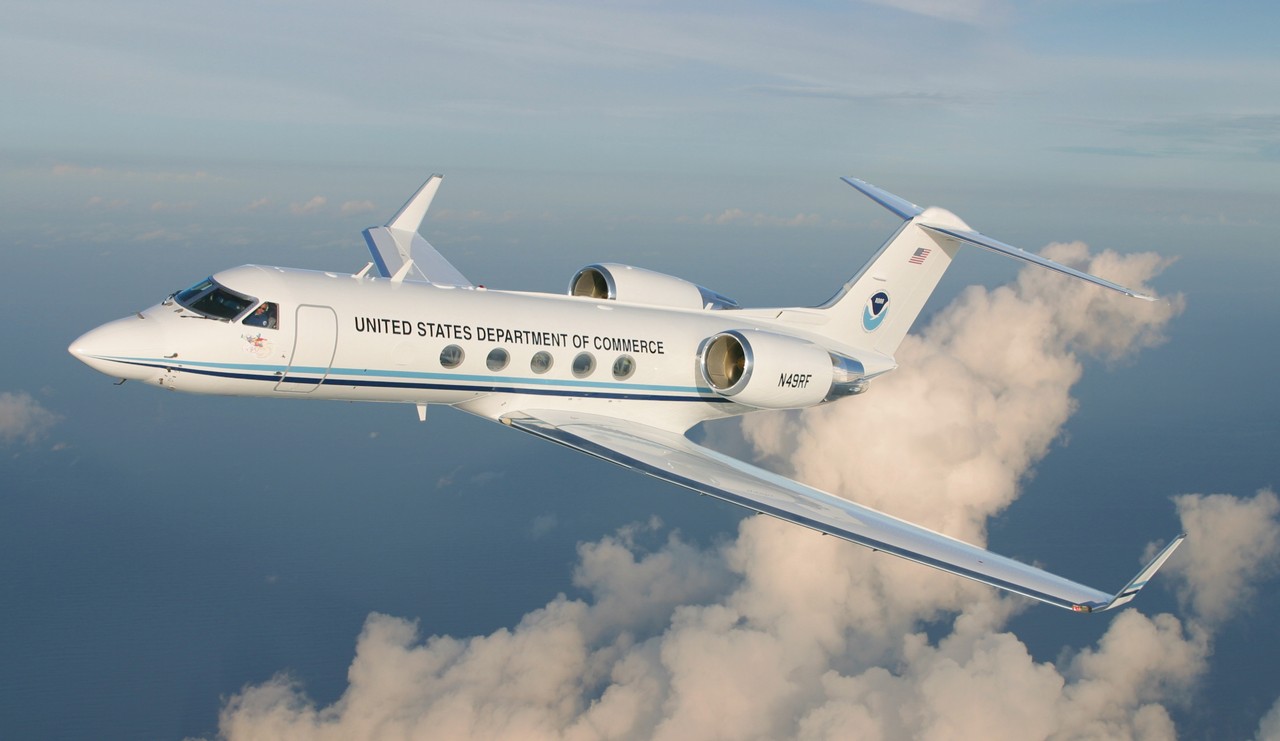
Production Excellence in Limited Numbers
The G400 emerged in January 2003 as Gulfstream Aerospace's answer to the growing demand for fully-equipped, premium business jets. Unlike its predecessor variants, the G400 came with 360 pre-installed items including advanced avionics and luxury fittings, eliminating the need for extensive post-delivery customization that had characterized earlier models. This streamlined approach represented a significant shift in business jet manufacturing philosophy, moving toward production-line completion rather than customer-specific outfitting.
Production ran for just over one year, concluding in 2004 with exactly 23 aircraft delivered. This brief production window positioned the G400 as one of the most exclusive members of the Gulfstream family, with each aircraft representing the pinnacle of the company's Gulfstream IV development program that had begun in March 1983.
The Manufacturer's Evolution
Gulfstream Aerospace's journey to the G400 began in 1958 with the original Gulfstream I turboprop. The company underwent significant ownership changes throughout its history, transitioning from Grumman Aerospace's Gulfstream American division in the 1970s to an independent Gulfstream Aerospace Corporation in 1982. Chrysler acquired the company in 1985, followed by General Dynamics in 1989, before a Bernstein/Schroeder investment group purchased it in 1995 for $4.8 billion.
By the time G400 production commenced, Gulfstream had established itself as the premier manufacturer of large-cabin business jets, having produced over 2,000 aircraft since its founding. The company's Savannah, Georgia facility had become synonymous with ultra-long-range business aviation excellence, continuing operations today as a subsidiary of Berkshire Hathaway since 2019.
Rolls-Royce Tay Power
The G400's performance capabilities stemmed from its twin Rolls-Royce Tay turbofan engines, selected specifically for their superior noise characteristics and fuel efficiency compared to previous Gulfstream powerplants. These engines, part of Rolls-Royce's production run spanning the 1980s through early 2000s, enabled the G400 to achieve a maximum speed of Mach 0.85 while maintaining the range and altitude performance expected of ultra-long-range business jets.
The Tay engines proved particularly well-suited to the demands of international business travel, providing the reliability necessary for extended overwater flights and operations into airports with strict noise restrictions. With over 1,000 Tay engines produced across various applications, the 46 engines powering the 23 G400 aircraft represented a small but significant portion of this successful turbofan family.
Operational Excellence
The G400's cabin could accommodate up to 19 passengers, though typical executive configurations seated 12 to 16 in considerable luxury. The aircraft's service ceiling of 45,000 feet allowed it to operate above most airline traffic, while its 4,200 nautical mile range enabled nonstop flights between major business centers worldwide.
Private owners, corporations, and charter operators quickly recognized the G400's capabilities, with the aircraft filling a crucial role in the expanding market for premium business aviation. The model's enhanced standard equipment package eliminated much of the complexity associated with aircraft customization, allowing operators to take delivery of fully-capable aircraft without extended completion times.
Design Heritage and Innovation
The G400 inherited the proven aerodynamics and structural design of the original Gulfstream IV, which had completed its maiden flight on September 19, 1985, and received FAA certification on April 22, 1987, after accumulating 1,412 flight test hours. This extensive development program provided the foundation for all subsequent variants, including the G400's immediate predecessor, the G300.
Gulfstream's engineering team built upon decades of large-cabin jet experience, incorporating lessons learned from over 500 Gulfstream IV family aircraft that had entered service between 1987 and 2002. The G400 represented the culmination of this development effort, featuring refinements in systems integration and cabin appointments that would influence future Gulfstream designs.
Limited Legacy, Lasting Impact
Despite its brief production run and small fleet size, the G400 played a crucial role in Gulfstream's evolution from traditional business jet manufacturer to the industry's technology leader. The lessons learned during G400 production, particularly in streamlined manufacturing and integrated systems design, directly influenced the development of the highly successful G450 that followed.
Today, many of the 23 G400 aircraft remain in active service, testament to both Gulfstream's build quality and the enduring appeal of ultra-long-range business aviation. While the G400 never achieved the production numbers of its predecessors or successors, it stands as a bridge between eras, representing the final chapter of the original Gulfstream IV story while pointing toward the advanced capabilities that would define 21st-century business aviation.