
Service History
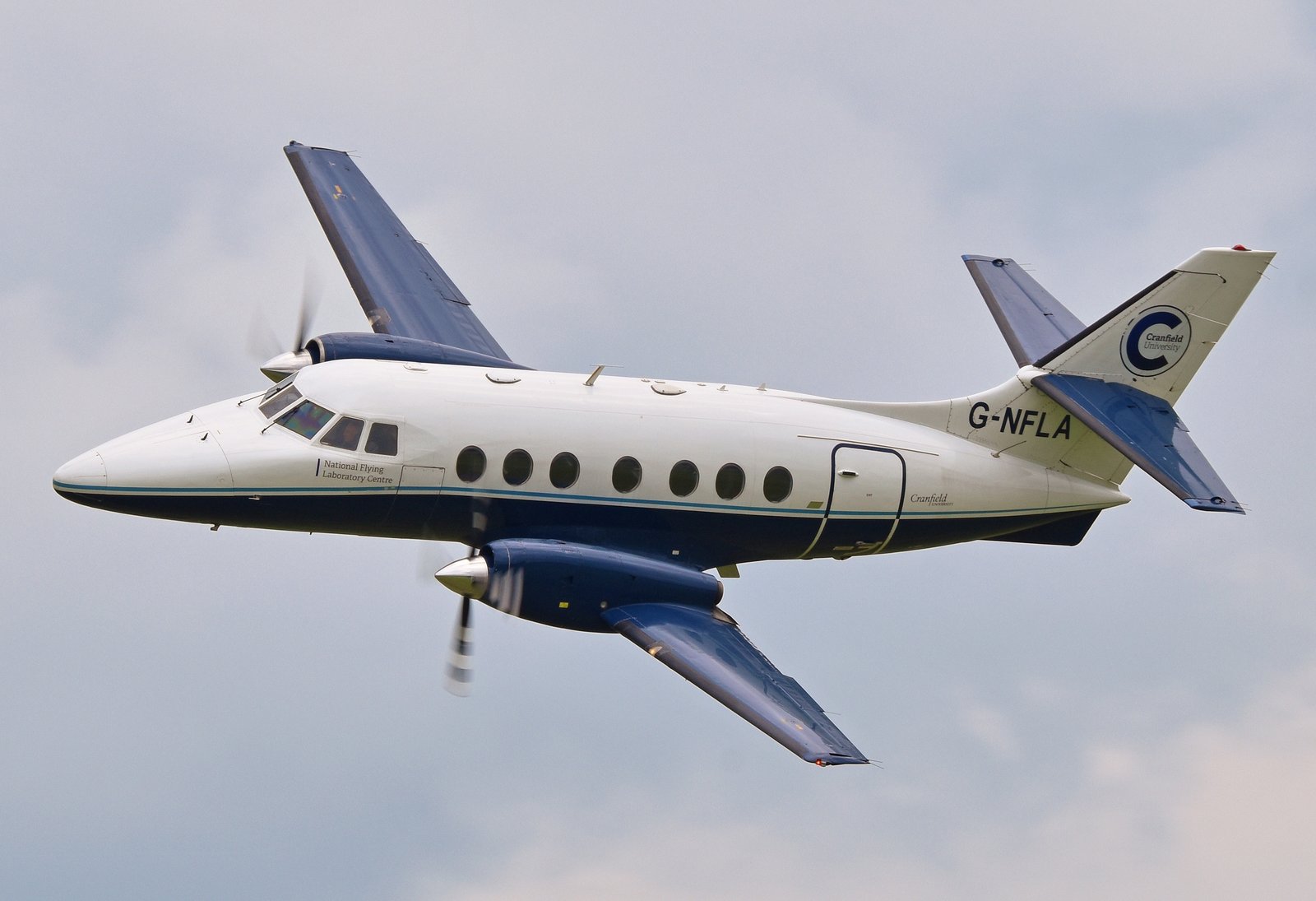
The Jetstream Super 31 carved out a vital niche in regional aviation during the late 1980s and early 1990s, serving commuter airlines worldwide on short-haul routes connecting smaller cities to major hubs. Its 18-19 passenger capacity and ability to operate from shorter airfields made it ideal for routes that larger aircraft could not serve economically. The aircraft's offset 2+1 seating configuration maximized passenger comfort while maintaining operational efficiency on thin routes.
Military Applications
While primarily a civilian aircraft, the Jetstream family served limited military roles focused on training and transport duties. The Royal Navy ordered four Jetstream 31s in 1985, designated as T.3 radar observer trainers and delivered in 1986. These aircraft were later repurposed for VIP transport duties. The Royal Air Force had operated 26 earlier Scottish Aviation-built variants designated T.1 and T.2 from 1973, using them for multi-engine pilot training and observer instruction. Saudi Arabia received two Mk 31 variants equipped with Panavia Tornado avionics systems for navigation training purposes.
The Manufacturer
British Aerospace inherited the Jetstream design through a complex corporate history spanning three decades. The aircraft originated with Handley Page's HP-137 Jetstream design from 1965, but the company's bankruptcy in 1970 after producing only a handful of aircraft nearly killed the program. Scottish Aviation acquired the design rights and manufacturing capabilities, building military variants before being absorbed into British Aerospace in 1978. BAe formed in 1977 through the nationalization and merger of several British aircraft companies, creating a aerospace giant that later evolved into BAE Systems, which remains a major defense contractor today.
Engine & Technical Innovation
The Super 31's success stemmed largely from British Aerospace's decision to replace the troublesome Turboméca Astazou engines of earlier variants with proven Honeywell TPE331-10 turboprops. Each engine delivered 1,020 shaft horsepower, significantly more than the 840-965 horsepower Astazou XIV and XVI engines that had plagued earlier Jetstreams with reliability issues and shorter overhaul intervals. The TPE331 engines drove four-bladed Dowty reversible propellers measuring 106 inches in diameter, enabling superior short-field performance and hot-and-high operations.
The aircraft featured a DC electrical system, revised air conditioning, and structural modifications to handle the increased maximum takeoff weight of 6,600 kilograms. These improvements addressed the shortcomings that had limited earlier variants and enabled reliable commercial operations in demanding regional airline environments.
Performance Characteristics
Pilots appreciated the Super 31's docile handling characteristics and robust performance envelope. The aircraft cruised at approximately 300 knots and could reach service ceilings above 25,000 feet. Its short-field capabilities made it particularly valuable for serving airports with limited runway lengths, while the reliable TPE331 engines provided confidence for operations over challenging terrain and in adverse weather conditions.
The two-pilot crew configuration met airline operational standards while keeping operating costs manageable for regional carriers. The aircraft's range performance, enhanced over earlier variants, enabled longer stage lengths that expanded route possibilities for operators.
Production & Legacy
British Aerospace manufactured the Super 31 from 1988 through 1993, contributing to the total production run of 386 aircraft across all Jetstream 31 and 32 variants. This represented a remarkable turnaround from the near-failure of the original Handley Page design, demonstrating how proper engineering and reliable powerplants could revive a troubled aircraft program.
The Super 31's success influenced subsequent developments including the stretched J41 and the updated J32EP variant introduced in 1997. Many examples remain active in regional airline service, cargo operations, and specialized roles decades after production ended. The Bournemouth Aviation Museum in the United Kingdom preserves a Handley Page Jetstream 31 as a testament to the aircraft's place in British aviation history.
The Jetstream Super 31 proved that regional turboprops could fill an essential market niche, providing reliable service to communities that larger aircraft could not serve economically while maintaining the comfort and safety standards passengers expected from commercial aviation.