
Development and Design Innovation
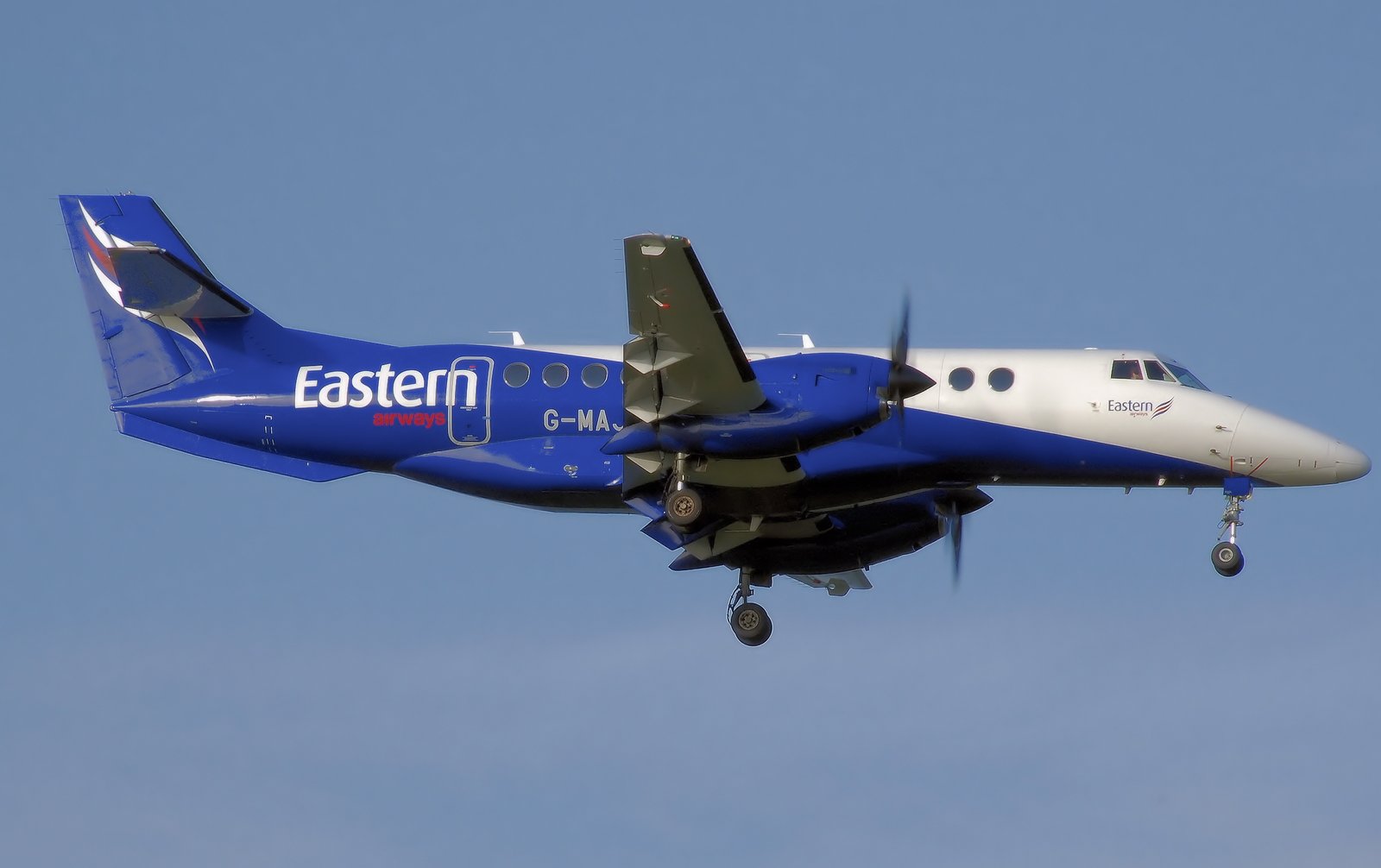
British Aerospace launched the Jetstream 41 project in 1989 as an ambitious stretch of their successful Jetstream 31 design. The engineering team added 16 feet to the fuselage through strategic plugs—8 feet 3 inches forward and 7 feet 9 inches aft of the wing—creating space for 29 passengers in a comfortable 2-by-1 seating arrangement. The prototype G-GCJL rolled out from British Aerospace's Prestwick facility in Scotland on March 27, 1991, taking to the skies for its maiden flight on September 25, 1991.
The aircraft incorporated significant technological advances beyond its stretched airframe. Engineers designed an entirely new fuselage structure, redesigned wings for improved performance, and installed a modern EFIS glass cockpit—advanced technology for regional turboprops of the early 1990s. The Jetstream 41 achieved the distinction of becoming the first turboprop certified to both European JAR25 and American FAR25 transport category standards, demonstrating British Aerospace's commitment to international market penetration.
Powerplant and Performance
Honeywell's TPE331-14GR/HR turboprop engines powered the Jetstream 41, each initially delivering 1,500 shaft horsepower before later uprating to 1,650 shaft horsepower. The engines drove five-bladed McCauley constant-speed feathering propellers measuring 9 feet 6 inches in diameter. These powerplants featured extended 7,000-hour inspection intervals, reducing operational costs for airlines operating intensive regional schedules.
The aircraft's maximum takeoff weight reached 24,000 pounds, with a maximum ramp weight of 24,100 pounds and maximum landing weight of 23,300 pounds. Fuel capacity totaled 727 imperial gallons, weighing 5,960 pounds when fully loaded. The increased ground clearance of the engine nacelles accommodated the larger propellers while maintaining adequate runway clearance during rotation.
The Manufacturer's Legacy
British Aerospace inherited the Jetstream lineage through a complex corporate evolution spanning three decades. The original Jetstream concept emerged from Handley Page in 1965, but the company's 1970 bankruptcy transferred the design to Scottish Aviation, and later to Jetstream Aircraft. British Aerospace, formed in 1977 through nationalization and merger of British aviation companies, acquired the program and developed it into the successful Jetstream 31, which first flew on March 28, 1980, and received certification on June 29, 1982.
The Jetstream 41 represented British Aerospace's final turboprop airliner effort before the company merged into BAE Systems in 1999. BAE Systems continues operations today, though no longer in the commercial aircraft manufacturing sector.
Commercial Service and Operators
Manx Airlines received the first production Jetstream 41 on November 25, 1992, following European certification on November 23, 1992. United States certification followed on April 9, 1993, opening the crucial American regional airline market. Trans States Airlines became the type's largest operator with 25 aircraft, utilizing the Jetstream 41 on feeder routes under the United Express banner.
Other significant operators included Airlink in South Africa, Guna Airlines, and Proflight Zambia. The aircraft targeted direct competition with established 30-seat regional aircraft including the Embraer Brasilia, Dornier 328, and Saab 340. In January 1996, British Aerospace joined the Aero International (Regional) marketing consortium alongside ATR, Aérospatiale, and Alenia to strengthen the aircraft's market position.
Production End and Market Challenges
Despite its technical merits, production ceased in 1997 after exactly 100 aircraft rolled off the assembly line. The regional airliner market's intense competition and changing airline preferences for jet-powered aircraft contributed to the program's termination. Airlines increasingly favored pure jets over turboprops for passenger appeal, even on routes where turboprop economics remained superior.
The aircraft encountered two notable accidents during its service life: United Express Flight 6291 crashed on January 7, 1994, resulting in five fatalities, while Airlink Flight 8911 on September 24, 2009, claimed one life. These incidents, while tragic, did not significantly impact the aircraft's safety reputation given the small fleet size.
Current Status
Jetstream 41 aircraft remain in active service today with operators including Guna Airlines and Proflight Zambia. The type's durability and efficient operating characteristics on thin regional routes have enabled continued commercial viability more than two decades after production ended. Several aircraft maintain current registrations, including the prototype G-GCJL, demonstrating the design's longevity and structural integrity.
The Jetstream 41's legacy represents both the pinnacle of British turboprop airliner development and the end of an era, as market forces shifted decisively toward regional jets in the late 1990s.