
Service History
The ATP entered commercial service in 1988 with British Midland as the launch customer, quickly gaining adoption among British carriers including British Airways, Loganair, and British Regional Airlines. Despite British Aerospace's projections to sell approximately 300 aircraft between 1987 and 2002, the ATP faced fierce competition from the de Havilland Canada Dash 8, ATR 42, and ATR 72. Charter operators embraced the type during the 1990s, while British World Airlines acquired several aircraft in quick-change passenger-to-cargo configuration. The ATP proved significantly more economical than preceding regional aircraft such as the BAC 1-11 and Douglas DC-9 jetliners, yet sales remained disappointingly low throughout its production run.
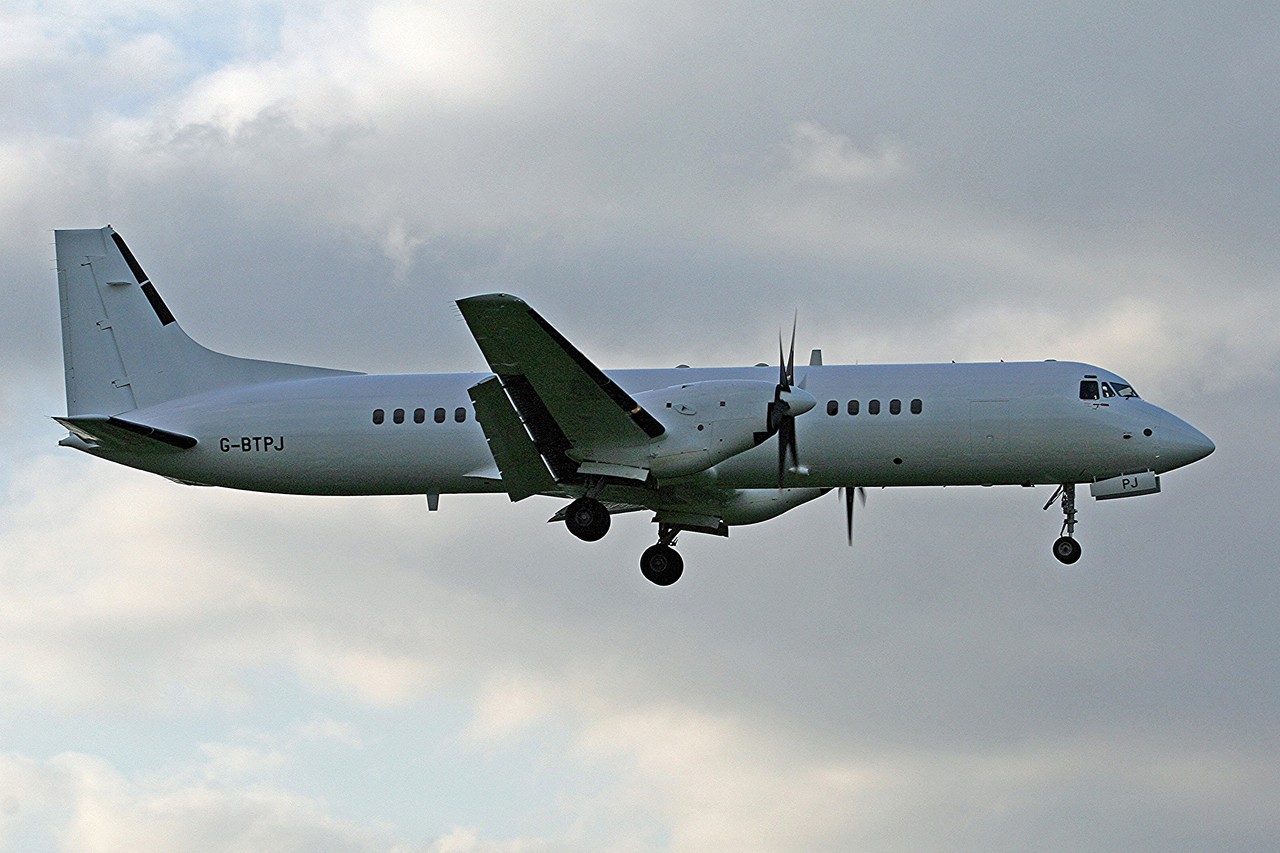
As passenger airlines retired their ATP fleets, the aircraft discovered renewed purpose as cargo haulers. West Air Sweden developed the first cargo conversion, which completed its maiden flight on July 7, 2002. The freighter version carries 30 percent more cargo than its predecessor while maintaining only marginally increased operating costs, utilizing a modified HS 748 freight door design. West Air Sweden operated as the final European ATP operator until February 24, 2023, when they conducted the type's last repositioning flight, marking the end of primary European service after 35 years of operations.
The Manufacturer
British Aerospace emerged from the 1977 nationalization of Britain's aircraft industry, combining Hawker Siddeley, British Aircraft Corporation, and Scottish Aviation. The company revealed the ATP project to the public in early 1984, developing it as an evolution of the successful Hawker Siddeley HS 748 rather than designing an entirely new aircraft. Manufacturing operations were distributed across multiple facilities: wing and airframe construction occurred at the Chadderton plant near Oldham, while final assembly took place at Woodford and Prestwick.
During the ATP's production run, British Aerospace's regional airliner operations underwent significant restructuring. On January 26, 1995, the company merged its regional aircraft manufacturing with ATR to form Aero International (Regional), though ATP production continued until mid-1997. British Aerospace later evolved into BAE Systems through subsequent corporate mergers and remains active today as a major defense and aerospace contractor, though it no longer manufactures commercial aircraft.
Engine and Technical Innovation
The ATP's most distinctive feature was its powerplant configuration: two Pratt & Whitney Canada PW126 turboprops, each delivering 1,978 kilowatts (2,653 shaft horsepower). These fuel-efficient engines replaced the older Rolls-Royce Dart engines used in the HS 748, paired with custom-designed six-bladed BAe/Hamilton Standard propellers measuring 4.19 meters (13 feet 9 inches) in diameter. The propellers were engineered to rotate at slower speeds than conventional designs, dramatically reducing noise generation while maintaining passenger comfort levels comparable to contemporary jetliners.
Advanced avionics distinguished the ATP from earlier turboprops, incorporating Electronic Flight Information Systems (EFIS), automatic flight control systems, and Electronic Engine Control (EEC) technology. These systems reduced pilot workload while enhancing safety margins and operational efficiency. The aircraft's lightweight construction achieved remarkable efficiency, weighing only 468 pounds per passenger seat—reportedly less than any regional airliner in its size category during the mid-1980s.
Performance and Operational Characteristics
The ATP delivered significantly improved cruise speeds compared to its HS 748 predecessor while maintaining the fuel efficiency that turboprops offered over regional jets. The aircraft could be configured for 64 to 72 passengers depending on airline requirements, with quick-change variants allowing rapid conversion between passenger and cargo configurations. Test pilot Robby Robinson conducted the prototype's maiden flight from Manchester Airport, completing a successful two-hour, 40-minute flight despite challenging weather conditions and strong crosswinds.
Production Legacy
British Aerospace terminated ATP production in mid-1997 after completing just 65 aircraft over eight years of manufacturing. The limited production run reflected intense competition in the regional aircraft market rather than technical shortcomings. More than three decades after its first flight, over 30 ATP aircraft continue flying worldwide, primarily in cargo operations where the type has found its most successful niche.
The ATP's cargo conversion success demonstrates the aircraft's fundamental soundness, with operators appreciating its reliability, efficiency, and load-carrying capabilities. While it failed to achieve commercial success as a passenger airliner, the ATP's continued service in freight operations validates British Aerospace's engineering achievements and the aircraft's enduring utility in specialized roles.