
Service History
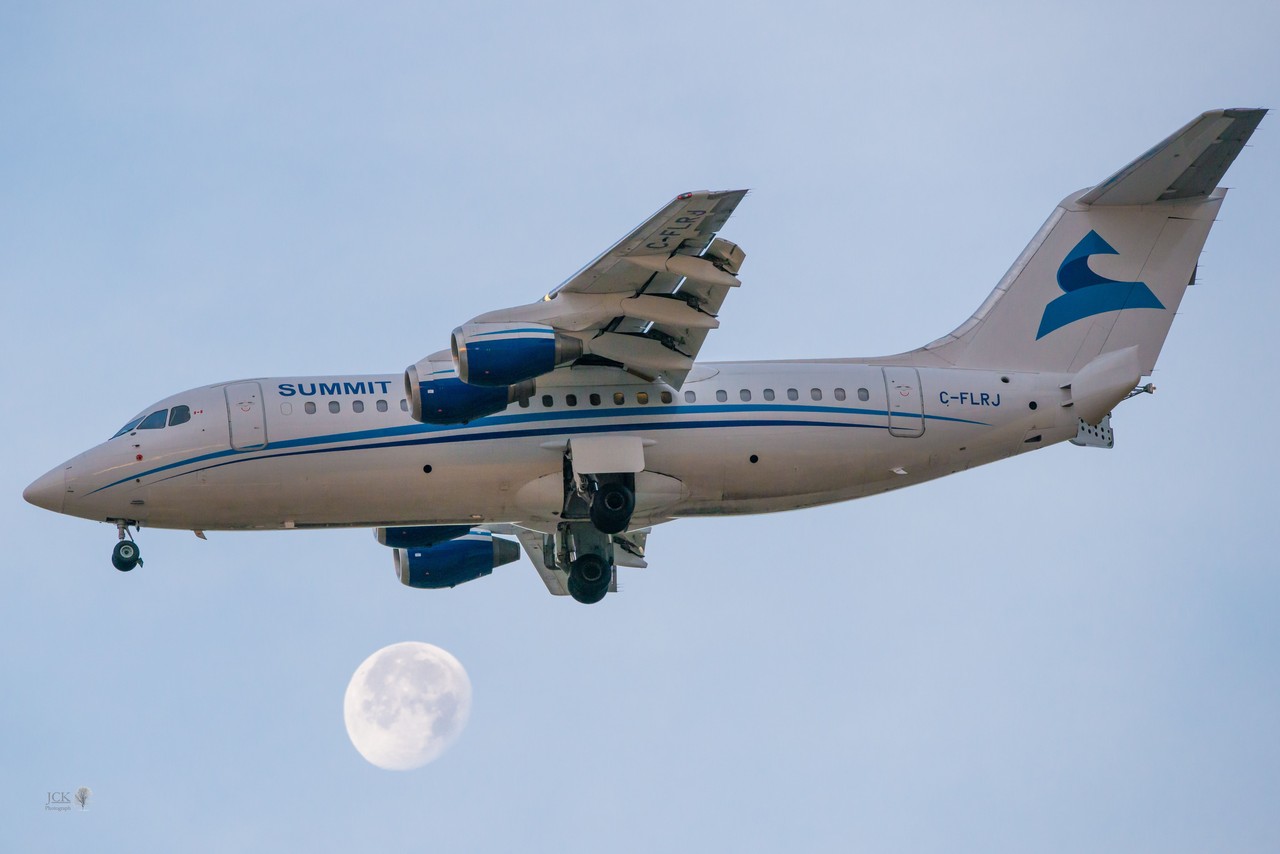
The RJ-85 entered commercial service in April 1993 as the upgraded variant of the successful BAe 146 family, capturing a unique niche in regional aviation through its exceptional short-field performance and whisper-quiet operation. Northwest Airlines became the type's largest operator, ordering 36 aircraft between 1996 and 2000 for operation by its subsidiary Mesaba Airlines on routes from Memphis, Detroit, and Minneapolis hubs. These aircraft typically carried 69 passengers in a comfortable First Class configuration, replacing aging DC-9 and Convair aircraft during the intense regional jet competition of the 1990s.
The aircraft proved invaluable for airlines serving challenging airports like London City Airport, where its steep approach capability and short runway performance made it a regular sight. CityJet operated multiple RJ-85s on European routes, while international carriers including Drukair in Bhutan utilized the type's high-altitude performance and short-field capabilities for mountainous terrain operations.
The Manufacturer
British Aerospace emerged in 1977 as the successor to Hawker Siddeley, inheriting the BAe 146 project and relaunching development in 1978. The company established a major assembly facility at Hatfield in Hertfordshire by 1981, later transferring RJ series production to Woodford Aerodrome in Greater Manchester under subsidiary Avro International Aerospace. In 1999, British Aerospace merged with Marconi Electronics Systems to form BAE Systems, which continued RJ production until 2003.
The company terminated the advanced RJX program in 2001 as market conditions shifted toward twin-engine regional jets like the Bombardier CRJ and Embraer ERJ families. BAE Systems remains active today primarily as a defense and aerospace contractor, though its regional aircraft division wound down civil production after delivering the final four RJ aircraft in late 2003.
Engine & Technical Innovation
The RJ-85 featured four Honeywell LF507 high-bypass turbofan engines, representing a significant upgrade from the original Lycoming ALF 502 engines used on early BAe 146 variants. These engines, housed in redesigned nacelles, provided higher thrust and improved fuel efficiency while maintaining the family's signature quiet operation. The four-engine configuration offered exceptional safety margins and reliability for operations into remote airfields with limited emergency services.
Engineering teams at British Aerospace designed the aircraft around demanding operational requirements, creating high-lift wings optimized for steep approaches and short runways. The aircraft featured a high-wing configuration that provided excellent ground clearance and stability during challenging approaches. Flight crews appreciated the type's forgiving handling characteristics and superior climb performance, which exceeded manufacturer predictions during 1981 certification testing.
Performance & Pilot Experience
The RJ-85 achieved a maximum cruise speed of 737 kilometers per hour at altitudes up to 11,000 meters, with a maximum range of 2,900 kilometers. Its exceptional short-field performance allowed operations from runways as short as those at London City Airport, while the aircraft's quiet signature earned it the title of "world's quietest jetliner" upon introduction. The spacious cabin, wider than competing CRJ and ERJ aircraft, provided passenger comfort that airlines valued for premium regional routes.
Pilots praised the aircraft's stability during steep approaches and its responsive controls during challenging weather conditions. The later RJ variants incorporated Electronic Flight Instrument System (EFIS) cockpits that modernized the flight deck while maintaining the reliable systems architecture that made the type popular with regional carriers.
Production Legacy
British Aerospace and BAE Systems produced 173 Avro RJ aircraft across all variants between 1993 and 2003, contributing to a total production run of 387 BAe 146/RJ aircraft - making it the most successful British civil jet program. The RJ-85 represented approximately 70 aircraft within this total, with construction numbers ranging from E2208 to E2312 according to production records.
By the 2020s, few RJ-85s remained in active service as airlines transitioned to more fuel-efficient twin-engine regional jets. Notable retirements included Northwest/Mesaba's fleet in 2006 following post-9/11 financial pressures, with some aircraft converted to firefighting roles. The type's cultural significance endures as the final chapter of British commercial aviation leadership, representing innovative engineering solutions for specialized airport operations that twin-engine aircraft could not initially match.