
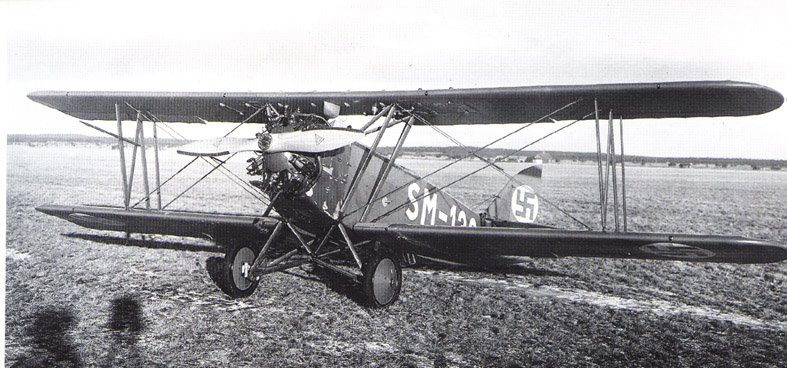
The Letov Š-18 was a two-seat primary training aircraft developed in Czechoslovakia during the mid-1920s. Designed as a "school plane," it served as a standard trainer for the Czechoslovak Air Force and played a key role in the country's effort to maintain a self-sufficient domestic aircraft industry following the success of earlier models like the Š-1.
Produced by Letov (Letecká továrna Letov) at its works near Prague, the Š-18 first flew in 1925. The manufacturer itself grew from Austro-Hungarian military repair facilities and became the central national aircraft works after the creation of Czechoslovakia in 1918. While the exact end date of production for the base Š-18 is undocumented, the aircraft family remained active into the late 1920s, as evidenced by the Š-218 derivative produced in 1928.
Technically, the Š-18 was powered by a Walter NZ 120 air-cooled radial piston engine, which delivered 120 hp (approximately 89 kW). The design proved robust and adaptable, leading to the development of the Š-218. This derivative saw significant international adoption, with approximately 30 to 34 aircraft built, including a number license-built in Finland. These Finnish-built versions featured a more powerful engine capable of producing 145 hp (approximately 108 kW).
In terms of service, the Š-18 was exported for military training use to both Bulgaria and Finland. While it was a staple of inter-war aviation, it was obsolete by the start of World War II and did not see front-line combat. Beyond its military role, at least one example entered the Czechoslovak civil registry as OK-ZOB in April 1936. This specific aircraft was later returned to the Letov factory and transferred to the National Technical Museum in Prague, where it remains as a preserved example of early Czech aviation design.
Letov continued to operate as a major manufacturer through the 1930s, though during the German occupation in World War II, the plant was forced to serve the Luftwaffe as a repair facility and a production site for the Junkers Ju 290.