
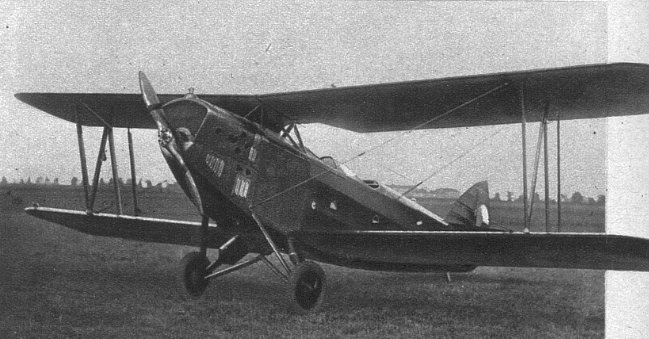
The Letov Š-25 was a single-engine, two-seat biplane trainer designed and constructed by the Czechoslovak aircraft works, Letov. Developed in 1930, the aircraft was intended to serve as an operational trainer for the Czechoslovak Air Force. The prototype first flew in July 1930, representing Letov's effort to secure a government contract for basic and advanced flight training during the inter-war period.
Production of the Š-25 was limited to a single prototype aircraft. It was manufactured at Letov's factory located in Letňany (Kbely), Prague. The company, which had been established in 1918 by the Czechoslovak Ministry of Defense, was a central hub for indigenous aviation development, producing approximately 50 different aircraft types by 1939. While the "Š" in the designation likely refers to Alois Šmolík, who served as the chief designer for many Letov types during the 1920s and 1930s, available primary documentation does not explicitly name the chief designer for the Š-25 specifically.
Technically, the Š-25 was configured as a biplane powered by a single piston engine manufactured by Škoda. While the specific model and horsepower of the Škoda engine were not documented in available records, the aircraft was designed to accommodate a crew of two, consisting of an instructor and a student. Due to its status as a one-off prototype, detailed technical specifications regarding its dimensions, weight, and performance metrics remain undocumented.
Despite its development, the Š-25 failed to enter series production. It competed in a Czechoslovak Air Force trainer competition, which it ultimately lost on March 12, 1931, to the Praga BH-41. Consequently, the aircraft never entered operational military service, and there are no records of it being used in a civilian or commercial capacity. No examples of the Š-25 are known to survive today, and it is not listed in the collections of major Czech aviation museums, such as those at Kbely. Its historical legacy is that of an experimental prototype that illustrates the competitive nature of early Czechoslovak military aviation procurement.