
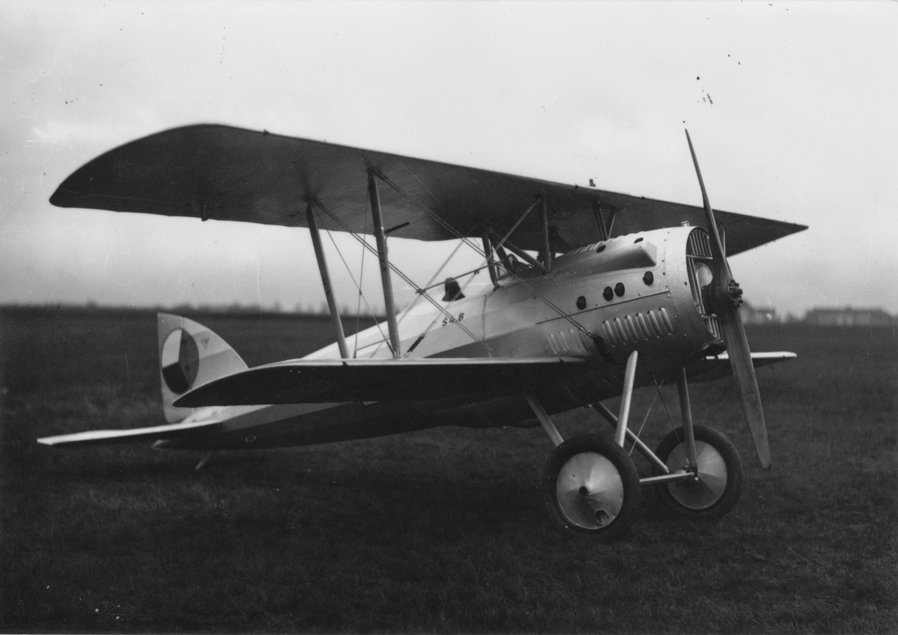
The Letov Š-4 was a pivotal aircraft in the early development of the Czechoslovak aviation industry. Designed and manufactured by Letov at its works in Kbely/Letňany, Prague, the Š-4 was developed as a single-seat fighter biplane. Its primary historical significance lay in its role as a domestic replacement for the French-made SPAD VII and XIII fighters then in use by the Czechoslovak Air Force, marking a transition toward national self-reliance in military aircraft procurement.
Letov, the manufacturer, had been established in 1918 by the Czechoslovak Ministry of Defense. Originally founded as a state enterprise to repair captured World War I aircraft, the company quickly evolved into a developer of indigenous designs. The Š-4 was part of an early lineage of military aircraft, following the Š-1 and Š-2, which collectively demonstrated the new nation's ability to supply its own defense forces with home-designed equipment. By 1939, Letov had expanded its portfolio to include approximately 50 different aircraft types.
Production of the Š-4 began following an order placed in 1922. Deliveries of the aircraft commenced in early 1923, with a total production run of 20 aircraft. The type made its first flight in 1922. While the specific chief designer of the Š-4 is not recorded in available documentation, the aircraft represented a conventional biplane fighter configuration for the era. Technical specifications regarding the engine model, horsepower, and performance metrics are not detailed in the historical record, though the aircraft was utilized specifically in the fighter role.
The Š-4 entered active service with the Czechoslovak Air Force in 1923. It remained in front-line service throughout the mid-1920s until its retirement in 1928. There is no documented evidence that the Š-4 participated in any combat operations or specific wars, as its service coincided with the interwar period. Following its retirement, no surviving airframes are known to be preserved in museums.
The legacy of Letov continued long after the Š-4. During the German occupation in World War II, the factory served as a Luftwaffe repair facility and produced the Junkers Ju 290. In the Cold War, Letov manufactured components for Soviet MiG-15, MiG-19, and MiG-21 aircraft. In 2000, the company was acquired by the French Groupe Latécoère, and it currently produces aerostructure components for large passenger aircraft.