
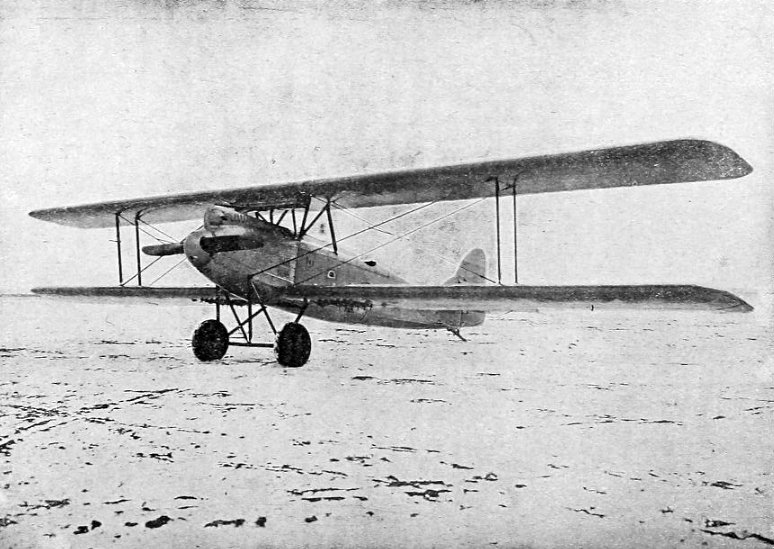
The Letov Š-6 was a Czechoslovak two-seat biplane light bomber developed during the early 1920s. It served as a critical evolutionary link in the early history of Czechoslovak military aviation, specifically designed to transition the capabilities of the Letov Š-2—which functioned in both reconnaissance and light bombing roles—into a more specialized bomber aircraft. The aircraft was designed by Alois Šmolík, who would later apply his experience to subsequent Letov bomber projects, including the Š-16.
Production of the Š-6 took place at the Letov factory located in Kbely, near Prague. While explicit start and end dates for the production run are not documented in available records, the aircraft's first flight occurred in 1923, indicating that manufacturing began shortly thereafter. The Š-6 was produced in a small series, with a total of approximately 35 aircraft built for military service. The design followed a conventional biplane layout featuring a fixed undercarriage and wings of unequal span, a characteristic inherited from the Š-2 family.
Technical specifications for the Š-6 remain sparse in historical records. While its predecessor, the Š-2, utilized Hiero L or Maybach Mb.IVa six-cylinder inline engines, there is no explicit documentation confirming the specific engine model, manufacturer, or power output used in the Š-6. Consequently, detailed performance metrics regarding its maximum speed, range, and bomb load capacity are unknown, although it is established as a purpose-built bomber for the Czechoslovak Air Force.
In terms of operational history, the Š-6 served with the Czechoslovak Air Force during the mid-1920s. There is no verifiable evidence that the type participated in specific combat operations or conflicts; its service was primarily limited to peacetime military aviation. No civil or commercial variants of the aircraft were produced. Today, no complete airframes are known to survive in museums, although the Smithsonian's National Air and Space Museum maintains a subject file reference for the type. The legacy of the Š-6 lies in its contribution to the indigenous design experience of Letov and Alois Šmolík, paving the way for later, more widely produced aircraft such as the Š-328.