
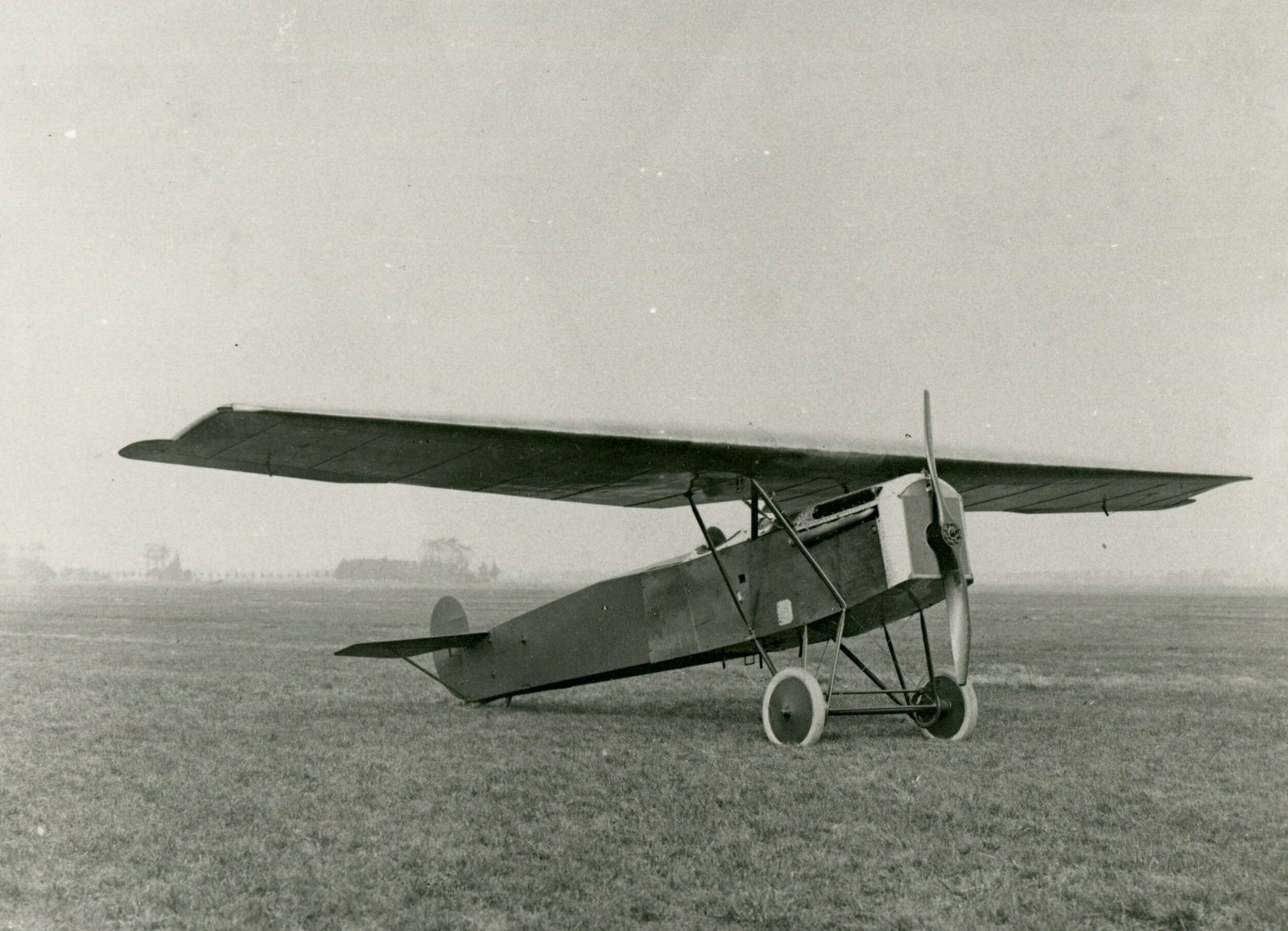
The Fokker PW-5, known in its original Dutch design as the Fokker F.VI, was a light fighter developed in 1920. While designed for combat, its primary historical significance stems from its acquisition by the U.S. Army Air Service, which utilized the type as an advanced trainer rather than a frontline fighter. The aircraft was an evolution of the earlier V.37 design and featured a parasol monoplane wing configuration.
Production of the PW-5 was limited, with a total of 12 aircraft built for the U.S. Army Air Service. This batch began with two evaluation aircraft, followed by an additional order of 10 aircraft delivered in 1921. These aircraft were produced by Fokker, a company founded by Anthony Fokker in 1919 as the Dutch Aircraft Factory. Although Fokker became a prominent name in both military and civil aviation between 1912 and 1996, the company eventually went bankrupt in March 1996 following the loss of support from Daimler-Benz and a failed acquisition attempt by Bombardier.
Technically, the PW-5 was powered by a Wright-Hispano liquid-cooled V-8 piston engine capable of producing 300 hp (220 kW). The aircraft was designed for a single crew member and featured a wingspan of 39 ft 5 in and a length of 26 ft 1 in. Its performance specifications included a maximum sea-level speed of 144 mph and a rate of climb of 1,585 ft/min, with an operational endurance of two hours. For armament, the aircraft carried two .30 in machine guns and included a fuselage rack for small bombs.
In military service, the PW-5 was operated by the 1st Pursuit Group of the U.S. Army Air Service. Its service history was marked by a notable incident on March 13, 1922, when one of the two evaluation aircraft crashed. The accident was attributed to wing failure caused by flutter. Despite this, the type provided a valuable bridge between World War I-era combat aircraft and the training requirements of the postwar period. No civil or commercial operations are documented for the type, and there are no verified surviving airframes in museums or flying condition today.