
Development and Design Philosophy
The A330-800neo emerged from Airbus's strategy to modernize its proven A330 platform with new-generation technology while addressing the specific needs of the 250-seat market segment. Development began in 2015 as part of the broader A330neo family, with Airbus targeting airlines seeking to replace aging A330-200s with more fuel-efficient aircraft capable of ultra-long-range operations. The aircraft was engineered to operate routes up to 8,150 nautical miles with its maximum 251-tonne takeoff weight variant, positioning it uniquely in the market between narrow-body and larger wide-body aircraft.
The design philosophy centered on maximizing commonality with the A330-900, achieving 99% parts sharing including identical cockpits, engines, and systems. This approach allowed airlines to operate both variants with shared pilot training and maintenance programs, reducing operational complexity and costs.
Manufacturing and Production Challenges
Airbus distributes A330-800 manufacturing across its European network, with final assembly taking place at the company's Toulouse facility. The production chain involves specialized facilities: Bremen installs high-lift devices, Hamburg constructs fuselage sections, Nantes produces the center wing-box, Toulouse manufactures titanium engine pylons, and Korean suppliers provide sharklet wingtips.
The program encountered significant delays during development, primarily due to engine certification issues. The Rolls-Royce Trent 7000 powerplant development fell behind schedule by six weeks in December 2016, delaying engine delivery to Airbus until June 2017. These setbacks pushed the first flight from mid-2018 to November 6, 2018, when the prototype completed a successful 4-hour 4-minute inaugural flight, launching a 350-hour test program.
Engine Technology and Performance
The A330-800 exclusively uses Rolls-Royce Trent 7000 engines, advanced high-bypass turbofans designed specifically for the A330neo family. These engines incorporate modern materials and design features that contribute significantly to the aircraft's improved fuel efficiency compared to previous A330 variants. The Trent 7000's development represented a critical path item for the program, with engine maturation directly impacting the aircraft's certification timeline.
With its base 242-tonne maximum takeoff weight, the A330-800 can operate routes up to 7,500 nautical miles, while the higher-weight variant extends this capability to 8,150 nautical miles, enabling non-stop flights between city pairs previously requiring intermediate stops or larger aircraft.
Certification and Market Entry
The European Aviation Safety Agency awarded type certification to the A330-800 on February 13, 2020, including initial 180-minute ETOPS approval for extended overwater operations. Extended ETOPS clearance beyond 180 minutes followed on April 2, 2020, enabling the aircraft to operate the most demanding transoceanic routes with confidence.
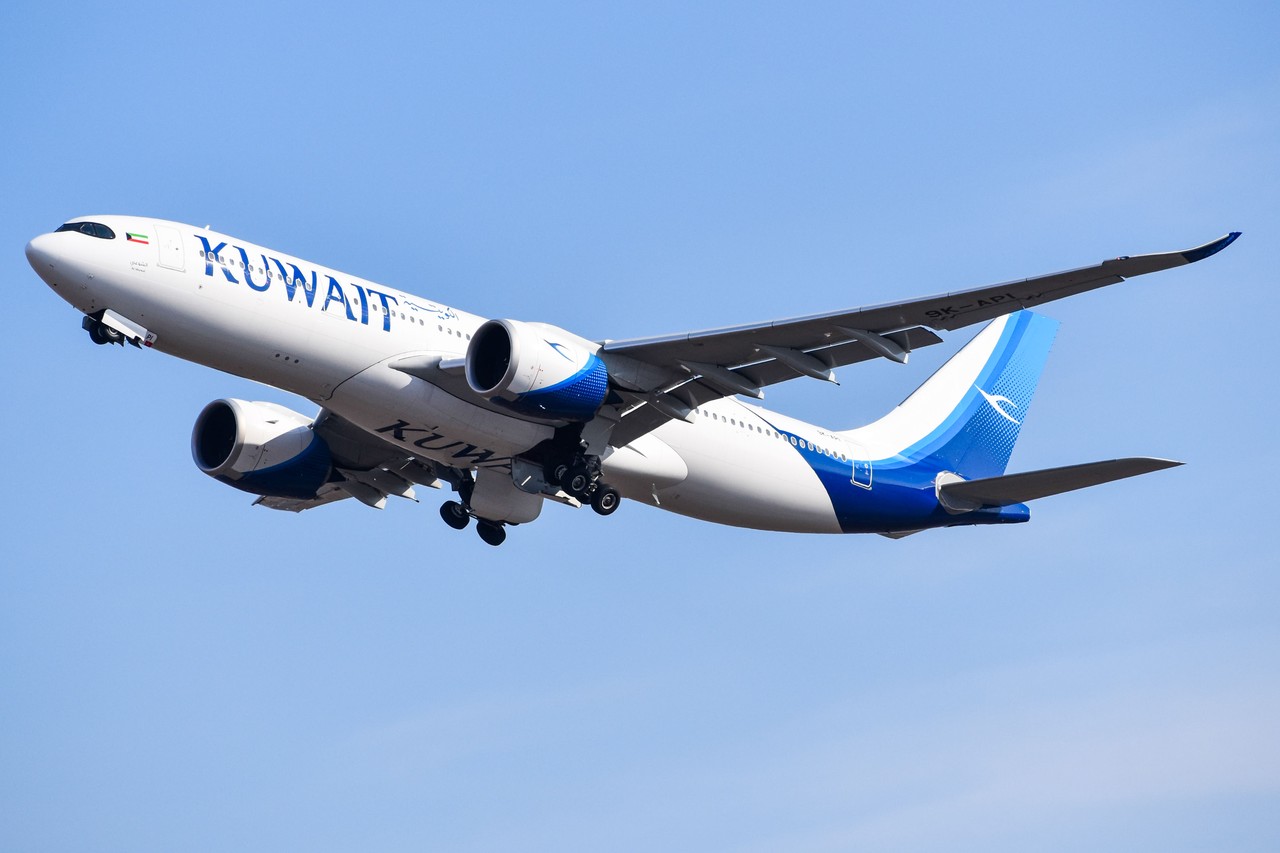
Kuwait Airways became the launch customer, receiving the first two aircraft on October 29, 2020. The COVID-19 pandemic disrupted the original delivery schedule, postponing Kuwait Airways' first delivery from March 2020 to the third quarter. The airline's first A330-800 was configured with 226 seats, including 23 business class positions, and operated its inaugural revenue service between Kuwait and Dubai on November 20, 2020.
Limited Commercial Success
Despite its technical capabilities, the A330-800 has struggled to find market acceptance. Uganda Airlines became the second operator, taking delivery of its first aircraft on December 21, 2020, with a second unit following in January 2021. Kuwait Airways, initially ordering eight A330-800s, subsequently converted six orders to the larger A330-900 variant, highlighting the market's preference for higher-capacity aircraft in the wide-body segment.
This pattern reflects broader industry trends favoring either smaller narrow-body aircraft for medium-haul routes or larger wide-bodies for long-haul operations, leaving limited demand for the A330-800's specific capacity and range combination.
The Airbus Legacy
Airbus developed from a consortium of European aerospace companies in the 1970s, with the original A330 program launched alongside the four-engine A340 in April 1987. The A330 family has become one of commercial aviation's most successful wide-body programs, accumulating over 1,700 orders with more than 1,300 aircraft delivered to 117 customers worldwide. The family operates nearly one million annual flights, establishing itself as what Airbus terms "the most popular wide-body aircraft ever."
Today, Airbus continues as Europe's premier commercial aircraft manufacturer, competing globally with Boeing while maintaining production facilities across multiple European nations. The company's success with the A330 family demonstrates its ability to develop aircraft that meet diverse airline requirements across different market segments.
Current Status and Future Outlook
As of 2026, the A330-800 remains in production despite limited orders, with Airbus maintaining the program as part of its complete A330neo offering. The aircraft serves a niche market for airlines requiring medium-capacity, ultra-long-range capability, though its commercial success pales compared to both the larger A330-900 and competing Boeing aircraft.
The A330-800's legacy may ultimately rest on its technical achievements rather than commercial success, demonstrating advanced fuel efficiency and range capabilities in the challenging middle market segment between narrow-body and large wide-body aircraft.