
Service History
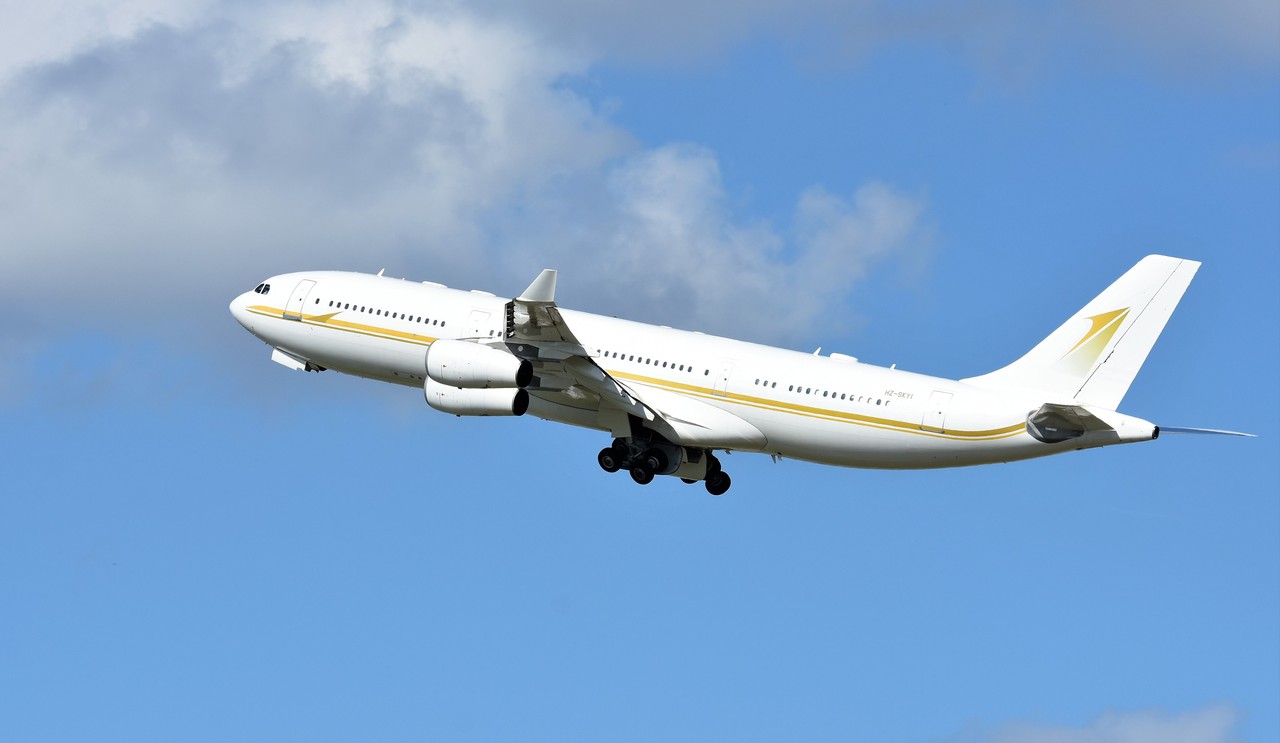
The A340-200 entered commercial service on March 15, 1993, with launch customers Lufthansa and Air France leading the type's operational debut. Despite its advanced capabilities, the variant struggled commercially, representing the smallest production run in the A340 family with only 28 aircraft delivered over its 15-year production span. Major operators included Lufthansa, Air France, South African Airways with 4-6 units, and Philippine Airlines with a similar fleet size. The aircraft's four-engine configuration allowed unrestricted operations on long transoceanic routes without the Extended-range Twin-engine Operations Procedures (ETOPS) limitations that constrained twin-engine competitors of the era.
The Manufacturer
Airbus developed the A340-200 as part of its ambitious entry into the long-haul market, with the program launching on June 5, 1987. The European consortium, established in the 1970s to challenge American aviation dominance, designed the A340 family alongside the twin-engine A330, sharing common systems and manufacturing processes. Airbus assembled the aircraft at its European facilities as part of the integrated A330/A340 production line. The company, now operating as Airbus SE, successfully transformed from a multinational consortium into one of the world's two dominant commercial aircraft manufacturers, competing directly with Boeing across all market segments.
Engine & Technical Details
Four CFM56-5C turbofan engines powered the A340-200, manufactured by CFM International, a joint venture between General Electric and Safran Aircraft Engines. These proven powerplants belonged to one of commercial aviation's most successful engine families, with thousands of units produced across multiple aircraft platforms including the Boeing 737 and Airbus A320 series. The aircraft featured a Honeywell 331-350[A] auxiliary power unit and required a flight crew of two pilots operating advanced fly-by-wire flight controls.
Design Philosophy
The A340-200's design prioritized range over passenger capacity, featuring a shortened fuselage compared to the A340-300 variant to optimize weight distribution for extended flights. This configuration trade-off reflected airline demand for aircraft capable of opening new direct routes between distant city pairs without technical stops. The four-engine layout provided redundancy and passenger confidence for overwater operations, particularly important during the 1990s when twin-engine aircraft faced significant route restrictions.
Performance Specifications
Operational performance centered on the aircraft's impressive 6,700-nautical-mile range capability, enabling nonstop flights between major intercontinental destinations. The A340-200 achieved certification on December 22, 1992, following extensive flight testing that validated its long-range capabilities and operational systems. Cruise performance and fuel efficiency, while adequate for the era, would later prove insufficient against newer twin-engine competitors as ETOPS restrictions relaxed.
Production & Legacy
Production ceased in 2008 after the completion of just 28 aircraft, making the A340-200 one of the least successful variants in Airbus commercial history. The limited production reflected challenging market conditions where airlines increasingly favored either higher-capacity aircraft or more fuel-efficient twin-engine alternatives. As of January 2024, only 70 of the 377 total A340 aircraft across all variants remain in active service, with most A340-200s retired from scheduled passenger operations.
The type has found renewed purpose in specialized markets, particularly high-end charter services where business-class configurations with lie-flat seating attract entertainment industry, sports, and corporate clients. Several aircraft have been converted to presidential or government transport roles, extending their operational lives beyond commercial airline service. Some examples serve museums and aviation preservation organizations, representing an important chapter in Airbus's evolution from European startup to global aircraft manufacturer.
Historical Significance
The A340-200 represented a crucial stepping stone in Airbus's development, demonstrating the company's ability to design and manufacture competitive long-haul aircraft. While commercial success remained limited, the program established critical engineering capabilities and market credibility that enabled subsequent Airbus wide-body programs. The aircraft's 18-year family production run from 1993 to 2011 contributed valuable experience in four-engine operations and long-range aircraft systems that influenced later Airbus designs, including the highly successful A350 series that ultimately replaced the A340 family in the company's product lineup.