
Service History
The A340-500 carved out a specialized niche in commercial aviation by serving routes that no other airliner could economically operate. Emirates became the launch operator in March 2003 after original customer Air Canada's bankruptcy delayed initial deliveries. Singapore Airlines achieved the aircraft's most celebrated operational milestone by launching the world's longest non-stop commercial flight in October 2004—an 18-hour 45-minute polar route covering 8,285 nautical miles between Singapore Changi and Newark Liberty airports. This route flew over the North Pole, Russia, Mongolia, and China, demonstrating the A340-500's unprecedented range capabilities.
Asian carriers dominated A340-500 operations, with Singapore Airlines, Etihad Airways, and Thai Airways among the primary operators. These airlines configured their aircraft in various layouts, from 313-passenger high-density arrangements to all-business class configurations for premium ultra-long-haul services. The aircraft's four-engine design provided operational redundancy crucial for extended overwater flights, allowing airlines to operate routes previously requiring technical stops.
The Manufacturer
Airbus developed the A340-500 as an extended-range variant of the successful A340-300, incorporating reinforced wings, improved aerodynamics, and greater fuel capacity. The European consortium manufactured all A340 variants at its Toulouse-Blagnac facility, where the -500 made its maiden flight on February 11, 2002, at 10:25 local time. The five-hour 52-minute test flight validated the aircraft's design parameters and ultra-long-range capabilities.
Production ceased on November 10, 2011, when Airbus announced that all firm orders had been fulfilled. The A340-500 and -600 variants combined accounted for 131 of the 375 total A340 family aircraft delivered. Airbus continues as a major commercial aircraft manufacturer, having transitioned focus to more fuel-efficient twin-engine designs like the A350 family.
Engine & Technical Details
Four Rolls-Royce Trent 500 high-bypass turbofan engines powered the A340-500, providing the thrust necessary for maximum-weight takeoffs on ultra-long routes. This powerplant configuration, while fuel-intensive by modern standards, offered crucial redundancy for extended overwater operations and enabled the aircraft to maintain altitude on three engines if necessary.
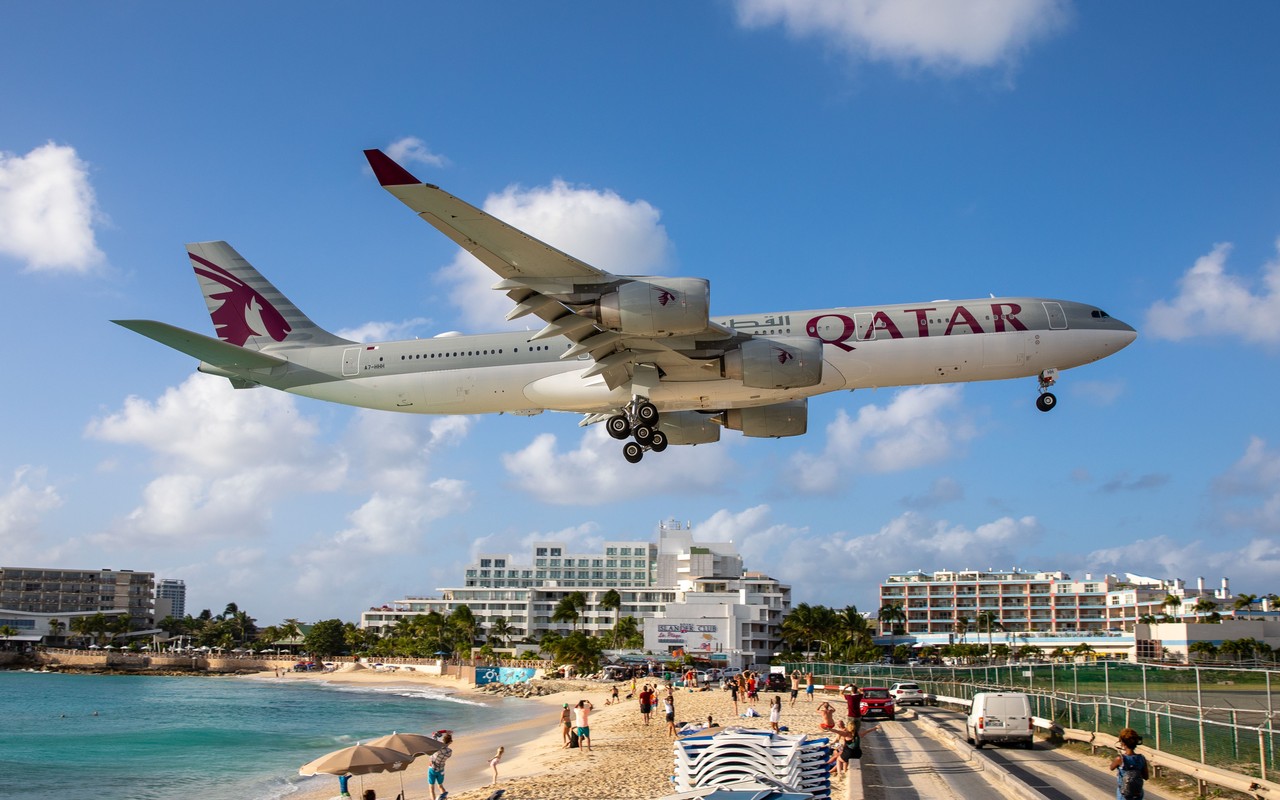
The A340-500 featured a distinctive three-leg main landing gear configuration to distribute the aircraft's maximum takeoff weight. The design incorporated advanced flight management systems and extended-range navigation equipment essential for polar and transoceanic operations. Fuel capacity reached approximately 200,000 pounds, enabling the aircraft to carry sufficient reserves for the longest commercial routes.
Operational Performance
Pilots praised the A340-500's stability during long-haul operations and its sophisticated autopilot systems that reduced crew workload on ultra-long flights. The aircraft maintained a cruise speed of approximately Mach 0.83 and could reach altitudes exceeding 41,000 feet. Its extended range of 8,500 to 9,000 nautical miles depending on configuration made it the benchmark for ultra-long-range operations throughout the 2000s.
Crew requirements typically included two pilots and a relief pilot for the longest routes, with cabin crew numbers varying based on passenger configuration and route duration. The aircraft's advanced systems included enhanced weather radar and satellite communications essential for polar route operations.
Production & Legacy
Total A340-500 production reached approximately 34 aircraft before manufacturing concluded in 2011. The type's commercial service ended by 2025, with remaining examples operating in private or government configurations for operators including Las Vegas Sands and Qatar Amiri Flight. Singapore Airlines suspended its record-breaking Newark route in 2013 due to escalating fuel costs, briefly resuming it in October 2018 using the more efficient A350-900.
The A340-500's legacy lies in proving the viability of ultra-long-range commercial operations and establishing route structures that continue today with more efficient aircraft. Its four-engine design represented the final generation of quad-jet airliners, superseded by twin-engine aircraft offering comparable range with significantly lower operating costs. The type demonstrated that passenger demand existed for non-stop flights exceeding 18 hours, fundamentally changing airline route planning and passenger expectations for transoceanic travel.
While no longer in commercial service, the A340-500 established operational precedents and route possibilities that shaped modern long-haul aviation, proving that technological capability could create entirely new market segments in commercial aviation.