
Service History
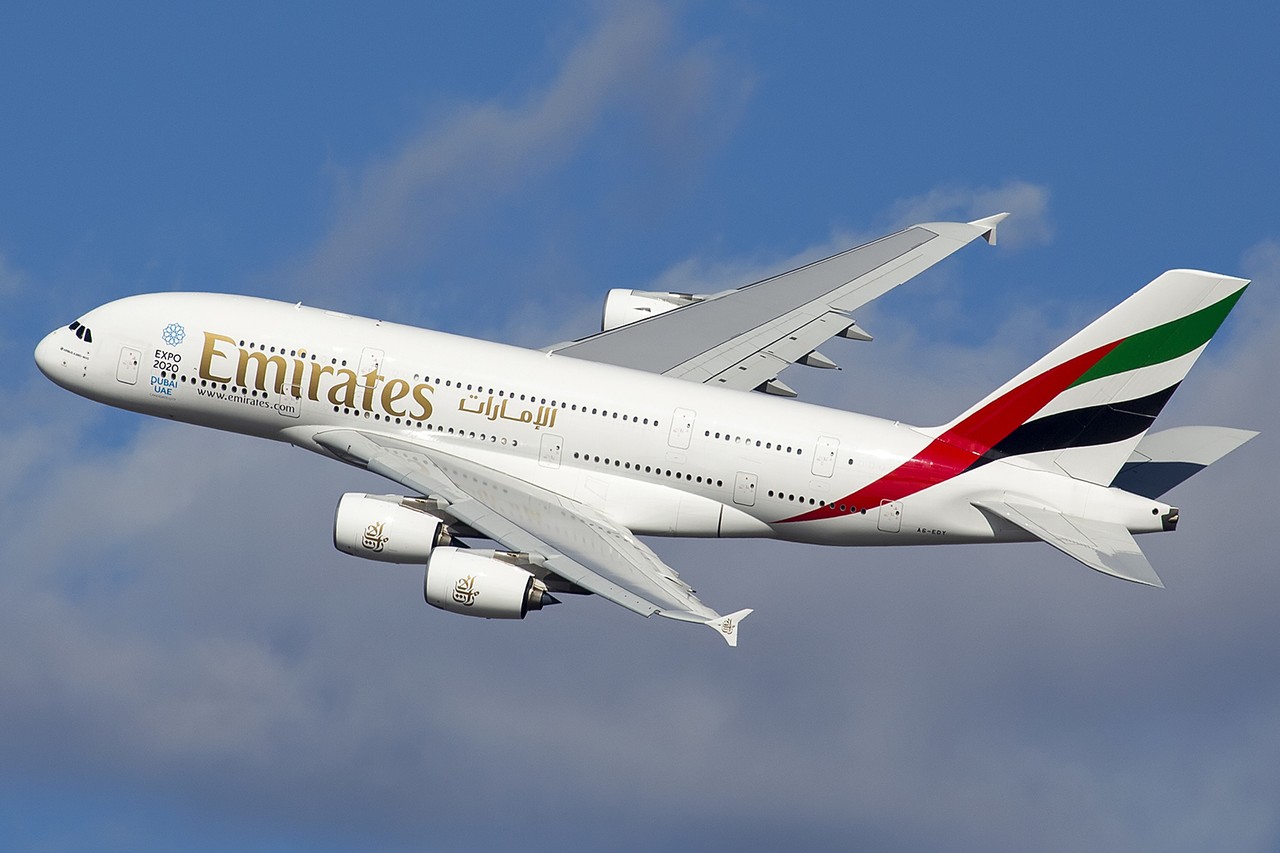
The A380 entered commercial service on October 25, 2007, with Singapore Airlines operating the inaugural flight from Singapore to Sydney. Emirates emerged as the dominant operator, acquiring 123 of the 251 delivered aircraft, representing nearly half of the entire production run. By the end of its service life, the superjumbo had accumulated over 800,000 flights and transported more than 300 million passengers across 14 airlines including Air France, Lufthansa, Qantas, Korean Air, and Malaysian Airlines.
The aircraft's massive size created both opportunities and challenges for operators. While passengers praised its spacious cabin and quiet operation, many airports required costly infrastructure modifications to accommodate the giant. Major hubs including New York's JFK, London Heathrow, Paris Charles de Gaulle, and Chicago O'Hare invested millions in gate modifications, runway strengthening, and ground support equipment upgrades.
The Manufacturer
Airbus, founded in 1970 as a consortium of European aerospace companies, developed the A380 as its flagship program to challenge Boeing's dominance in the large aircraft market. The company, now known as Airbus SE and headquartered in Toulouse, France, remains a leading commercial aircraft manufacturer alongside Boeing. The A380 project showcased European industrial cooperation, with components manufactured across the continent: nose and center sections in northwest France, wings in Wales, horizontal tailplane in Cadiz, Spain, and rear fuselage sections in Hamburg, Germany.
Airbus has produced notable aircraft including the A320 family, A330, A340, and A350 series, establishing itself as Boeing's primary competitor in commercial aviation.
Development and Design
The A380 program officially launched in December 2000 after nearly a decade of conceptual development that began in the early 1990s. Initially designated A3XX, the project aimed to create a double-deck aircraft capable of carrying more passengers than Boeing's 747 on high-density long-haul routes. Lead test pilot Jacques Rosay commanded the maiden flight on April 27, 2005, departing from Toulouse-Blagnac Airport in aircraft F-WOWW.
The development proved extraordinarily complex and costly. Initial projections estimated €9.5 billion in development costs, but complications with the aircraft's electrical systems drove expenses to €18.9 billion by 2014. The superjumbo required up to 350 miles of wiring, and integration problems with the 330-mile cable system alone added €5 billion to the program while delaying first deliveries by over a year.
Engine and Technical Specifications
The A380 features four high-bypass turbofan engines mounted on underwing pylons, with operators choosing between Rolls-Royce Trent 900 or Engine Alliance GP7000 powerplants. Both engines deliver approximately 70,000 to 80,000 pounds of thrust each, providing the massive thrust required to lift the aircraft's maximum takeoff weight of 1.2 million pounds.
The aircraft requires a minimum flight crew of two pilots, though many operators include additional crew members for long-haul operations. Its advanced fly-by-wire flight control system incorporates multiple redundancies and automated systems to manage the complex aerodynamics of the double-deck configuration.
Performance Characteristics
The A380 cruises at approximately Mach 0.85, equivalent to roughly 560 miles per hour at altitude. Its service ceiling reaches 43,000 feet, and maximum range extends to approximately 8,000 nautical miles depending on passenger configuration and payload. The aircraft's four-engine configuration provides exceptional safety margins and allows continued flight even with engine failures.
Pilots generally praise the A380's stable handling characteristics and sophisticated automation, though the aircraft requires specialized type ratings and extensive training due to its unique size and systems complexity.
Production and Legacy
Airbus manufactured 254 A380s between 2003 and 2021, including 251 delivered to customers and three test aircraft. Production ended in December 2021 when Emirates received the final aircraft, concluding an 18-year manufacturing run that fell far short of the 1,200 aircraft Airbus originally projected.
The program's commercial failure stemmed from changing airline preferences toward smaller, more fuel-efficient twin-engine aircraft like the Boeing 787 and Airbus A350. Airlines increasingly favored point-to-point routes over the hub-and-spoke model that the A380 was designed to serve.
Today, approximately 250 A380s remain in active service worldwide, with many temporarily retired aircraft returning to service as international travel recovers. The aircraft's legacy extends beyond its commercial challenges, representing a pinnacle of aerospace engineering achievement and European industrial cooperation. Museums worldwide seek to preserve examples of the superjumbo, recognizing its significance as the largest passenger aircraft ever successfully operated in commercial service.