
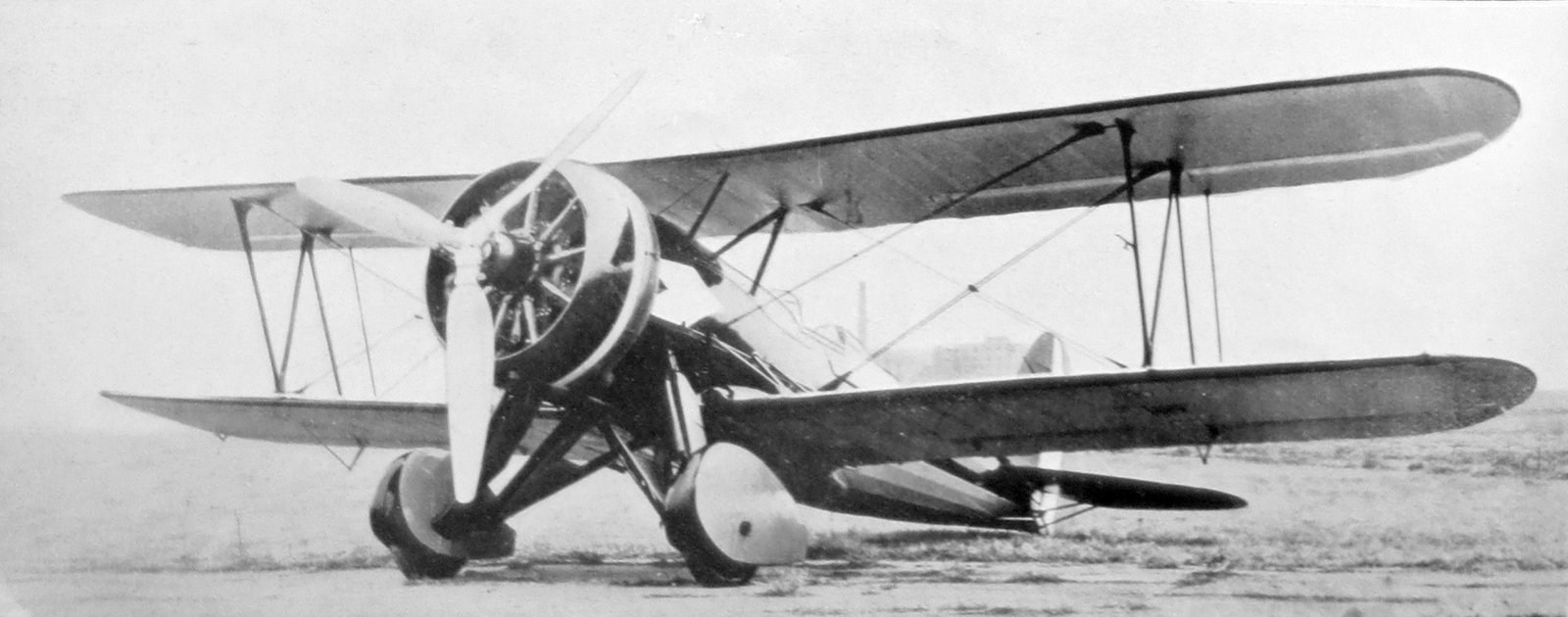
The Caproni Ca.114 was developed in 1933 as a response to a Regia Aeronautica requirement for a single-seat fighter. Designed during a transitional period in aviation when monoplane fighters were beginning to emerge, the Ca.114 represented one of the final Italian biplane fighter designs. It featured a single-bay configuration with equal-span wings and a mixed wood-and-metal structure. While intended for the Italian military, the aircraft did not enter service with the Regia Aeronautica.
Production of the Ca.114 was primarily focused on export, with Peru being the only operator to utilize the type in a substantial operational capacity. It is estimated that Peru received 36 aircraft delivered in three separate batches, with the final delivery occurring in January 1935. While the aircraft were manufactured in Italy by the firm founded by Gianni Caproni, some airframes were later sent to the FNA factory in Peru for overhaul and servicing. This facility was operated by Caproni Peruana, the Italian manufacturer's Peruvian subsidiary.
Technical specifications for the Ca.114 varied by batch. Some aircraft were equipped with Piaggio engines, while 12 machines delivered to Peru utilized license-built Bristol Mercury IV radial piston engines. The Mercury IV variant produced 530 hp (395 kW). The aircraft had a wingspan of 10.50 m, a length of 7.68 m, and a height of 2.54 m. With a wing area of 25.68 m², the fighter had an empty weight of 1,310 kg and a maximum takeoff weight of 1,660 kg. For armament, it carried two fixed 7.7 mm Breda-SAFAT machine guns firing forward.
In terms of performance, the Ca.114 could reach a maximum speed of 355 km/h at an altitude of 5,000 m, with a cruise speed of 230 km/h. It possessed a service ceiling of 9,500 m and a range of 600 km, and it could climb to 3,000 m in 4 minutes.
Operationally, the Ca.114 saw its most significant action during the 1941 Peru–Ecuador conflict. During the hostilities from July to October 1941, the aircraft flew border missions. Specifically, nine aircraft were assigned to the First Aviation Squadron of the Second Fighter Squadron, operating out of the Teniente Coronel Ruiz airbase in Chiclayo. The fleet also utilized Las Palmas for operations and training, and in the summer of 1939, the aircraft underwent an extensive work program at the FNA factory. No surviving examples of the Ca.114 are known to exist today.